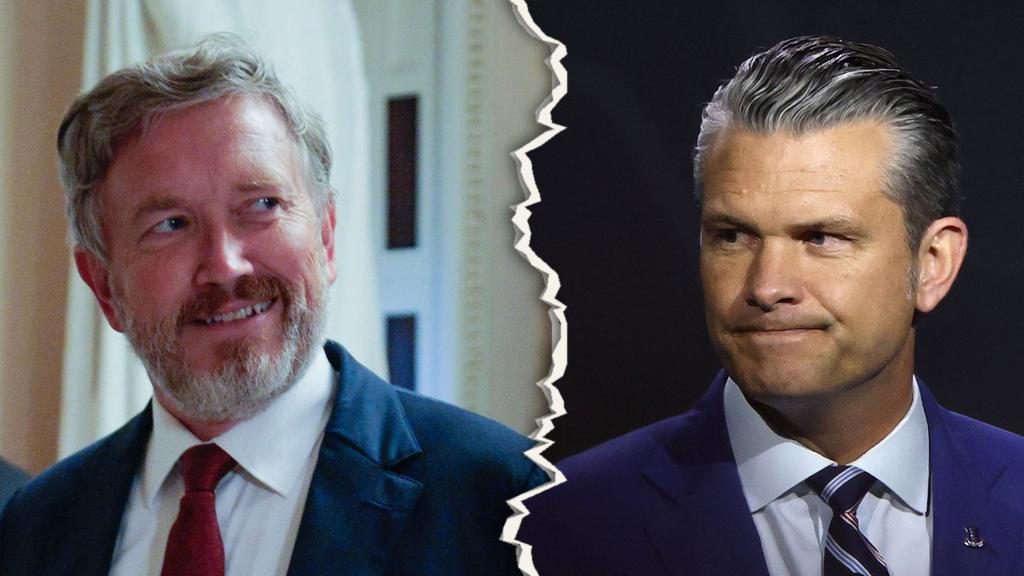
Outgoing Rep. Thomas Massie, R-Ky., announced plans to reintroduce articles of impeachment against Department of War Secretary Pete Hegseth early next week, citing what he describes as growing support for the effort following the recent election. The move comes as the Republican Party faces internal divisions over the administration’s handling of the ongoing war in Iran, an issue some GOP leaders have blamed for their party’s midterm election losses.
Explainer Modern Military Challenges: Energy Innovation and Middle East Conflicts Explored
Massie had previously filed similar impeachment charges against Hegseth in September. At that time, House Speaker Mike Johnson prevented a vote by dismissing the chamber early, effectively stalling the effort. According to Massie, the new resolution will be “substantially the same” as the eight charges filed earlier in the year, but will be updated to reflect continued U.S. military action, including recent bombings of fishing boats. These updates are intended to address what Massie and his supporters see as ongoing issues with the administration’s war policy.
Massie’s Impeachment Push
In an interview with the Daily Signal, Massie stated his intention to introduce the impeachment articles “Monday or Tuesday, as soon as we get back.” He expressed confidence that support for impeachment has increased since the election, noting that some members of Congress may be more willing to back the resolution now that they are either not returning to Congress or are seeking to distance themselves from the administration’s approach to the war.
“It’s an opportunity for them to show the people that they got the message, even if Trump hasn’t shown that he got the message,” Massie said, referring to the perceived public dissatisfaction with the war in Iran and its political consequences.
Massie acknowledged that he does not know whether the resolution will ultimately pass, but said, “Chances are better now than they were before the election.” He suggested that the shifting political landscape, with some lawmakers preparing to leave office, could make them more open to supporting the impeachment effort as a final statement on the administration’s war policy.
GOP Divisions Over Iran War
The Republican Party remains divided over the ongoing conflict in Iran. Key party leaders, including President Donald Trump and Vice President JD Vance, have publicly attributed the GOP’s midterm election losses to the administration’s handling of the war. Vance wrote on X, “The reason we lost is the war. The president himself said so last night. If you’d like to argue it was worth it, that losing the Senate for the next 6 years was worth it, then do so.”
Despite such criticism from within the party, Trump has indicated he intends to retain Hegseth as Secretary of War. Hegseth himself has responded to the controversy by posting on X, “At the War Department: We Stand. We Fight. We Defend the Republic.” This statement underscores the administration’s commitment to its current course in Iran, even as some Republicans call for a change in leadership at the War Department.
Procedural Hurdles and Next Steps
Massie said he has not discussed his plans with Speaker Johnson or other GOP members, and Johnson has not responded to requests for comment regarding the renewed impeachment effort. Massie noted that the resolution could face significant procedural obstacles, such as motions to table or refer it to committee, which would effectively block a vote on the articles themselves. “It’s possible that Mike Johnson will try a couple of dilatory things first to kill it. ... We’d have to survive both of those things and then vote on the articles themselves,” Massie explained.
With approximately 20 legislative days remaining before he leaves Congress—having lost his primary—Massie said he will focus his remaining time on advancing the impeachment effort and pushing for his Epstein Files Transparency Act II. He claims the latter initiative needs just two more signatures to force a vote. Massie has argued that both of these initiatives have been sidelined by House leadership, stating, “They had to shut Congress down for two-and-a-half weeks to avoid these two things.”
While Massie and other critics continue to press for Hegseth’s removal, the administration and some Republicans remain supportive of the Secretary. Speaker Johnson has not publicly addressed Massie’s renewed impeachment push, and it remains unclear whether the effort will gain enough traction to move forward in the remaining days of the current Congress.
The coming weeks are expected to test both the unity of the Republican Party and the willingness of House leadership to allow a vote on the impeachment articles. As Massie prepares to leave office, his actions may serve as a final challenge to the administration’s war policy and the party’s direction on foreign affairs.