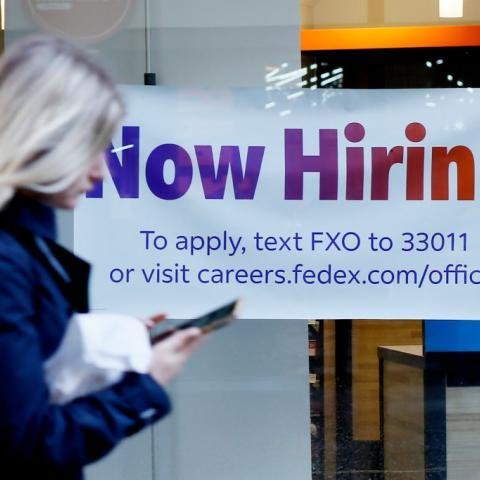
The US economy gained 165,000 jobs in October, while the national unemployment rate declined to 4.1%, according to the federal government's latest monthly report. These figures surpassed economists' forecasts for both job creation and unemployment levels, signaling a stronger-than-expected labor market performance.
The release of the October jobs report has renewed debate among analysts and policymakers about the overall health of the US labor market. Despite ongoing economic uncertainty, the latest data suggests that hiring remains steady and that more Americans are finding work or re-entering the workforce.
The monthly jobs report is a key indicator used by policymakers, businesses, and investors to gauge the momentum of the economy. The federal government publishes these figures each month to provide insight into employment trends and to help inform decisions on fiscal and monetary policy. The October report showed that both the number of jobs added and the drop in the unemployment rate exceeded what many analysts had anticipated.
October Jobs Report Details
The addition of 165,000 jobs in October marked a positive surprise for many observers. Prior to the release, economists had projected slower job growth and a higher unemployment rate. The actual results, however, indicate that employers continued to hire at a steady pace, even as concerns about inflation and higher interest rates persist.
The unemployment rate's decrease to 4.1% also outperformed expectations. This suggests that not only are businesses hiring, but more individuals are either finding jobs or returning to the labor force after periods of absence. The improvement in the unemployment rate is often viewed as a sign of increasing confidence among job seekers and employers alike.
The monthly jobs report did not provide detailed information about which sectors contributed most to the job gains. However, the overall increase in employment points to broad-based hiring across various industries. This kind of widespread job growth is typically seen as a positive indicator for the broader economy, as it suggests that no single sector is solely responsible for driving employment gains.
Exceeding Expectations
Economists had forecast more modest job gains for October, with many predicting that the unemployment rate would remain unchanged or even rise slightly. The actual results, as reported by the federal government, indicate a labor market that remains resilient in the face of economic headwinds.
"The jobs and unemployment rate numbers exceeded economists expectations"
— Federal government's monthly report
The stronger-than-expected data has prompted some analysts to reconsider their outlook for the remainder of the year. While the report did not specify which industries saw the largest increases, the broad nature of the gains suggests that hiring is not limited to just a few sectors. This resilience is notable given the ongoing challenges posed by inflation and tighter monetary policy.
The labor market's continued strength is an important factor for policymakers as they weigh future decisions. A robust jobs report can influence the direction of interest rates and other economic policies, as officials seek to balance the goals of supporting employment and controlling inflation.
Broader Economic Context
The release of stronger-than-expected employment data comes at a time when policymakers and analysts are closely monitoring the trajectory of the US economy. The labor market's performance is central to discussions about fiscal and monetary policy, especially as inflation and other economic pressures remain a concern.
Officials have not yet commented on whether the October jobs report will influence upcoming policy decisions. The data is likely to be a key consideration in future deliberations by the Federal Reserve and other economic policymakers.
Supporters of the current administration have pointed to steady job growth as evidence of economic stability and effective policy measures. They argue that the continued hiring and declining unemployment rate demonstrate that the economy is on a solid footing, even as it faces challenges from global and domestic factors.
Critics, however, caution that challenges remain for many workers and businesses. They note that while headline numbers are positive, some groups may still be struggling to find employment or may be facing stagnant wages. Additionally, ongoing concerns about inflation and the cost of living continue to affect households across the country.
The October jobs report will likely continue to be a focal point in discussions about the state of the US economy. As policymakers, businesses, and workers look ahead, the resilience of the labor market will remain a key factor in shaping expectations and guiding future decisions.