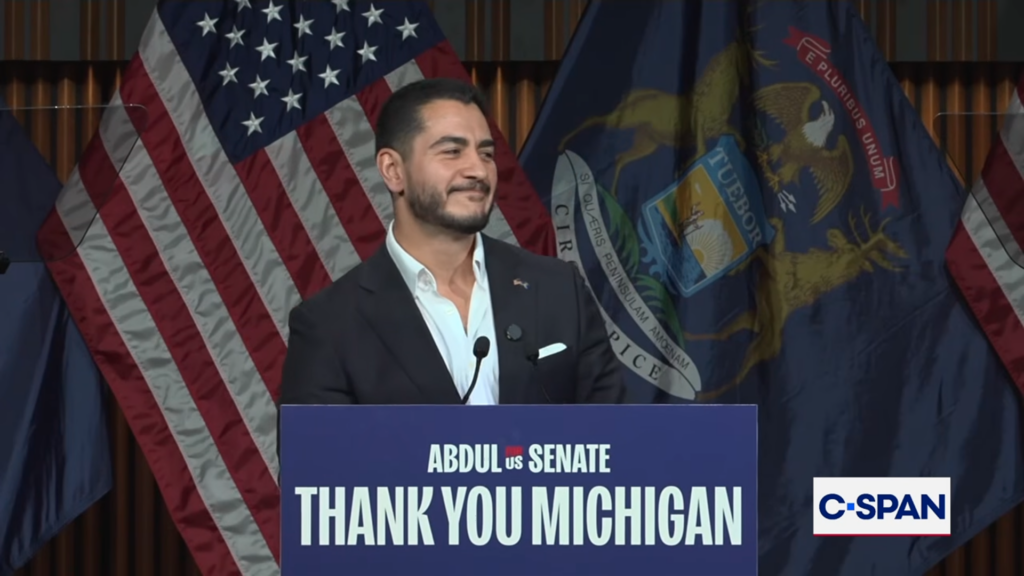
Democrat Abdul El-Sayed has made history by being elected to the U.S. Senate from Michigan, defeating Republican Mike Rogers and becoming the first Muslim to serve in the chamber, according to multiple news outlets. El-Sayed’s victory is part of a broader trend in the 2024 elections, with more than 30 Muslim candidates reportedly winning races across the United States. This includes seven who are set to serve in the U.S. House of Representatives, marking a significant milestone for Muslim representation in American politics.
Explainer Legal Battles Over Gender Identity Policies and School Bathroom Laws Explained
El-Sayed’s Background and Campaign
El-Sayed, a former public health official and the son of Egyptian immigrants, ran on a progressive platform. His campaign focused on issues such as universal health care, removing outside money from elections, and reforming U.S. foreign policy. According to PBS NewsHour, El-Sayed’s message resonated with voters who were seeking change, and he drew support from several progressive leaders. He was particularly vocal about health care reform and was critical of U.S. policy toward Israel, which became a central issue in his campaign.
After his win, El-Sayed addressed supporters in Detroit, expressing gratitude for their trust. “You took a chance on the unlikeliest of candidates. Thank you. This is all yours,” he told the crowd. He also made a reference to his faith, saying, “For the right-wing ops, that just means ‘Praise be to God.’”
Scrutiny and Criticism
Throughout the campaign, El-Sayed faced scrutiny over his ties to Islamic organizations and his positions on foreign policy. Critics pointed to his reluctance to condemn the Iranian regime and the Muslim Brotherhood, as well as his stances on immigration enforcement and health care. Some also raised concerns about comments he made during previous campaigns. Despite these criticisms, El-Sayed’s supporters have not directly addressed the controversies in public statements, instead focusing on his policy proposals and historic candidacy.
Broader Wave of Muslim Candidates
El-Sayed’s win is part of a larger wave of Muslim and progressive candidates making gains in the 2024 elections. Incumbent Representatives Ilhan Omar (D-Minn.), Rashida Tlaib (D-Mich.), and André Carson (D-Ind.) were reelected to the U.S. House. Joining them are Aisha Wahab (D-Calif.) and Lateefah Simon (D-Calif.), as well as newcomers Darializa Avila Chevalier (D-N.Y.) and Adam Hamawy (D-N.J.), who will take office in January. Some of these candidates have also faced questions about their backgrounds and associations. For example, Omar is under federal investigation related to alleged immigration fraud and financial disclosures, while Hamawy has been questioned about past associations with controversial figures.
At the state level, Aber Kawas became the first Palestinian elected to the New York State Senate. Kawas has faced criticism for past statements about the 9/11 attacks and for appearing in a video waving a Hamas headband. In Minnesota, Abdi Daisane became the state’s first Somali lawmaker. Daisane, who owns a daycare center that received over $7 million in public funds, has faced scrutiny over violations at his facility and its sponsorship by a nonprofit that settled fraud claims.
Voter Turnout and Issues
Exit polling conducted by NBC indicated that Muslims made up 1 percent of voters in the 2024 elections and overwhelmingly supported Democrats, with 86 percent backing the party. The Council on American-Islamic Relations (CAIR) estimated turnout at over 90 percent of registered Muslim voters. According to CAIR’s survey, four out of five Muslim voters cast ballots for Democrats. The top issues cited by Muslim voters included the conflict in Gaza, the war in Iran, and the economy.
Democratic Gains and Political Impact
The strong performance by Democrats in these races comes as the party secured control of both chambers of Congress. Progressive candidates made gains in several battleground states, signaling a shift within the party. El-Sayed’s win is seen by some observers as a breakthrough for the party’s left wing and for Muslim Americans seeking greater representation in government. However, critics argue that the backgrounds and policy positions of some newly elected lawmakers warrant further scrutiny, particularly regarding foreign policy and associations with controversial organizations.