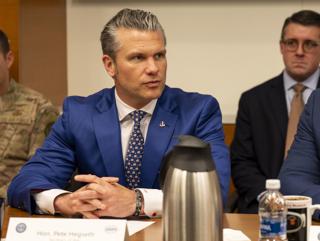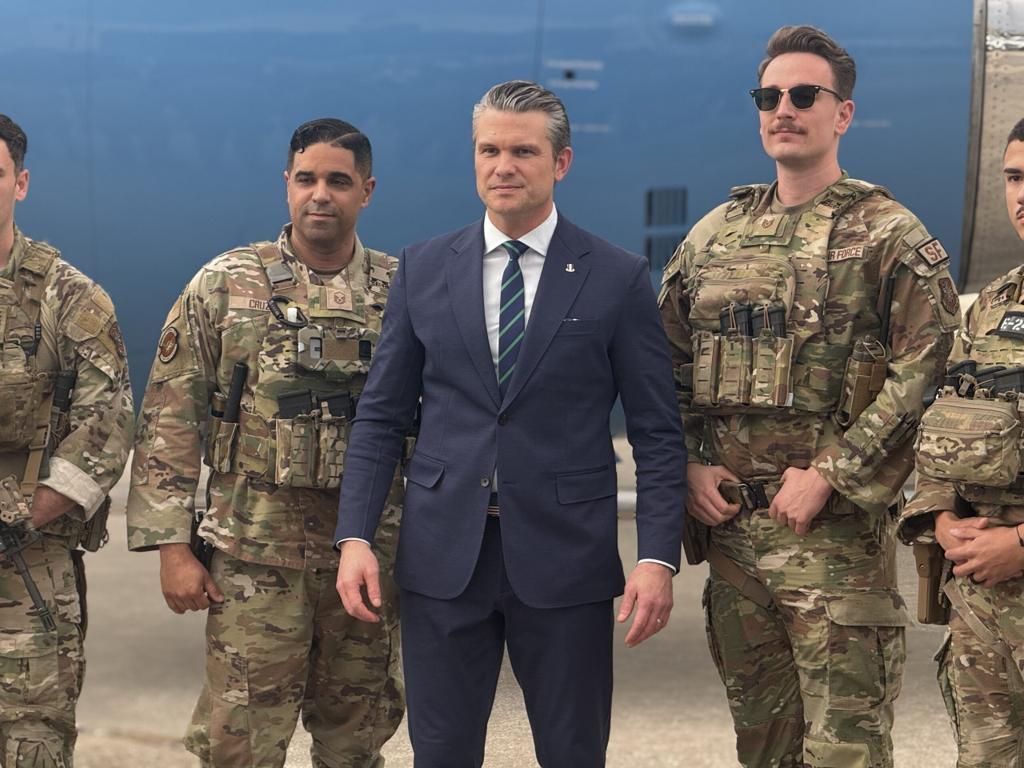
Secretary of War Pete Hegseth stated Tuesday that the ongoing war in Iran will not resemble the nation-building efforts seen in Iraq during the early 2000s. Speaking at the Pentagon, Hegseth assured the public that the current military operations are focused and will not devolve into a prolonged conflict.
The core tension lies in the public's concern over the potential for another extended military engagement in the Middle East, a sentiment echoed by many Americans who are wary of past experiences in Iraq and Afghanistan. Hegseth's comments come as the U.S. military continues its operations against Iranian targets, with some estimates suggesting that the conflict could extend into September.
Hegseth, alongside Chairman of the Joint Chiefs of Staff Gen. Dan Caine, provided an update on the military campaign, which has reportedly struck over 5,000 targets since its inception. He emphasized that the current administration is committed to a specific mission, stating, "This is not endless. It’s not protracted. We’re not allowing mission creep."
Military Strategy and Objectives
The Secretary of War highlighted that the military's approach is markedly different from previous conflicts. He remarked, "Our generation of soldier will not let that happen again, and nor will this president, who very clearly ran against those kinds of never-ending, nebulously scoped missions — those days are dead."
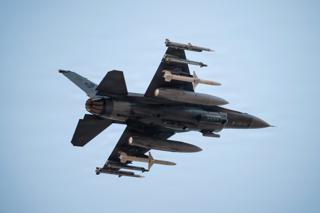
Despite these assurances, Hegseth's earlier remarks had drawn comparisons to the Iraq War, particularly regarding the scale of military force being deployed. He noted that the opening strikes in Iran utilized twice the air power compared to the initial Iraq campaign. This inconsistency has raised questions among critics about the administration's messaging regarding the nature of the conflict.
President Donald Trump, meanwhile, has suggested that the war may be nearing its conclusion, stating in an interview with CBS News, "I think the war is very complete." However, the War Department countered that operations are just beginning, indicating a potential disconnect between the administration's public statements and military realities.
Concerns Over Prolonged Conflict
Hegseth addressed concerns about a prolonged conflict, emphasizing that the President is in control of military objectives. "He’s the one deciding — he’s the one elected on behalf of the American people — when we’re achieving those particular goals," Hegseth said. This statement reflects an effort to reassure the public that the administration is focused on defined outcomes rather than open-ended military engagements.
Despite these reassurances, the administration's approach has faced scrutiny. Critics point to Trump's previous comments regarding regime change, particularly his dissatisfaction with the new Iranian supreme leader, Mojtaba Khamenei. Trump has expressed a desire for "unconditional surrender" from Iran, raising concerns that the U.S. may be pursuing goals beyond mere military objectives.
Impact on Regional Stability
Gen. Caine provided additional context on the military's progress, reporting a significant reduction in Iranian missile capabilities. He stated that ballistic missile attacks have decreased by 90 percent, and one-way attack drones are down 83 percent. This reduction is seen as a critical step in limiting Iran's military capabilities in the region.
Caine also noted that U.S. forces are prepared to assist oil vessels navigating the strategically important Strait of Hormuz, should the need arise. This highlights the ongoing importance of regional stability in the context of U.S. military operations.
Hegseth acknowledged the concerns of Americans who are apprehensive about another war in the Middle East. He stated, "I understand those concerns, because I’ve heard from a lot of people who went through — I went through 20 years of those wars myself, worried about getting dragged in, worried about mission creep."
While the administration has attempted to clarify its objectives, the mixed messaging regarding the nature of the conflict continues to raise questions among both supporters and critics. As military operations proceed, the administration faces the challenge of maintaining public support while navigating the complexities of military engagement in Iran.