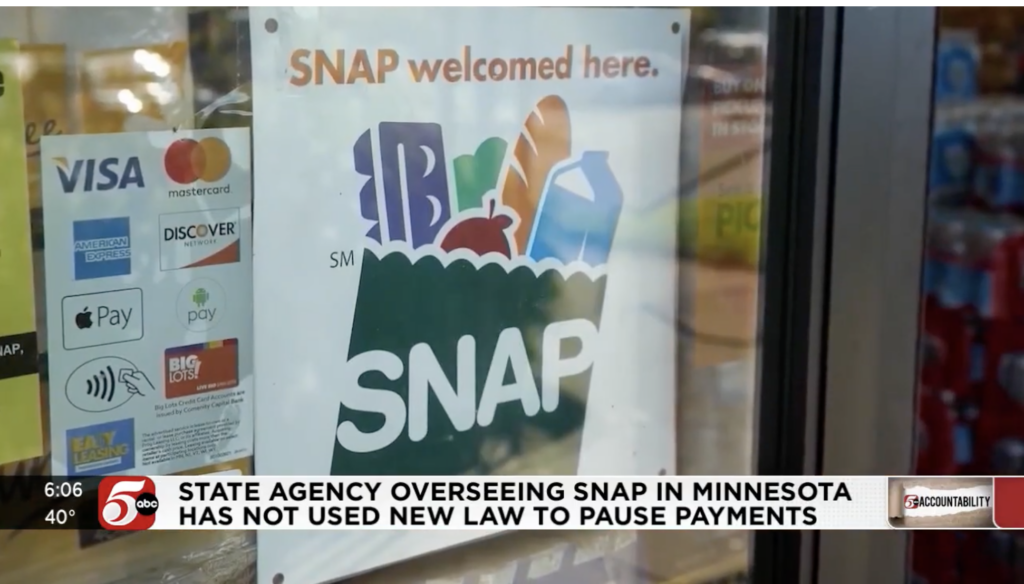
Rob Undersander, known as the "Minnesota Millionaire," has brought attention to a loophole in the food stamp program that he claims allows wealthy individuals to improperly access benefits, costing taxpayers billions. Undersander, a retired engineer, has been advocating for reforms to the Broad-Based Categorical Eligibility (BBCE) policy, which he argues has led to widespread abuse of the Supplemental Nutrition Assistance Program (SNAP).
Explainer Understanding Immigration Enforcement: Policies and Controversies
The core issue revolves around the BBCE policy, which critics say enables individuals with significant assets to qualify for food assistance. Undersander's efforts highlight a growing concern about the integrity of welfare programs and their impact on taxpayers.
For over a decade, Undersander has worked with the Foundation for Government Accountability (FGA) to expose what they describe as a "fraud by design" within the BBCE framework. This policy, which originated during the Clinton administration, allows states to bypass federal income and asset limits for food stamp eligibility. According to the FGA, millions of SNAP recipients do not meet the necessary criteria, with one in five reporting assets of $100,000 or more.
The Loophole Explained
Undersander's journey began in 2016 when he volunteered to assist seniors with Medicare applications. During this time, he learned about the BBCE loophole, which permits states to grant food stamp eligibility based on non-cash welfare benefits. "If someone is deemed eligible to receive other welfare benefits, they automatically qualify for food stamps," the FGA explains.
States have reportedly exploited this loophole by creating new welfare benefits, such as informational pamphlets and hotlines, which facilitate access to SNAP. Undersander asserts that this practice has led to a significant increase in food stamp enrollment and costs, with the number of recipients doubling from 17.1 million in 2000 to 41.1 million in 2022.
Personal Experience with SNAP
To illustrate the issue, Undersander applied for SNAP benefits himself, receiving $278 a month initially, which later increased to $341. He stated, "I like to say I audited the program. And what better way to audit the program than to be a part of it?" His experience included dining on meals like lobster and filet mignon, raising eyebrows among critics.
Minnesota Democrats have criticized Undersander for his actions, with Rep. John Considine stating, "You knew this was wrong and you did it anyway. I find it pretty despicable." However, Undersander maintains that he did not break any laws, as the loophole is a legal provision.
Calls for Reform
Undersander has taken his concerns to state lawmakers, advocating for reforms to the BBCE policy and the implementation of asset limits for food stamp eligibility. He testified in support of a recent bill aimed at addressing these issues, emphasizing the need to eliminate what he calls "fraud by design."
Despite his efforts, Undersander noted that little has changed in the past decade. He stated, "The amount of fraud is appalling. By eliminating this 'fraud by design,' it really makes the program stronger and helps those who truly need it."
The FGA reports that the official error rate for food stamp payments stands at 11 percent, with some states experiencing even higher rates. In response to these concerns, the Trump administration enacted penalties for states that fail to reduce payment errors.
As Minnesota faces scrutiny over welfare fraud, Undersander's advocacy continues to shine a light on the complexities of welfare eligibility and the need for accountability in government programs.
While critics of the BBCE policy argue for immediate reforms, supporters have not publicly addressed the specific allegations raised by Undersander and the FGA.
Undersander's campaign serves as a reminder of the ongoing debate surrounding welfare programs and their impact on taxpayers, as well as the necessity for effective oversight to ensure that assistance reaches those who genuinely need it.