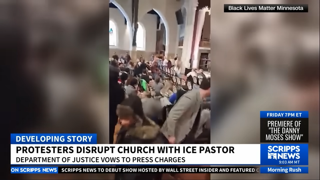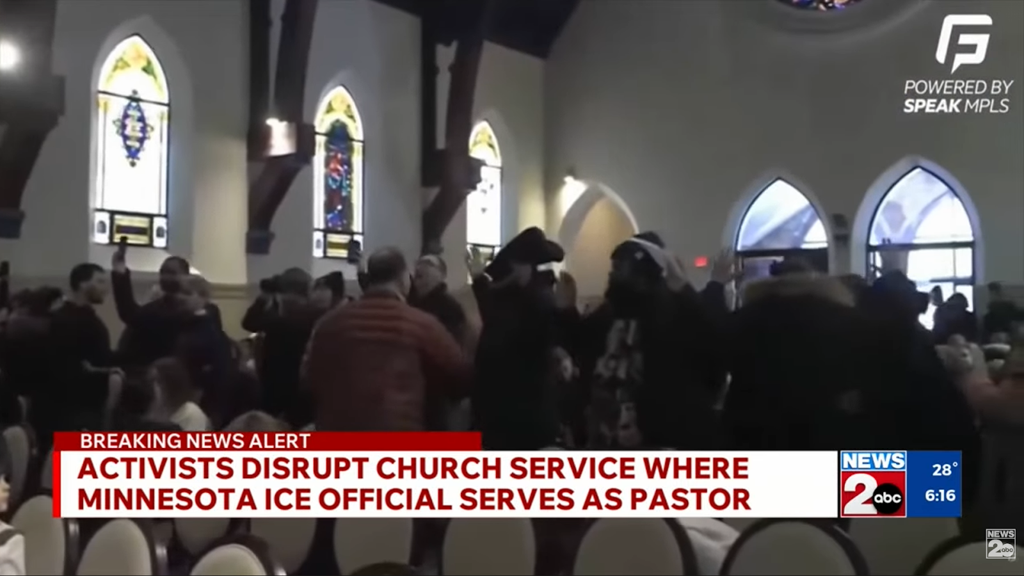
A group of protesters disrupted a church service in St. Paul, Minnesota, over the weekend, leading to renewed criticism of the Trump administration's handling of immigration enforcement and public safety. The incident, which involved demonstrators allegedly targeting a pastor they believed was affiliated with ICE, has intensified calls for stronger action against what some describe as left-wing harassment.
Explainer Public Safety and Crime Trends in America: Understanding the Landscape
Critics argue that the administration's lack of decisive action has emboldened activists to engage in increasingly aggressive behavior against immigration authorities and their supporters. The situation reflects broader tensions surrounding immigration enforcement in Minnesota, where local leaders have indicated a reluctance to support federal immigration operations.
The protest at the church was reportedly sparked by a belief among demonstrators that one of the pastors was connected to ICE. Video footage from the event showed protesters confronting churchgoers, including families with children, as they attempted to enter the service. This incident has drawn significant media attention and raised questions about the safety of individuals involved in immigration enforcement.
Key Details
In response to the disruption, Attorney General Pam Bondi stated that the Justice Department would "prosecute federal crimes and ensure that the rule of law prevails." White House Press Secretary Karoline Leavitt added that "President Trump will not tolerate the intimidation and harassment of Christians in their sacred places of worship."
Background and Reactions
However, critics contend that the administration's response has been insufficient. They argue that the perceived inaction has allowed protesters to feel secure in their disruptive tactics. "The primary reason those left-wing anarchists felt comfortable enough storming that church is because Trump and his administration have given them zero reason to fear any real accountability for their actions," one critic stated.
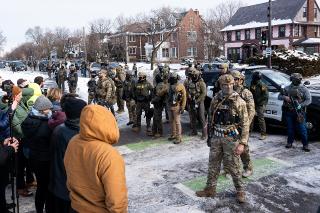
The ongoing unrest in Minnesota has been characterized by a series of protests against ICE and immigration enforcement, with local leaders like Governor Tim Walz and Minneapolis Mayor Jacob Frey expressing opposition to federal immigration policies. This has led to a perception that law enforcement is not adequately protecting federal agents or those who support them.
Supporters of the administration argue that the situation is complex and that local leaders bear responsibility for maintaining order. They contend that the federal government cannot unilaterally enforce laws in states where local authorities are unwilling to cooperate. As one supporter noted, "The federal government can only do so much when local officials refuse to enforce the law."
The criticism of the Trump administration's response has raised concerns about the potential for escalating violence. Observers warn that continued inaction could lead to more aggressive tactics from protesters, further straining the relationship between federal and local authorities. "Continued abdication of proper law enforcement will further embolden leftist agitators to take more egregious and increasingly violent actions against ICE and non-leftists in Minnesota," a commentator warned.
As the situation develops, the Trump administration faces pressure to take a firmer stance on immigration enforcement and public safety. Failure to address these concerns could lead to broader implications for law enforcement across the country, as activists may feel encouraged to replicate similar actions in other regions.
The administration's critics are calling for immediate accountability for those involved in the church disruption, emphasizing that any perceived leniency could set a dangerous precedent. "Every lawbreaker who stormed that church must be cuffed, charged, thrown behind bars, and have his mugshot published for the world to see," one critic asserted.
As the debate continues, the Trump administration's approach to immigration enforcement and public safety remains under scrutiny, with significant implications for both local and national law enforcement policies.