President Donald Trump is reportedly facing pressure from the White House to shift his immigration messaging away from mass deportations to a focus on deporting violent offenders. This development comes as Trump gears up for the 2024 presidential election, where immigration remains a pivotal issue for his supporters.
The core tension lies in whether Trump will adhere to his campaign promise of mass deportations, which many of his supporters view as essential for national security and cohesion, or if he will align with a more moderate approach that emphasizes targeting only violent criminals.
Historically, both Democratic and Republican administrations have prioritized deportation efforts against individuals deemed threats to national security. In a 2014 address, then-President Barack Obama stated that his administration would focus on “felons, not families” in its deportation strategy. Similarly, the Biden administration has indicated that enforcement priorities should focus on noncitizens who pose a threat to public safety. Critics argue that this approach has led to an increase in unauthorized immigration, which they believe undermines American communities.
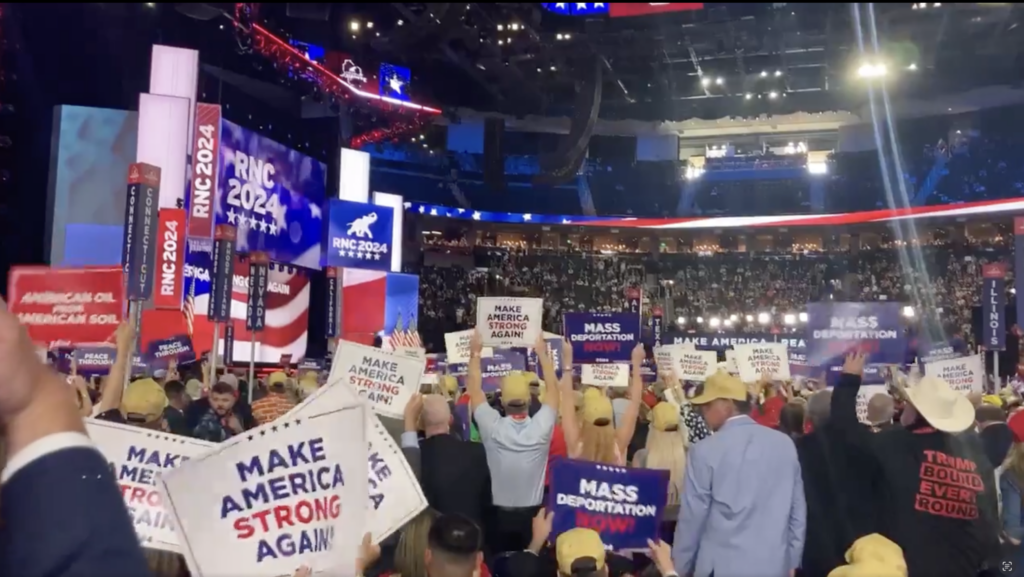
A Pew Research poll conducted in September 2024 indicated that 82 percent of Trump supporters consider immigration a leading issue, with 88 percent backing mass deportations. Many supporters express frustration over the perceived normalization of unauthorized immigration under previous administrations. At the 2024 Republican National Convention, demonstrators displayed signs advocating for “Mass Deportations Now!” reflecting a strong sentiment among the base.
White House Strategy Shift
Reports from Axios suggest that White House Deputy Chief of Staff James Blair is advising House Republicans to avoid discussions of mass deportations. Instead, he encourages a focus on deporting violent criminal immigrants. Blair stated, “Republicans want to keep deporting the violent/criminal illegals that Joe Biden & the Democrats in Congress let in.” This shift raises questions about whether the GOP is returning to the more lenient immigration policies of the Obama and Biden administrations, which many voters rejected in the last election.
Critics of the proposed strategy argue that it could dilute the GOP's commitment to stricter immigration enforcement. They contend that focusing solely on violent offenders may not address the broader concerns about unauthorized immigration that motivated many voters to support Trump in the first place.
Impact on Local Communities
The influx of unauthorized immigrants has had significant effects on local communities, particularly in urban areas. Reports indicate that cities like New York and Chicago are experiencing overcrowded schools and strained public resources due to an increase in immigrant families. A September 2025 report noted that over 220,000 asylum seekers and immigrant families had arrived in New York City over three years, leading to a surge in English Language Learners in public schools.
Local leaders have expressed concerns that the needs of long-standing residents are being overlooked. In Chicago, Mayor Brandon Johnson acknowledged that migrants are settling in communities that already lack adequate resources. Residents have voiced frustration, stating that their issues, such as high crime and unemployment, are not being addressed while resources are allocated to assist newcomers.
National Cohesion at Stake
The debate over immigration policy also touches on broader concerns about national cohesion. Critics argue that mass unauthorized immigration can hinder the development of a unified national sentiment, as highlighted by historical figures like Alexander Hamilton. They assert that when large numbers of immigrants enter the country, it becomes challenging to foster a common identity and shared values.
Supporters of mass deportations contend that a strong stance on immigration is essential for maintaining national security and ensuring that government resources are directed toward citizens. They argue that the current approach has led to a dilution of American representation in Congress, as unauthorized immigrants can influence electoral outcomes.
As Trump navigates these complex issues, he faces a critical decision on whether to maintain his commitment to mass deportations or to adopt a more moderate stance that could alienate a significant portion of his base. The outcome of this decision may have lasting implications for the Republican Party and the broader national discourse on immigration.