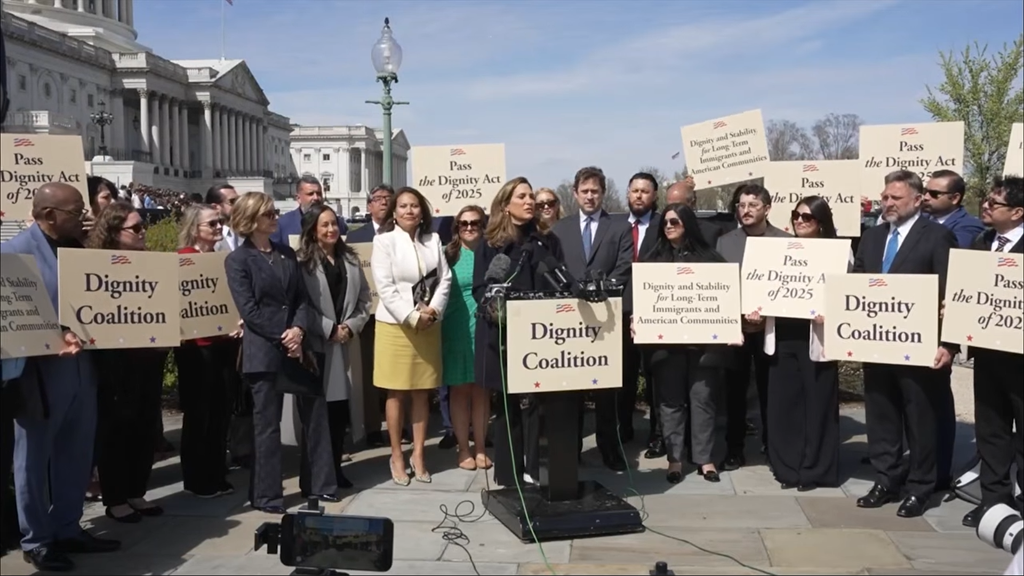
Several Republican lawmakers are promoting the DIGNIDAD (Dignity) Act, which would allow certain unauthorized immigrants to earn legal status in the United States. Critics argue that the bill amounts to amnesty and could jeopardize the GOP's prospects in the upcoming 2026 midterms.
The DIGNIDAD Act, sponsored by Reps. Maria Elvira Salazar of Florida and Mike Lawler of New York, aims to create a program that would permit long-term undocumented immigrants to live and work legally in the U.S. for seven years, contingent on good conduct and restitution. Supporters argue that the legislation is a necessary step to address the nation’s immigration challenges.
The push for the DIGNIDAD Act comes as part of a broader effort by its sponsors to rally support through a “Dignity Tour.” Salazar’s office described the initiative as a way to provide undocumented immigrants with an opportunity to earn legal status without a direct path to citizenship. However, critics within the GOP contend that this approach undermines the party's commitment to border security and immigration law enforcement.
Internal GOP Divisions
Critics of the DIGNIDAD Act assert that it represents a significant departure from the party's traditional stance on immigration. They argue that allowing unauthorized immigrants to remain in the country under any circumstances could alienate Republican voters who prioritize strict immigration enforcement.
Shawn Fleetwood, a staff writer for The Federalist, expressed concern that the bill could be politically damaging for the GOP. "It’s clear some Republicans are content with handing out amnesty to foreign lawbreakers like candy on Halloween," he wrote. Fleetwood emphasized that the party risks losing voter support if it does not adhere to its promises regarding immigration policy.
Despite the criticism, some lawmakers maintain that the DIGNIDAD Act is a pragmatic solution to a complex issue. Supporters argue that the bill addresses the realities of the current immigration landscape while offering a pathway for undocumented immigrants to contribute to society legally. However, no prominent GOP officials have publicly defended the bill in light of the backlash.
Political Stakes Ahead of Midterms
The timing of the DIGNIDAD Act's introduction is critical, as the GOP faces significant challenges heading into the 2026 midterms. Recent special elections have shown a trend of Democratic victories, raising concerns among Republicans about their ability to maintain control in Congress. In Wisconsin, Democrats expanded their majority on the state Supreme Court, while in Georgia, they performed well in a special House race.
Republicans are under pressure to deliver on their campaign promises, particularly regarding immigration reform. Many party members believe that failing to take a strong stance on border security could lead to electoral losses. Fleetwood noted that voters may punish Republicans for not effectively using their congressional majorities to advance conservative policies.
As the DIGNIDAD Act gains attention, the GOP must navigate the delicate balance between appealing to moderate voters and maintaining the support of its conservative base. The internal debate over the bill reflects broader tensions within the party regarding immigration policy and electoral strategy.
Looking Ahead
The DIGNIDAD Act's future remains uncertain as it faces scrutiny from both party members and the public. While supporters argue it is a necessary step toward comprehensive immigration reform, critics warn that it could undermine the GOP's electoral prospects. As the midterms approach, the party must address these divisions and clarify its stance on immigration to avoid potential backlash at the ballot box.
In summary, the DIGNIDAD Act represents a significant moment for the GOP as it grapples with immigration policy and its implications for the upcoming elections. The party's ability to unify around a coherent strategy will be crucial in determining its success in the 2026 midterms.