Senate Republicans are under fire for their handling of immigration funding and accountability measures related to alleged government abuses. Critics, including prominent conservative voices, argue that the GOP's inaction is undermining efforts to address what they describe as political weaponization by the Biden administration.
The core tension lies in the GOP's struggle to unify on key issues, particularly the funding for Immigration and Customs Enforcement (ICE) and the Department of Justice's controversial anti-weaponization fund. As Senate Republicans grapple with internal divisions, Democrats are reportedly benefiting from the stalemate, further complicating the legislative landscape.
Recent reports indicate that Senate Republicans have failed to advance a reconciliation bill aimed at securing $70 billion for border security and ICE operations. This inaction comes amid criticism that the GOP is inadvertently aiding Democrats in their efforts to dismantle accountability measures for government actions perceived as politically motivated.
Mollie Hemingway, editor-in-chief of The Federalist, expressed her frustration, stating, "You think the Senate GOP couldn’t be worse, but it looks like their only achievement will be to work overtime with the media and other Democrats to destroy any accountability for Democrat lawfare and censorship." Hemingway's comments reflect a growing sentiment among conservatives that the GOP is not adequately addressing their concerns.
Internal GOP Divisions
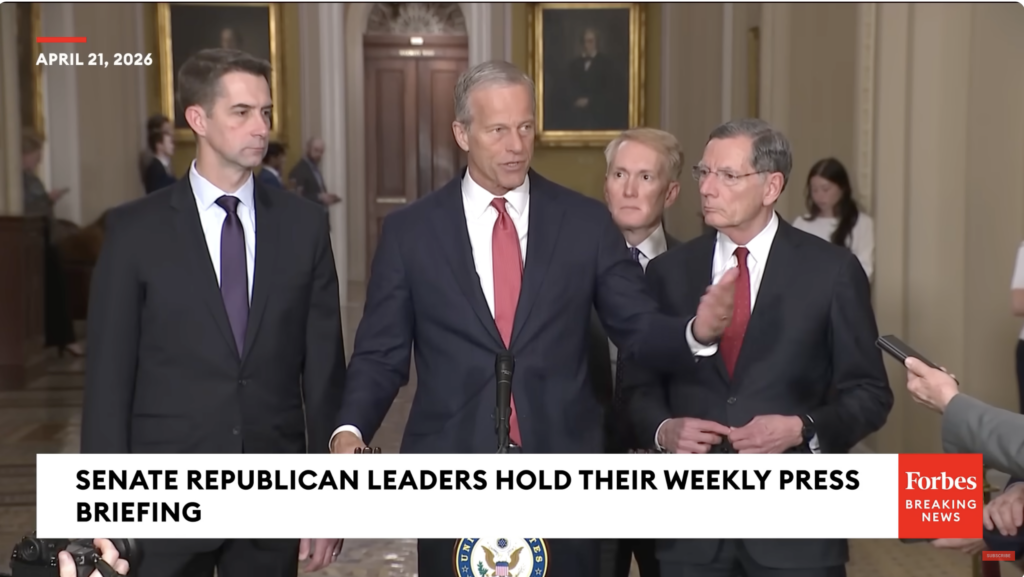
Senate Majority Leader John Thune has faced scrutiny for his leadership amid these challenges. Critics point to his decision to leave Washington for a nine-day Memorial Day weekend without resolving the immigration funding bill as indicative of a lack of urgency. Thune's office did not respond to inquiries about whether he believes accountability for victims of alleged government weaponization is necessary.
The impasse has led to frustrations among Republican senators, with some expressing doubts about the immigration bill's viability. Politico reported that enough Republican senators to block progress on the immigration bill cited unanswered questions that could hinder its advancement without a clear resolution.
The Department of Justice's recent decision to comply with a court order temporarily freezing the Trump administration's $1.776 billion anti-weaponization fund has also drawn ire from conservative lawmakers. Critics argue that this fund is essential for providing restitution to individuals they believe have been unfairly targeted by government actions.
Accountability Concerns
Supporters of the anti-weaponization fund argue that it is necessary to ensure accountability for government overreach. The fund is designed to assist individuals who have faced legal challenges or punitive actions due to their political beliefs. However, some Senate Republicans have expressed concerns about the fund's implications, particularly regarding potential payouts to individuals involved in the January 6 Capitol riots.
Senator Lisa Murkowski of Alaska voiced her skepticism, stating, "If it means it’s completely pulled, then that would satisfy me, but I haven’t heard anybody say that that is actually what is happening." Her comments highlight the uncertainty among GOP members regarding the future of the fund and its impact on broader immigration legislation.
Kyle Brosnan, general counsel for the Oversight Project, criticized Senate Republicans for their perceived hypocrisy. He noted that the same Senate majority that allowed provisions for their own legal protections has now turned against the anti-weaponization fund. Brosnan stated, "If we can't get paid for being victims of weaponization, no one can."
Broader Implications
The ongoing debate over immigration funding and accountability measures raises significant questions about the GOP's direction and priorities. As the party navigates internal divisions, the potential for legislative action on critical issues remains uncertain. The lack of a cohesive strategy may hinder the GOP's ability to address the concerns of its conservative base, particularly regarding government accountability.
As the situation unfolds, it remains to be seen whether Senate Republicans can find common ground on these contentious issues. The stakes are high, with implications for both immigration policy and the broader political landscape as the 2024 elections approach.
Critics argue that failure to act could further alienate conservative voters who expect accountability from their elected representatives. The GOP's ability to respond effectively to these challenges may ultimately shape its electoral prospects in the coming years.