Congressional Republicans and Democrats have left Washington for an extended Thanksgiving recess, departing with several major legislative priorities unresolved. As lawmakers head home, looming deadlines for government funding, defense spending, and surveillance law reauthorization remain unaddressed, raising concerns about the ability of both chambers to complete their work before the end of the session.
Explainer The SAVE America Act: Defending Election Integrity with Strong Voter Eligibility Laws
The decision to adjourn comes as Congress faces a crowded agenda and diminishing time to act before the next session begins. Among the most urgent issues are government funding, which is set to expire soon, and national security measures that require reauthorization. The Senate is not scheduled to reconvene for more than a week, according to the official 2026 Senate calendar, while the House adjourned even earlier, canceling votes that had initially been planned for the Friday before Thanksgiving.
Leadership Statements and Attendance Issues
Senate Majority Leader John Thune, who was recently reelected by his Republican colleagues, sought to reassure the public and his conference that Republicans would "make the most of the time we've got" and remain "committed to being here to do whatever it takes to get as much done as they can." Thune emphasized the importance of finishing the legislative session strong and preparing for the next Congress, the 120th.
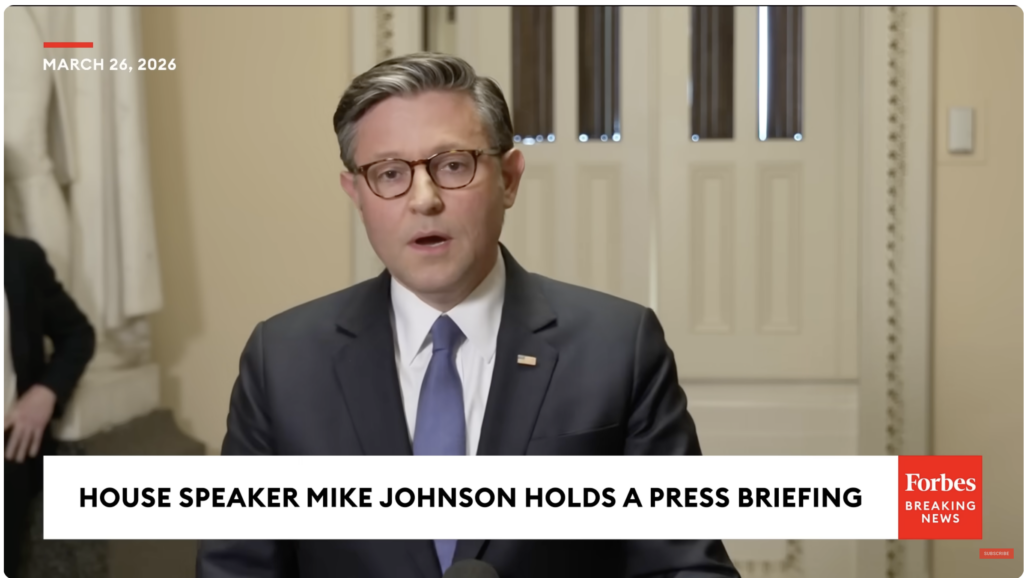
House Speaker Mike Johnson echoed the call for unity and attendance, stressing that "we must have full attendance and the support of our entire conference." Johnson noted that a key procedural rule vote had to be postponed due to absences among GOP members, and the House ultimately canceled its planned Friday voting session. According to Roll Call, 21 Republicans, 10 Democrats, and one independent missed votes during Thursday morning's session, highlighting ongoing attendance challenges.
"To state the obvious, barring any serious medical issue, we need every Republican to be here to faithfully complete our full two-year term."
— Speaker Mike Johnson, House Speaker
These attendance issues have complicated efforts to advance legislation, particularly in the closely divided House, where every vote can prove decisive. The early adjournment has fueled criticism from some members and outside observers who argue that Congress should remain in session to address the outstanding agenda.
Unfinished Legislative Business
Several significant pieces of legislation remain unresolved as Congress departs. Lawmakers have yet to reach an agreement on funding the federal government beyond the December 11 deadline, raising the prospect of a partial government shutdown if a deal is not reached in time. In addition, a $350 billion defense spending supplement is still pending, with no clear path forward.
The House has also left other issues unaddressed, including legislation related to artificial intelligence safety and the regulation of automated license plate readers. Bills aimed at restricting the use of Flock Safety cameras have stalled, and there has been little movement on related privacy concerns.
A third reconciliation bill, totaling $95 billion, passed the House in July but still awaits Senate action. This package includes $10 billion in grants to implement the SAVE America Act, $73 billion for national security, and $12 billion for farmers. Notably, the bill does not include any spending offsets and does not address the $1.4 trillion federal deficit. The Senate is expected to consider a permitting reform bill designed to lower energy costs, but any amendments would require further approval from the House.
Judicial confirmations also remain a significant item on the Senate's agenda. A backlog of judicial nominees awaits action, and if these vacancies are not filled before the end of the session, Democrats could attempt to confirm them in the next Congress, depending on the balance of power.
Political Fallout and Next Steps
The Republican-controlled House has passed the SAVE America Act, which supporters describe as election integrity legislation. However, the Senate has not yet taken up the measure, leaving its fate uncertain. Rachel Bovard, vice president of programs at the Conservative Partnership Institute, expressed skepticism about the prospects for major legislative action in the remaining days of the session. "Everyone hates the Senate. It's the one unifying force in America," Bovard said, reflecting frustration with the chamber's slow pace.
Democratic leaders have signaled that they may not support a continuing resolution to fund the government if the conflict involving Iran persists, adding another layer of complexity to the negotiations. Meanwhile, the national debt surpassed $40 trillion in August, but Congress has not advanced any measures to address the growing fiscal imbalance.
With only 11 scheduled voting days left in the House before the session concludes, time is running short for lawmakers to resolve these outstanding issues. Republican leaders have not provided details on how they plan to address the remaining items on the agenda before the December deadlines. The combination of a packed legislative calendar, attendance challenges, and partisan divisions leaves the path forward uncertain as Congress prepares to return from its Thanksgiving break.