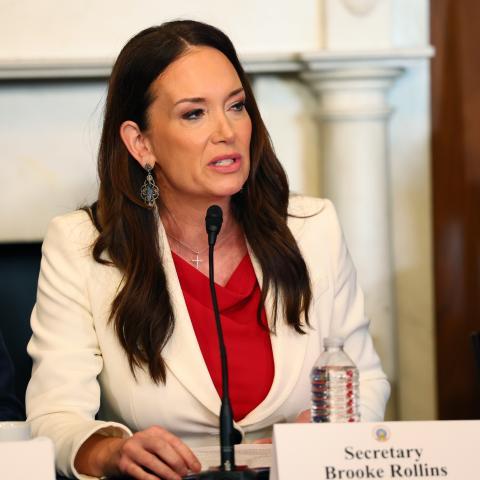
A federal district judge has issued a preliminary injunction prohibiting Agriculture Secretary Brooke Rollins from including overtly Christian messages in her official communications to agency employees.
Explainer Free Speech Battles: Navigating Rights and Censorship in Modern Society
The order, handed down Thursday by U.S. District Judge Trina L. Thompson in the Northern District of California, found that Rollins likely violated the Establishment Clause of the First Amendment. The ruling cited Rollins’ practice of sending emails containing Christian themes, references to Jesus Christ, and Bible stories on federal holidays such as Independence Day, Thanksgiving, and Easter.
Lawsuit Over Religious Content in Official Emails
The case was brought by the National Federation of Federal Employees, a union representing 11,000 federal workers. The lawsuit followed complaints from several staff members who reported feeling spiritual harm and pressure to conform to Rollins' religious views. According to the judge’s order, employees said the emails made them uncomfortable and created an environment where they felt compelled to align with the Secretary’s beliefs, even if those beliefs differed from their own.
The court documents indicate that the emails in question were sent to all agency employees and included explicit references to Christian doctrine and holidays. Some staff members stated that the persistent religious messaging created a workplace atmosphere that was not welcoming to those of different faiths or no faith at all. The union argued that such communications crossed the line from personal expression into official endorsement of a particular religion, which is prohibited by the Constitution.
Judge’s Ruling and Reasoning
Judge Thompson’s preliminary injunction requires Rollins to "recognize certain boundaries when disseminating messages which convey religious content." The injunction specifically bars Rollins from using her official authority to pressure subordinates or create a hostile work environment through persistent, unwelcome religious advances. The judge emphasized that government officials must maintain neutrality toward all religions in their official capacities, as required by the Establishment Clause of the First Amendment.
"[Rollins] must recognize certain boundaries when disseminating messages which convey religious content."
— Judge Trina L. Thompson, U.S. District Judge
The court found that while Rollins is restricted from sending religious messages in official emails, she is still permitted to discuss her faith with interested colleagues, politely invite coworkers to religious events, and express her beliefs in appropriate private conversations. The ruling clarified that the injunction does not bar all religious expression by Rollins, but limits her ability to use her official position to promote religious views in a manner that could be perceived as coercive or exclusionary.
Constitutional Context and Next Steps
The Establishment Clause of the First Amendment prohibits government officials from endorsing or advancing any particular religion in their official roles. Judge Thompson noted in her ruling that the preliminary injunction is a temporary measure, intended to prevent further potential violations while the lawsuit proceeds through the courts.
The Department of Agriculture and Secretary Rollins have not publicly responded to the ruling or addressed the employees’ concerns, according to court documents. It remains unclear whether the agency will appeal the injunction or change its internal policies regarding official communications.
The next steps in the case will depend on further proceedings in the U.S. District Court for the Northern District of California. The court will consider additional evidence and arguments before issuing a final decision on whether Rollins’ actions constituted a violation of the Establishment Clause.
The full text of Judge Thompson’s order is available here.