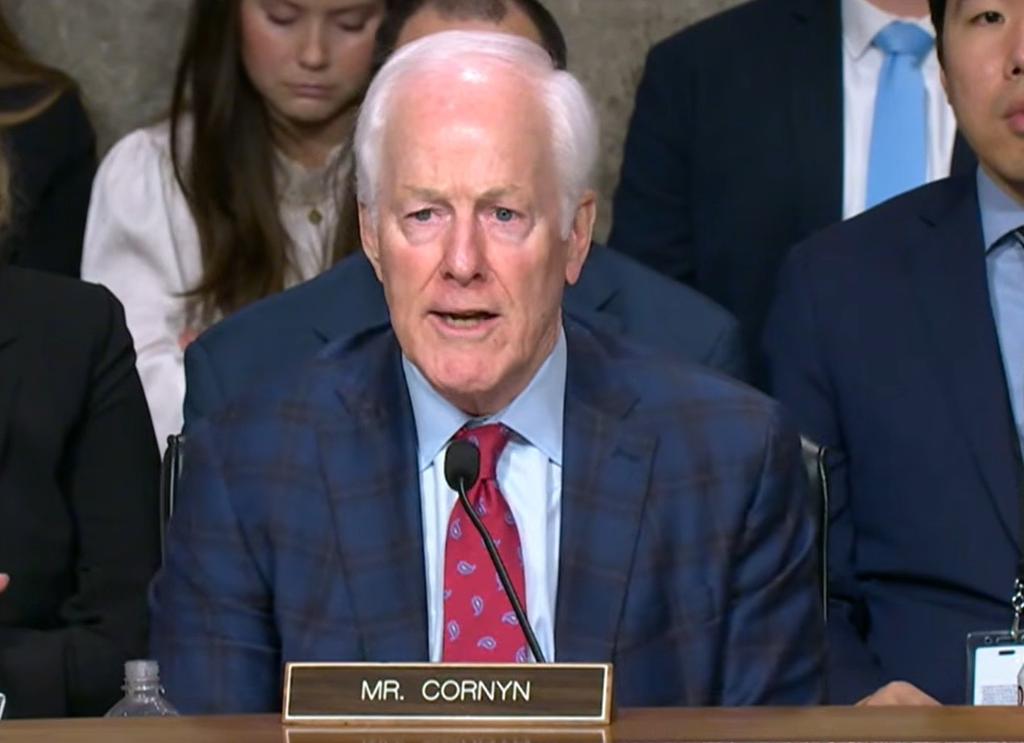
Sen. John Cornyn, R-Texas, has privately urged Senate Democrats to oppose Rep. Wesley Hunt’s nomination as U.S. ambassador to Saudi Arabia, according to multiple Senate sources familiar with the matter. Cornyn, who is leaving office after losing his primary race, has been the only Republican on the Senate Foreign Relations Committee not to support Hunt’s advancement to a full Senate vote.
The move has created friction within the Republican caucus, as most GOP committee members back Hunt and view him as qualified for the diplomatic post. The nomination, announced by President Donald Trump on September 14, has become a focal point for both personal and political tensions within the Senate.
Hunt, a Houston native and Army veteran, was nominated following a career that includes three military tours in the Middle East—one as an Apache helicopter pilot in Iraq and two as a diplomatic liaison officer in Saudi Arabia. Hunt has served as a U.S. Congressman since 2023 and sits on the House Natural Resources and Judiciary Committees, according to his official biography. His supporters highlight his military and diplomatic experience as key qualifications for the ambassadorial role.
Cornyn’s Opposition and Lobbying Efforts
Cornyn informed committee Chairman James Risch, R-Idaho, on November 7 that he would not support Hunt’s nomination. By November 10, Cornyn began lobbying Senate Democrats, including Chris Coons, D-Del., Jeanne Shaheen, D-N.H., and Tim Kaine, D-Va., to oppose Hunt, according to Senate Foreign Relations Committee sources. Cornyn also attempted to persuade Republicans John Curtis, R-Utah, and Steve Daines, R-Mont., but was reportedly met with resistance from his GOP colleagues.
A committee source told The Federalist that Cornyn’s efforts were designed to ensure that no Democrat could offset his opposition, effectively stalling the nomination in committee. On November 18, Chairman Risch announced that Hunt’s nomination was being held over by a senator until December 1, delaying any potential committee vote or advancement to the full Senate.
Cornyn’s lobbying has drawn attention both for its unusual nature and for the impact it could have on the nomination process. Typically, committee members work within their own parties to build consensus, but Cornyn’s outreach to Democrats has been described by sources as an attempt to block Hunt’s nomination through bipartisan opposition.
Personal and Political Tensions
Committee sources attribute Cornyn’s opposition to lingering animosity from a recent primary contest in which Hunt challenged Cornyn for his Senate seat. Both ultimately lost to Texas Attorney General Ken Paxton. The primary battle, which was marked by sharp rhetoric and policy disagreements, appears to have left personal and political tensions between the two Texas Republicans.
During a November 10 confirmation hearing, Sen. Shaheen questioned Hunt about comments he made during the campaign, reportedly at Cornyn’s urging. This line of questioning underscored the personal nature of the dispute, as well as the broader political dynamics at play within the committee.
"Cornyn has gone to all the Democrats and has whipped them and asked them to vote against Hunt, and every other Republican on the committee is like, 'This is crazy. Wesley’s qualified.'"
— Senate Foreign Relations Committee source
Cornyn’s office did not respond to requests for comment from The Federalist by the stated deadline. Committee sources described Cornyn’s actions as a personal vendetta, with one stating, “This is more just being vindictive, and sour grapes, and an angry old man as he’s being escorted out the building.”
Hunt’s Qualifications and Support
Hunt’s supporters point to his military experience and prior diplomatic work in Saudi Arabia as evidence of his suitability for the ambassador post. Hunt graduated from West Point, served eight years in the Army, and completed advanced degrees at Cornell University. He was appointed to the United States Military Academy Board of Visitors by President Trump in 2025. Sen. Ted Cruz, R-Texas, who introduced Hunt to the committee, has voiced support for his nomination.
Committee sources argue that Cornyn’s stated criteria for opposing other nominees—such as lack of Texas ties—do not apply to Hunt, who was born and raised in Houston. Critics within the committee say the opposition appears to be driven by personal motives rather than qualifications.
Cornyn’s office has not publicly addressed the specific allegations regarding his lobbying efforts or his reasons for opposing Hunt’s nomination. The lack of official comment has left other committee members and observers speculating about the true motivations behind Cornyn’s stance.
As the nomination remains stalled in committee, the episode highlights the complex interplay of personal rivalries and political strategy that can influence high-profile diplomatic appointments. Hunt’s supporters continue to advocate for his confirmation, emphasizing his service record and experience in the region, while Cornyn’s opposition underscores the challenges nominees can face even from within their own party.