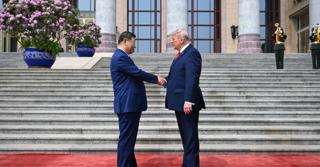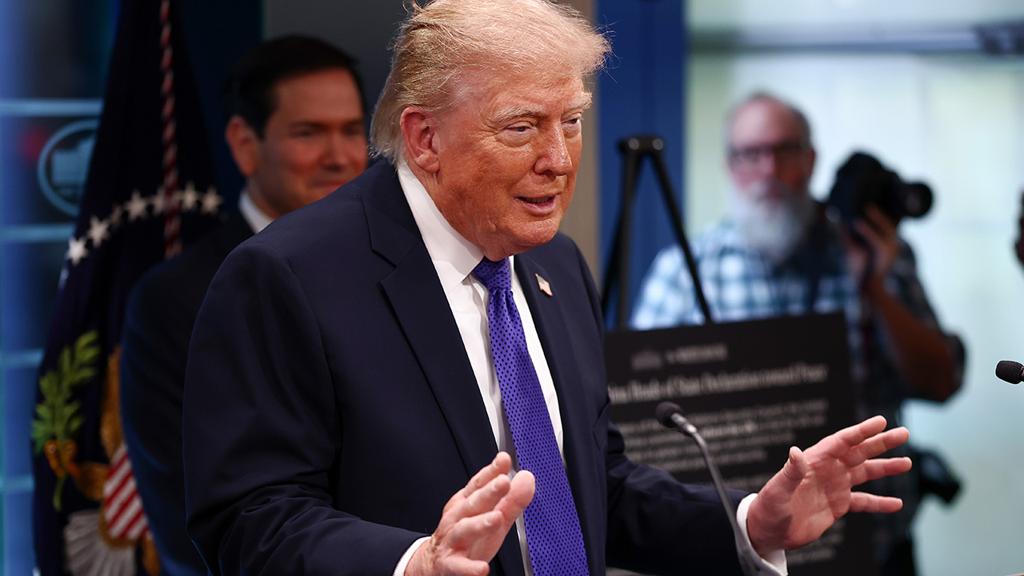
President Donald Trump announced this week that he and Chinese President Xi Jinping have reached an agreement to establish "joint guardrails" on artificial intelligence (AI) following a series of meetings in China. The announcement marks a notable moment of cooperation between the United States and China, two countries that have often found themselves at odds over technology policy and global influence.
Explainer Understanding China’s Strategic Role in Global Politics and U.S. Relations
The agreement comes as both nations compete for leadership in the rapidly advancing field of AI. Trump described the United States and China as the clear frontrunners in what he referred to as the race for "superintelligence," or "SI," a term he said he prefers over the more commonly used "AI." Speaking at a press conference on Friday, Trump stated, "There really is no third place, and we are leading, and they're second, and there's nobody even close after that. I don't think there ever will be. But whoever wins [superintelligence] wins. Remember that. Whoever wins SI wins."
Joint AI Guardrails with China
According to Trump, the two leaders agreed to set up mechanisms designed to manage the risks associated with artificial intelligence. While the specific details of these joint guardrails were not disclosed, the move signals a willingness by both governments to coordinate on issues of AI safety and oversight. Trump also noted that Xi Jinping supports the use of the term "SI" to describe the advanced capabilities of the technology, suggesting a shared understanding of the stakes involved.
The establishment of joint guardrails is significant given the broader context of U.S.-China relations. In recent years, both countries have invested heavily in AI research and development, viewing the technology as central to future economic growth, national security, and global influence. The agreement to collaborate on managing AI risks indicates a recognition by both sides of the potential dangers posed by unchecked advances in the field, including concerns about misuse, unintended consequences, and the broader impact on society.
U.S. Data Center Policy
During the same press conference, Trump addressed the issue of data center policy, emphasizing the importance of keeping data centers within the United States. He warned that U.S. companies would face a "tremendous tax" if they attempted to build data centers abroad, stating, "We're not going to allow our companies to build data centers outside of our country. We're not going to allow that to happen."
Trump urged local communities to take advantage of the economic opportunities presented by hosting data centers. "Make them pay your community, but take advantage. Don't shut them off. And there's always somebody else in this country. But if it's not this country, there's somebody else outside," he said. He pointed to areas near Loudoun County as examples of regions that have benefited financially from the presence of data centers, noting, "They're making so much money they don't know what to do with it. And you're going to make a lot of money."
The emphasis on domestic data centers aligns with the administration’s broader focus on national security and ensuring that the economic benefits of technological infrastructure remain within the United States. By discouraging the construction of data centers abroad, the administration aims to keep sensitive data on U.S. soil and support local economies.
Cybersecurity Director Dismissal
Trump also addressed his recent decision to dismiss cybersecurity director Sean Cairncross, who was fired on Thursday. Trump said Cairncross "wasn't good enough," but did not elaborate on the specific reasons for the dismissal. No additional comments were provided by Cairncross or the White House at the time of the announcement.
The removal of the cybersecurity director comes at a time when concerns about digital security and the protection of critical infrastructure are heightened, particularly as AI systems become more integrated into government and private sector operations.
Context and Broader Stakes
The agreement between Trump and Xi Jinping to establish joint guardrails on artificial intelligence comes amid a high-stakes competition between the U.S. and China for technological supremacy. Both countries have made significant investments in AI, recognizing its potential to transform industries, reshape economies, and influence global power dynamics.
The move to coordinate on AI safety reflects growing concerns about the risks posed by advanced AI systems, including ethical challenges, security vulnerabilities, and the potential for unintended consequences. By seeking to manage these risks together, the U.S. and China are acknowledging the global nature of AI’s impact and the need for international cooperation, even as they continue to compete in other areas.
Trump’s push to keep data centers within the United States further underscores the administration’s focus on national security and economic benefits for American communities. The policy is intended to ensure that the infrastructure supporting AI and other digital technologies remains under U.S. control, while also providing economic opportunities for local regions.
As both countries move forward with their respective AI strategies, the establishment of joint guardrails may serve as a foundation for further dialogue and cooperation on technology governance. However, the lack of specific details about the mechanisms and enforcement of these guardrails leaves questions about how the agreement will be implemented in practice.
The developments this week highlight the complex interplay between competition and cooperation in the global technology landscape, as well as the challenges governments face in balancing innovation, security, and economic interests.