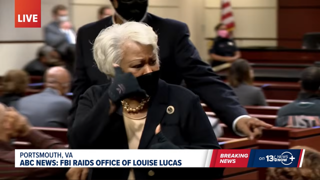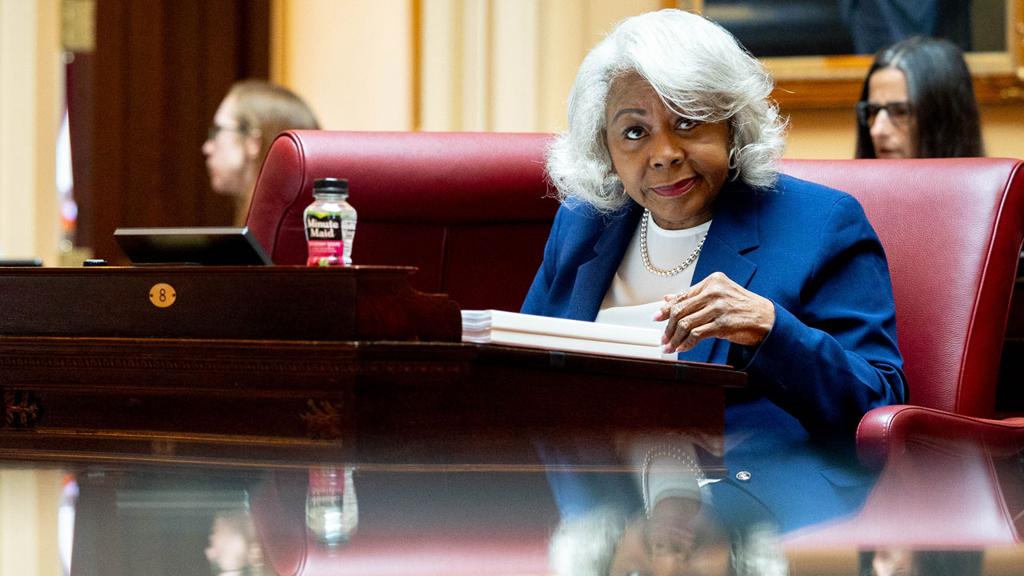
Virginia State Sen. L. Louise Lucas, a Democrat and president pro tempore of the Senate, pleaded not guilty this week to five federal charges, including racketeering conspiracy, conspiracy to distribute marijuana, and conspiracy to launder money. The charges come as Lucas begins her campaign for reelection, casting uncertainty over her political future and setting the stage for a high-profile legal and electoral battle.
Lucas, who has served in the Virginia Senate for 34 years, now faces a September trial date. This means that jurors will be weighing evidence against her at the same time voters are deciding whether to return her to office. The overlap of her trial and campaign is likely to keep her case in the public eye throughout the election season, with both supporters and opponents closely watching developments.
The L. Louise Lucas Legal Defense Fund has reported raising more than $36,000 since May to support her legal team. In an effort to rally public support, the group hosted a virtual town hall this week, allowing Lucas to address her constituents and answer questions about the charges and her defense. The event was part of a broader effort by her campaign and supporters to counter the negative publicity surrounding the indictment and to maintain momentum heading into the election.
Federal Charges and Legal Response
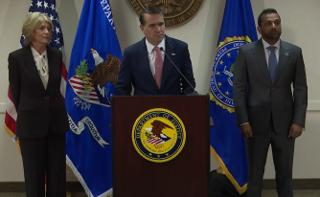
According to the indictment, Lucas is accused of accumulating nearly $5 million in illicit gains through what federal authorities describe as a criminal enterprise. FBI Director Kash Patel announced the charges, stating that the investigation uncovered a complex scheme involving racketeering, drug distribution, and money laundering. When asked for further documentation, the FBI referred inquiries to its press release and the indictment, declining to provide additional comment.
Lucas’s attorneys have responded aggressively to the charges. They have filed a motion asking a federal judge to sanction Attorney General Todd Blanche and FBI Director Patel for public comments made during the announcement of the indictment. Her legal team argues that these statements could prejudice potential jurors and threaten Lucas’s right to a fair trial. In their filing, they wrote, “The Court should sanction these violations and enter curative relief to protect Senator Lucas’s right to a fair trial by an impartial jury and to deter such conduct in the future.”
The legal team’s strategy appears to be twofold: contesting the substance of the charges while also challenging the conduct of federal officials involved in the case. The outcome of their motion could influence how the trial proceeds and whether further public statements by prosecutors or investigators will be permitted.
Political Fallout in Richmond
The indictment has triggered swift political maneuvering in Richmond, where Lucas is a prominent figure in the Democratic caucus. Republican Sen. Bryce Reeves has pre-filed Resolution No. 173, seeking Lucas’s expulsion from the Senate under Article IV, Section 7 of the Virginia Constitution. Reeves explained his position on social media, stating, “Let me be clear: the Senator is innocent until proven guilty, just like anybody else. The Senate of Virginia retains independent constitutional authority to investigate conduct that could be a breach of Senate rules.”
The resolution, if adopted, would set a significant precedent in the Virginia Senate, as expulsion of a sitting member is rare and typically reserved for the most serious offenses. Reeves’s move has sparked debate among lawmakers about the appropriate response to criminal charges against a sitting senator, especially in the absence of a conviction.
Democratic Sen. Mamie Locke, a close ally of Lucas, has spoken out against the expulsion effort. Locke warned that such a move would set a troubling precedent, saying, “It would be an awful precedent for us to take up a resolution against an individual who is presumed innocent.” She also raised concerns about the broader implications for Black women in politics, noting, “Why is it that so many powerful Black women who challenge political power find themselves having to defend not only their ideas, but their offices, their reputations, their careers and sometimes their very freedom?”
The debate over Lucas’s future in the Senate is expected to intensify as the trial date approaches and as the expulsion resolution is formally introduced. The resolution is scheduled to be considered in January, ensuring that the issue will remain at the forefront of legislative business in the coming months.
Calls for Further Investigation
The case has also prompted calls for additional investigation at the state level. Former Virginia Attorney General Jason Miyares, a Republican, has urged Governor Abigail Spanberger to launch a state-level probe into Lucas’s alleged activities. In a letter to the governor, Miyares questioned how “one of the most powerful people in state government allegedly was running a drug operation outside of the General Assembly, hundreds of thousands of dollars of cash being brought into the General Assembly, a cannabis control authority that allegedly was in collusion with her and the number of legislators that were quite aware.”
Miyares’s call for a state investigation adds another layer of scrutiny to the case, raising questions about oversight and accountability within the General Assembly. It also reflects the broader political stakes, as both parties seek to shape public perception of the charges and their implications for state government.
Meanwhile, Lucas’s legal team continues to contest the federal charges and challenge the conduct of officials involved in the case. The outcome of the trial, as well as the Senate’s response to the expulsion resolution, will likely have lasting effects on Virginia politics and on the standards by which elected officials are judged when facing serious legal allegations.
As the September trial date approaches, Lucas’s case is expected to remain a major topic of discussion in both legal and political circles. The intersection of her legal battle and reelection campaign ensures that the coming months will be pivotal for her career and for the broader debate over ethics and accountability in Virginia’s government.