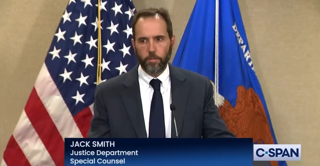
Special Counsel Jack Smith subpoenaed and obtained bank records belonging to former Trump Justice Department official Jeff Clark and his family, according to whistleblower disclosures first reported by The Daily Signal and detailed in documents obtained by Sen. Chuck Grassley, R-Iowa.
Explainer Jack Smith’s Role in the Trump Investigations: Law, Politics, and Controversy
The move expands scrutiny of Smith’s investigation into President Trump’s election challenges, raising questions about the breadth of financial data collected from Republican officials and their associates. The disclosures indicate Smith’s team acquired financial records for Clark, who served as assistant attorney general during President Trump’s first term, as well as records from his wife and children. The records included information dating back several years before the 2020 election, such as a 2017 mortgage and purchases at grocery stores and other retailers, including a Nintendo payment made by Clark’s son.
Details of the Subpoenas
According to The Daily Signal, the subpoenas issued by Smith’s team requested extensive information from financial institutions. The requests covered certificates of deposit, account statements, payment details, and documents related to both open and closed credit card accounts. They also sought information on mortgage loans, bank checks, and documents pertaining to current or expired safe deposit box rentals, among other items. PNC Bank, American Express, and other named institutions reportedly complied at least in part with the subpoenas.
PNC Bank described the subpoena for Clark’s financial records as “overly burdensome, harassing, costly, overly broad” and “irrelevant to the claims/defenses at issue in the action,” according to the report. The bank’s response highlights concerns among some financial institutions about the scope and relevance of the information requested by the special counsel’s office.
"The subpoenas asked for wide swaths of information such as certificates of deposit, ‘statements, payment details, and documents pertaining to open or closed credit card accounts’; mortgage loans; bank checks; and ‘documents pertaining to current or expired safe deposit box rentals,’ among other items."
— The Daily Signal report
Clark and his wife reportedly have a joint account, and their children, when minors, also spent from the account. The records obtained by Smith’s team included these family transactions, meaning that the financial activity of Clark’s immediate family was swept up in the inquiry. The records covered not only Clark’s own transactions but also those of his wife and children, reflecting a broad approach to the collection of financial data.
Other Targets and Broader Scope
The report also states that Smith’s office subpoenaed financial information from entities connected to John Eastman, a Claremont Institute senior fellow and Trump’s personal attorney during the 2020 election. Both Clark and Eastman are facing efforts to revoke their law licenses for legal advice given to Trump during election challenges. The inclusion of Eastman and related entities in the subpoenas suggests that the special counsel’s investigation is not limited to a single individual but encompasses a wider circle of Trump associates who played roles in the post-election period.
A month prior to these disclosures, Grassley’s office revealed that Smith’s team had seized data from nearly 639,000 Republican voters and donors as part of the same investigation. Additional disclosures showed the special counsel obtained payroll data from the Conservative Partnership Institute, nearly 5,000 checks written by Trump donors, and congressional Republicans’ phone records. These actions demonstrate the broad scope of the investigation, which has reached into the financial and personal data of a large number of individuals and organizations connected to Republican causes and the Trump administration.
Response and Context
The scope of Smith’s subpoenas has drawn criticism from those targeted and from some financial institutions. Critics have argued that the requests are overly broad and sweep up information unrelated to the investigation’s stated purpose. However, Smith’s office has not publicly addressed the concerns raised about the breadth of the records obtained, and it remains unclear how much of the collected data is directly relevant to the investigation’s core issues.
The investigation into President Trump’s election challenges has led to the collection of extensive personal and financial data from individuals associated with the former administration and Republican causes. The breadth of the subpoenas and the inclusion of family members’ financial records have raised questions about the limits of investigative authority and the privacy of those swept up in the inquiry. The details of the records obtained and the scope of the subpoenas are documented in records obtained by Sen. Grassley.
As the investigation continues, scrutiny of the special counsel’s methods and the impact on those targeted is likely to persist, with lawmakers and outside observers watching closely for further developments.