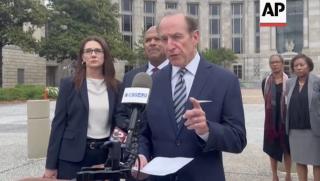
A federal judge has issued a final ruling in favor of Indiana, upholding the state's law that bans gender-transition procedures—including surgeries, hormone therapies, and puberty blockers—for individuals under 18. This decision brings to a close a legal battle that has lasted more than three years, following a challenge by the American Civil Liberties Union (ACLU) against the law.
Explainer Redistricting Battles: How Maps Shape American Political Power
The ruling is seen as a significant victory for state officials who argue that the law is necessary to protect children from what they describe as irreversible and potentially harmful medical interventions. Opponents, however, maintain that the law infringes on medical rights, personal freedoms, and the ability of families and physicians to make healthcare decisions for transgender youth.
The law in question, known as Senate Enrolled Act 480, was passed by the Indiana General Assembly and signed into law by then-Governor Eric Holcomb in 2023. The statute prohibits physicians and other healthcare practitioners from providing gender-transition procedures to minors, including prescribing puberty blockers, administering cross-sex hormones, or performing gender-affirming surgeries. After the law was enacted, the ACLU filed a lawsuit in federal court, arguing that the statute was unconstitutional and should be blocked from taking effect.
Initially, a lower federal court agreed with the ACLU and issued a temporary injunction, preventing the law from being enforced while the legal challenge proceeded. However, Indiana Attorney General Todd Rokita appealed the decision, and the case was taken up by the Seventh Circuit Court of Appeals. In November 2024, the appellate court reversed the lower court's ruling and determined that the law does not violate the Constitution. The court's decision allowed the law to take effect while the legal process continued.
Following the Seventh Circuit's ruling, the ACLU decided not to pursue further legal action. On Friday, U.S. District Judge James Patrick Hanlon entered a final judgment in favor of the state, dismissing the ACLU's claims with prejudice. This means the claims cannot be refiled, effectively ending the legal dispute over Senate Enrolled Act 480.
Judge’s Final Order
Judge Hanlon, who was appointed to the federal bench by President Donald Trump, issued a brief order entering final judgment for Indiana. The order follows the Seventh Circuit's November 2024 decision, which found that the law is constitutional and does not violate the rights of minors or their families. With the ACLU withdrawing its challenge, the court's final judgment formally closes the case.
Attorney General Todd Rokita welcomed the outcome, stating that his office would continue to "stand between our children and those who would sacrifice their health, innocence, and well-being on the altar of woke gender ideology."
"We have won this critical fight against radicals who would otherwise impose this horrific practice on our kids for ideological and financial reasons."
— Todd Rokita, Indiana Attorney General
The Attorney General's office described the ruling as a "massive win" and emphasized its commitment to enforcing the law and defending it against any future legal challenges.
Legal and Policy Context
The Indiana case is part of a broader national debate over the use of medical interventions for minors experiencing gender dysphoria. In recent years, more than half of U.S. states have enacted laws restricting or banning gender-transition procedures for children. These laws vary in scope but generally prohibit the use of puberty blockers, cross-sex hormones, and surgeries for individuals under 18.
Supporters of such laws argue that they are necessary to protect children from making irreversible medical decisions at a young age. They cite concerns about the long-term effects of puberty blockers and cross-sex hormones, including the potential for infertility, loss of bone density, and other health risks. Proponents also argue that children and adolescents may not be mature enough to fully understand the consequences of these treatments.
Critics, including the ACLU and many medical organizations, argue that these laws deny necessary and sometimes life-saving medical care to transgender youth. They contend that decisions about gender-affirming care should be made by families in consultation with qualified healthcare providers, rather than being dictated by state law. Opponents also argue that such bans infringe on the rights of parents and physicians, and may contribute to increased mental health risks for transgender minors.
The legal landscape surrounding these laws has been evolving. In 2025, the U.S. Supreme Court upheld similar state laws in its decision in U.S. v. Skrmetti. Writing for the majority, Chief Justice John Roberts stated that such statutes do not violate the 14th Amendment and that questions of policy should be left to elected representatives at the state level. This decision has provided legal support for states like Indiana that have enacted restrictions on gender-transition procedures for minors.
What Comes Next
With the federal court's final judgment, Indiana's ban on gender-transition procedures for minors remains in full effect. State officials have indicated that they will continue to defend the law against any future legal challenges. The outcome in Indiana may also influence ongoing legal and legislative battles over similar statutes in other states, as courts and lawmakers across the country continue to grapple with the issue.
No further appeals are pending in the Indiana case, and the ACLU has not issued a new statement following the final judgment. The state's Attorney General's office has reaffirmed its commitment to enforcing the law and described the ruling as a decisive victory for those who support restrictions on gender-transition procedures for minors.
The broader national debate over gender-affirming care for minors is likely to continue, as advocates on both sides of the issue seek to shape policy and public opinion. For now, Indiana's law stands as one of the more prominent examples of state-level action on this contentious issue.