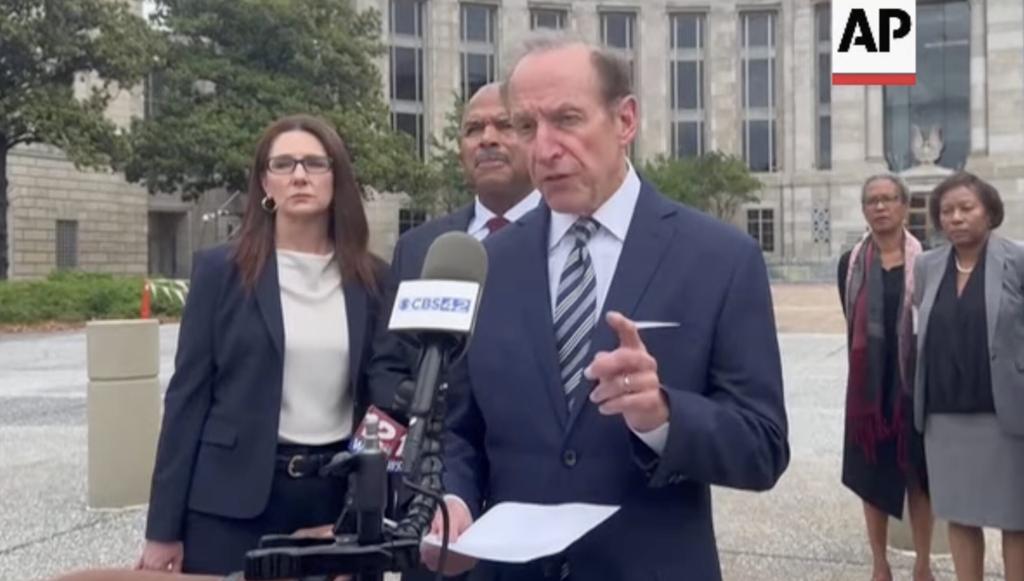
A federal judge in Alabama has denied the Southern Poverty Law Center’s (SPLC) motion to dismiss a federal indictment charging the organization with wire fraud, false statements to banks, and conspiracy to commit money laundering. The ruling, issued Friday, clears the way for a jury trial scheduled for October 5 and intensifies scrutiny of the SPLC, a prominent civil rights organization known for tracking hate groups and advocating against extremism.
Explainer The Voting Rights Act: Judicial Battles Over Race and Redistricting
The SPLC was indicted in April after a federal grand jury in Montgomery charged the group with 11 counts, including wire fraud and conspiracy to commit concealment money laundering. According to the Department of Justice, between 2014 and 2023, the SPLC allegedly directed more than $3 million in donor funds to individuals associated with groups such as the Ku Klux Klan, Aryan Nations, and National Socialist Party of America. Prosecutors allege the SPLC used fake business accounts to pay informants and purchase items like Klan robes and crosses, disguising the nature of the transactions. The U.S. Attorney’s Office for the Middle District of Alabama has also filed two forfeiture actions seeking to recover what it claims are proceeds of the alleged fraud.
The SPLC has denied any wrongdoing, asserting that the charges are an attempt to undermine its mission and reputation. The organization claims the prosecution is politically motivated, pointing to its long history of anti-racist advocacy and its frequent criticism by extremist groups and some political figures. The case has drawn national attention, with supporters and critics debating both the legitimacy of the charges and the motivations behind the prosecution.
Judge Marks’ Ruling
District Court Judge Emily Marks rejected the SPLC’s argument that the indictment was the result of vindictive prosecution. In her written opinion, Judge Marks criticized the legal filings for relying on “heated rhetoric, better suited for cable news, or a podcast,” and found that the SPLC “has failed to offer some evidence tending to show animus on the part of the prosecutors involved in bringing this case.”
"The parties’ briefing is, like much of our modern political discourse, heavy on heated rhetoric, better suited for cable news, or a podcast. It emphasizes noise over substance."
— Judge Emily Marks, U.S. District Court
The SPLC’s legal team, led by attorney Abbe Lowell, had argued that the indictment was politically motivated and part of a campaign by opponents of the organization’s anti-racist work. Several activist groups filed amicus briefs in support of the SPLC, echoing claims of political targeting. However, Judge Marks found the defense’s arguments unpersuasive, stating that the filings did not present sufficient evidence of prosecutorial bias or improper motivation.
The ruling means the case will proceed to trial, where the substantive allegations against the SPLC will be addressed before a jury. The court’s decision leaves open the possibility for the defense to raise other legal arguments as the case moves forward, but it firmly rejected the claim that the prosecution was brought in bad faith or for improper reasons.
Allegations and Defense
The Department of Justice alleges that the SPLC engaged in a scheme to mislead banks and donors, creating accounts for fictitious businesses to disguise payments to informants and fund purchases associated with extremist groups. According to the indictment, these actions were intended to conceal the true nature of the transactions and the recipients of the funds. Prosecutors claim that the SPLC’s conduct amounted to a deliberate effort to circumvent financial regulations and deceive both financial institutions and its own donors.
The SPLC, for its part, maintains its innocence. Attorney Abbe Lowell has characterized the prosecution as a politically charged attack, arguing that the charges are an attempt to silence the organization and damage its reputation. The SPLC’s public response has focused on claims of victimization, with the organization stating that it will continue to defend its mission and fight the charges in court. Despite these assertions, the court’s ruling leaves the substantive allegations to be addressed at trial, rather than dismissed on procedural or constitutional grounds.
Broader Context and Next Steps
The SPLC, headquartered in Montgomery, Alabama, has been a prominent voice in civil rights advocacy for decades, particularly in tracking hate groups and litigating against discrimination. The current case represents one of the most serious legal challenges the organization has faced in its history. The indictment and the upcoming trial have drawn widespread attention, with supporters arguing that the SPLC is being targeted for its work, while critics contend that the charges raise serious questions about the organization’s financial practices.
The scheduled jury trial on October 5 will be the next major development in the case. The Department of Justice and the U.S. Attorney’s Office have not commented further on the ongoing proceedings. The SPLC and its attorneys continue to deny wrongdoing and have not indicated whether they will pursue additional pre-trial motions. As the trial date approaches, both sides are expected to intensify their legal and public relations efforts, with the outcome likely to have significant implications for the SPLC’s operations and public standing.
The case remains closely watched by legal observers, advocacy groups, and the broader public, as it raises questions about the intersection of nonprofit advocacy, financial transparency, and the potential for political motivations in high-profile prosecutions.