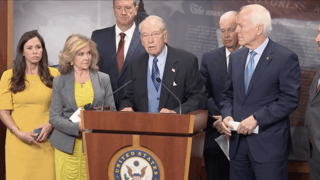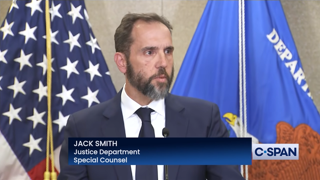
Sen. Marsha Blackburn, R-Tenn., has filed a federal lawsuit against former Special Counsel Jack Smith, alleging that Smith unlawfully obtained her cell phone records during the Arctic Frost investigation and that his appointment as special counsel was unconstitutional. The suit, filed in the U.S. District Court for the Middle District of Tennessee, raises significant questions about the boundaries of executive investigative power, congressional oversight, and the protection of legislative communications from federal probes.
Blackburn’s complaint asserts that Smith violated her constitutional and civil rights by subpoenaing her phone toll records without proper disclosure or notification, and by securing a nondisclosure order that prevented her carrier from alerting her to the subpoena. The senator is represented by the New Civil Liberties Alliance (NCLA), which argues that Smith’s actions infringed on her First Amendment rights, the Constitution’s Speech or Debate Clause, and her Fourth Amendment protections against unreasonable searches and seizures.
"This lawsuit is solely about holding Mr. Smith accountable and ensuring that our nation’s justice system can never again be weaponized against the American people."
— Sen. Marsha Blackburn, R-Tenn.
Allegations Against Smith’s Conduct
According to the complaint and statements from NCLA, Smith’s team sought and obtained a nondisclosure order from a federal court while withholding from the judge that the subpoena targeted a sitting U.S. senator. NCLA Senior Litigation Counsel Caitlin Moyna said Smith "conspired to violate Senator Blackburn’s Speech or Debate rights, First Amendment right of association, [and] Fourth Amendment right to be free from unreasonable searches and seizures."
The lawsuit further claims that Smith’s appointment as special counsel was unlawful because he was neither nominated by the president nor confirmed by the Senate, and was not serving in any governmental role at the time. NCLA President Mark Chenoweth noted that Smith previously served as a U.S. attorney in Tennessee and maintained a residence there during the events in question, but argues this did not legitimize his appointment or actions.
The complaint seeks a court declaration that both Smith’s appointment and the subpoena of Blackburn’s records were unlawful. Blackburn also requests injunctions requiring Smith to destroy any legislative materials in his possession and for the Justice Department to return and redact her toll records. The suit contends that these steps are necessary to protect the constitutional separation of powers and the independence of the legislative branch.
Scope of Arctic Frost Subpoenas
The Arctic Frost investigation, launched in 2022, has come under scrutiny from Republican lawmakers and civil liberties advocates, who argue it was used to pursue political opponents. Senate Judiciary Committee Chair Chuck Grassley, R-Iowa, revealed that Smith’s team obtained toll records for about 20 current or former Republican members of Congress, as well as communications from more than a dozen media outlets, including The Federalist. Grassley’s oversight identified 84 subpoenas sent to major telecom companies, with ten specifically requesting records of Republican lawmakers.
Grassley and Sen. Ron Johnson, R-Wis., are leading hearings on the matter, scrutinizing both the conduct of telecom companies and the breadth of the Arctic Frost investigation. Grassley’s statement described the probe as politically motivated and raised concerns about the targeting of Trump donors and conservative organizations. The scale of the subpoenas and the secrecy surrounding them have fueled debate over the appropriate limits of federal investigative authority, particularly when it involves members of Congress.
The Department of Justice and Jack Smith have not publicly responded to the specific allegations in Blackburn’s lawsuit. However, the controversy has intensified calls from some lawmakers for greater transparency and oversight of federal investigations that intersect with legislative activities.
Legal and Political Stakes
The NCLA’s complaint cites D.C. Circuit precedent that the Speech or Debate Clause provides absolute protection for legislative communications from compelled disclosure. Despite warnings from the DOJ’s Public Integrity Section, Smith’s office proceeded with the subpoenas, reasoning that the litigation risk was minimal. Smith has testified before Congress that he approved the subpoenas and understood that the nondisclosure orders meant members of Congress would not have the opportunity to challenge them on constitutional grounds.
Blackburn’s case is part of a broader push by congressional Republicans to challenge what they describe as the weaponization of federal investigations against political opponents. The outcome of the lawsuit could set new boundaries for how federal investigators interact with members of Congress and handle sensitive legislative materials. Legal experts note that the case could have implications for the balance of power between the executive and legislative branches, particularly regarding the protection of congressional communications from executive branch scrutiny.
The court has not yet set a hearing date for the case. As the legal process unfolds, the dispute is expected to remain a focal point in ongoing debates over congressional immunity, the scope of federal investigative powers, and the oversight of special counsels. Lawmakers and civil liberties groups are closely watching the case for its potential to shape future interactions between Congress and federal law enforcement.