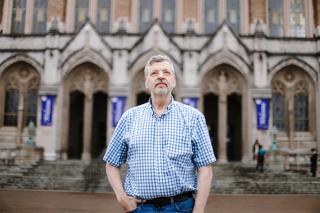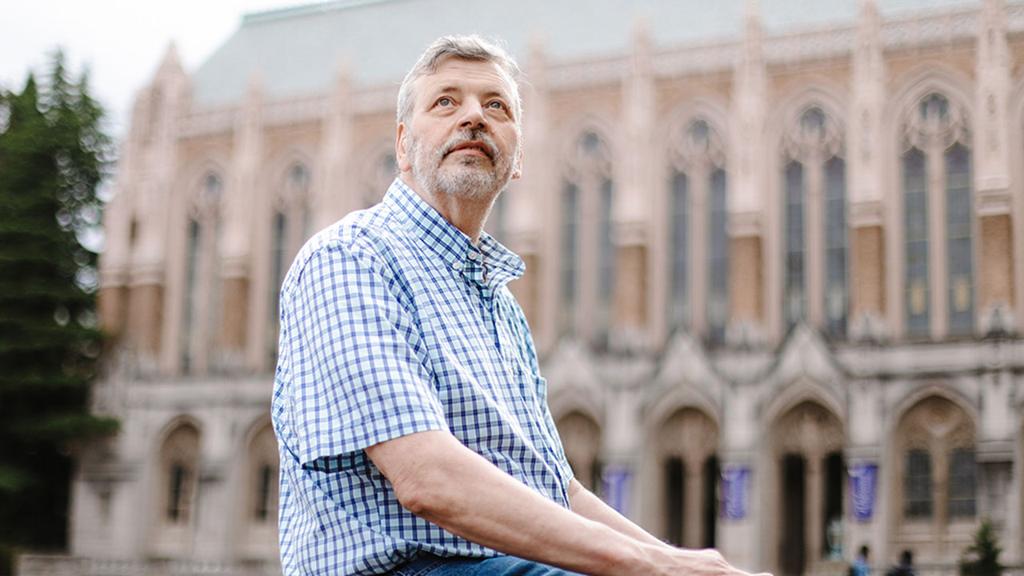
The University of Washington has agreed to pay $600,000 to settle a First Amendment lawsuit brought by computer science professor Stuart Reges, after the U.S. Court of Appeals for the 9th Circuit ruled the university violated his rights by censoring a mock land acknowledgment he included in his course syllabus.
Explainer Free Speech Battles: Navigating Rights and Censorship in Modern Society
The case highlights ongoing tensions over free speech and ideological conformity on college campuses, as universities navigate demands for inclusivity alongside faculty claims of viewpoint discrimination.
Background of the Dispute
Reges, a longtime faculty member at the university’s Paul G. Allen School of Computer Science and Engineering, filed suit after administrators removed his syllabus statement and took further actions following student complaints. The controversy began in 2022, when Reges wrote in his syllabus: “I acknowledge that by the labor theory of property the Coast Salish people can claim historical ownership of almost none of the land currently occupied by the University of Washington.”
The university had previously encouraged instructors to include land acknowledgments in their course materials but did not mandate specific language or require faculty to use the official statement. Land acknowledgments, which have become increasingly common at public events and in academic settings, are intended to recognize the Indigenous peoples who have historically inhabited the land where institutions now stand. The University of Washington’s official land acknowledgment, adopted in 2015, recognizes the Coast Salish peoples and was developed with input from local tribes. The university’s Office of Minority Affairs & Diversity describes the statement as a way to acknowledge the campus sits on occupied land and to recognize the region’s complex history.
Reges argued that his statement was intended to challenge what he described as a growing orthodoxy on campus, where only progressive viewpoints on issues like land acknowledgments are tolerated. He said the university’s actions—including removing his statement, apologizing to students, and creating an alternate course section—constituted adverse employment actions and violated his First Amendment rights.
“You can either forbid them all, you can allow them all, but what you can’t do is to allow the progressive ones and then deny the conservative one—that’s viewpoint discrimination.”
— Stuart Reges, professor
University Response and Legal Proceedings
After Reges’s syllabus statement, the university’s computer science department director, Magdalena Balazinska, ordered its removal, calling it “inappropriate” and “offensive.” The university apologized to students and offered an alternative course section for those uncomfortable with Reges’s teaching. Reges maintained that other faculty were permitted to include land acknowledgments reflecting the university’s preferred viewpoint, while his dissenting statement was censored.
The university settled the case without admitting wrongdoing. University spokesman Victor Balta said in a statement, “We effectively agree to disagree and determined that the most reasonable option was to settle rather than incur additional legal fees as we moved toward a damages trial on remand or leave it to the court to decide the final terms.”
Four other Washington universities—Washington State University, Western Washington University, Central Washington University, and Eastern Washington University—filed an amicus brief urging the 9th Circuit to rehear the case. They argued the ruling could limit administrators’ ability to address student and faculty complaints and maintain safe learning environments. Reges characterized these arguments as a defense of suppressing dissenting ideas in the name of safety.
Ongoing Debate Over Academic Freedom
The broader debate over land acknowledgments and academic freedom continues, with Reges warning that younger, more progressive faculty are likely to shape university culture in the years ahead. Critics of land acknowledgments often call them “hollow gestures,” while supporters view them as an important recognition of Indigenous history and a step toward greater awareness of historical injustices.
The university has not indicated plans to change its policies on land acknowledgments or faculty speech following the settlement. The case underscores the challenges universities face as they try to balance the values of inclusivity, academic freedom, and open debate on contentious issues.
The settlement closes a high-profile chapter in the ongoing national conversation about free speech on campus, but the underlying questions about how universities should handle competing viewpoints—especially on sensitive cultural and historical topics—remain unresolved.