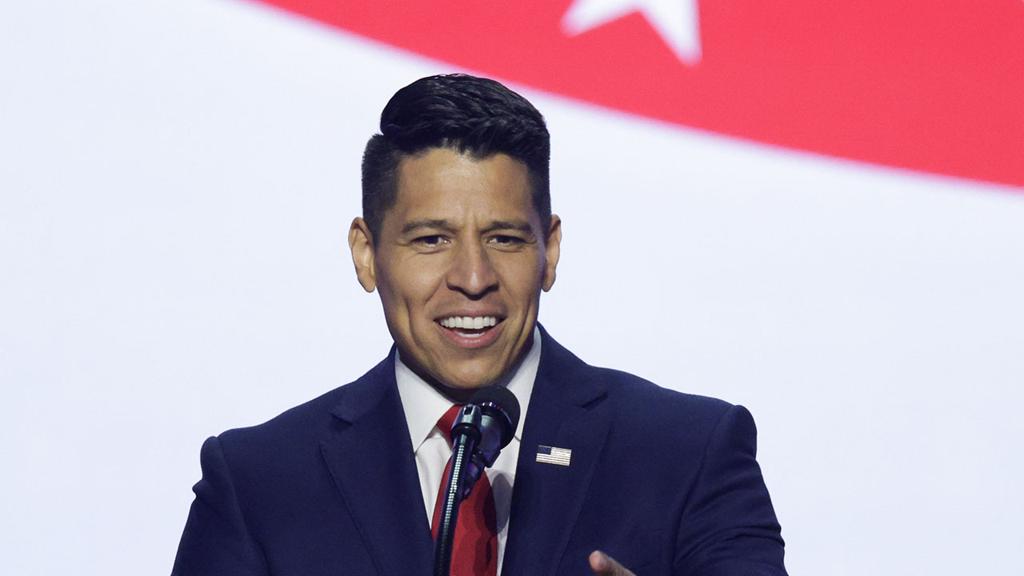
Republicans are mounting a significant push for Texas’ newly redrawn 35th Congressional District, which has shifted toward the GOP after the most recent round of redistricting. The changes have left the seat open and competitive for the first time in years, drawing attention from both major parties and political observers across the state.
Explainer Redistricting Battles: How Maps Shape American Political Power
The race features Republican Carlos De La Cruz, an Air Force veteran and brother of Rep. Monica De La Cruz, facing off against Democrat Johnny Garcia, who serves as the public information officer for Bexar County Sheriff Javier Salazar. The outcome of this contest could provide an early indication of how redistricting is reshaping party control in Texas and potentially signal broader trends for future elections.
Previously, the 35th District was considered a Democratic stronghold. In the last congressional race, incumbent Greg Casar secured a decisive victory, winning 67% of the vote. However, the recent redistricting process has moved Casar into the neighboring 37th District. Under the new boundaries, the political landscape has shifted considerably: former President Donald Trump would have carried the 35th District with 54.6% of the vote in the last presidential election, according to available data. This shift has transformed the district from reliably Democratic to a competitive battleground, prompting both parties to recalibrate their strategies.
Candidates’ Policy Priorities
De La Cruz has made border security the centerpiece of his campaign, drawing on his military experience and emphasizing his direct involvement at the southern border. He has argued that he is the “only candidate who has been deployed to the southern border,” highlighting his firsthand perspective on immigration and border issues. His platform calls for increased funding for immigration enforcement, expanded border infrastructure, and the deployment of more technology and personnel to the region. In addition to border security, De La Cruz supports parental rights, law enforcement, and veterans’ issues. He has also advocated for barring transgender women from participating in women’s sports and for prohibiting members of Congress from trading individual stocks.
"I am the only candidate who has been deployed to the southern border."
— Carlos De La Cruz, Republican candidate
De La Cruz’s campaign has attracted endorsements from high-profile Republicans, including former President Donald Trump, Republican Rep. Brandon Gill, and the National Border Patrol Council. These endorsements have helped raise his profile in a district that is now considered up for grabs.
On the Democratic side, Johnny Garcia has positioned himself as an “old-school” or “law-and-order” Democrat. Garcia has not shied away from criticizing members of his own party, particularly President Joe Biden’s approach to border policy. “Biden failed us on the border,” Garcia has said, signaling his willingness to break with party orthodoxy on key issues. Garcia’s immigration plan includes a pathway to citizenship and a work visa system based on economic needs, while also arguing that Immigration and Customs Enforcement should focus its efforts on criminal offenders rather than broad enforcement. Beyond immigration, Garcia supports strengthening the Affordable Care Act, opposes large data-center developments in the district, and, like his opponent, backs restrictions on congressional stock trading.
Polling and District Dynamics
A poll conducted by Normington Petts for the House Majority PAC from August 27-31 found the race to be extremely close. Among 500 likely voters surveyed, De La Cruz held a narrow lead with 45% support, while Garcia trailed closely at 44%. The poll’s margin of error was 4.4 percentage points, indicating that the race is essentially a statistical tie. This tight polling underscores the competitiveness of the district and the uncertainty surrounding the outcome.
The newly configured 35th District now includes parts of the south and northeast sides of San Antonio, as well as sections of Bexar, Guadalupe, Wilson, and Karnes counties. The shift in boundaries has made the district a focal point for both parties, with national and state-level organizations investing resources and attention in the contest. The demographic and geographic changes have introduced new dynamics, with candidates working to appeal to a more diverse and politically mixed electorate.
Both De La Cruz and Garcia did not respond to requests for comment by the time of publication.
Broader Redistricting Impact
The contest in Texas’ 35th District is part of a broader trend as redistricting alters the political landscape in several states. Across the country, new congressional maps are opening opportunities for Republicans in areas that were previously considered safe for Democrats. In Texas, the redrawing of district lines has created new battlegrounds and forced incumbents to adapt to shifting political realities.
With Election Day set for Tuesday, Nov. 3, the race in the 35th District is being closely watched for signs of shifting voter sentiment and party strength in Texas. The outcome may offer clues about the effectiveness of each party’s messaging and ground game in newly competitive districts, as well as the broader implications of redistricting for the balance of power in Congress. As both parties continue to mobilize their bases and court undecided voters, the 35th District stands as a key test case in the evolving political landscape of Texas.