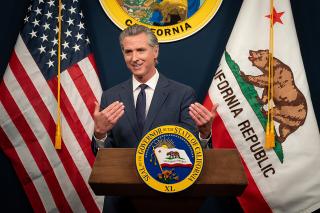
California Gov. Gavin Newsom has commuted all remaining death sentences in the state, declaring that he will not oversee executions and calling state-sanctioned killing incompatible with California values. Newsom announced the move in an open letter to Californians, stating, "I have decided to exercise my constitutional clemency authority to commute all California death sentences to life without possibility of parole. I take this action because I firmly believe that state-sanctioned killing is incompatible with California values, undermines the foundations of our legal system, and diminishes each of us."
Explainer California Elections: Low Turnout, Vote Counting Controversies, and Political Implications
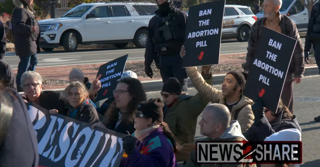
The decision highlights a core tension in Newsom's record: while he opposes capital punishment for convicted criminals, he has actively promoted expanded abortion access in California.
Newsom's actions come amid ongoing national debate over the death penalty and abortion rights, with California positioned as a leader in both abolishing executions and expanding reproductive freedoms. The governor has cited moral and legal grounds for his decisions, drawing praise from some religious leaders and criticism from opponents who point to the state's high abortion rates.
Death Penalty Moratorium and Commutations
Newsom first imposed a moratorium on executions in California in March 2019, two months after taking office. He said at the time, "The intentional killing of another person is wrong and as governor, I will not oversee the execution of any individual." On November 5, he formally commuted all remaining death sentences, converting them to life without parole.
Newsom has cited alignment with recent popes and the Catholic Church's evolving position on the death penalty. In a statement following the death of Pope Francis, Newsom praised the pope's "respect for all creation" and condemnation of capital punishment, saying, "He championed human dignity, especially that of the poor, called the world to urgent climate action, condemned the death penalty, and confronted painful truths."
At the 2024 Vatican Climate Summit, Newsom told Catholic News Service that Pope Francis "immediately brought up the issue of the death penalty" and expressed pride in California's actions. The Catechism of the Catholic Church was revised in 2018 to declare the death penalty "inadmissible because it is an attack on the inviolability and dignity of the person."
Expansion of Abortion Access
While opposing executions, Newsom has promoted expanded abortion access in California. In September, he signed a law to increase access to medication abortion on community college campuses, building on earlier legislation requiring California State University and University of California campuses to offer medication abortion.
A press release from Newsom's office highlighted a timeline of actions to promote "reproductive freedom," including the passage of Proposition 1, a constitutional amendment guaranteeing abortion and contraception rights. Newsom said at the time, "Californians stood up to the rollback of fundamental rights this year, ensuring women have a right to abortions and reproductive freedoms. No other state responded as comprehensively as California in the wake of the Supreme Court overturning Roe v. Wade nearly 6 months ago."
According to the Guttmacher Institute, clinicians in California performed 184,910 abortions in 2025, 183,490 in 2024, and 180,100 in 2023.
Criticism and Moral Debate
Critics argue that Newsom's opposition to the death penalty for convicted criminals contrasts with his support for abortion rights. The late Pope John Paul II, in the encyclical letter Evangelium Vitae, wrote that "the commandment 'You shall not kill' has absolute value when it refers to the innocent person," and described abortion as "murder" of "a human being at the very beginning of life."
"The intentional killing of another person is wrong and as governor, I will not oversee the execution of any individual."
— Gavin Newsom, California governor
Supporters of Newsom's abortion policies argue that the measures protect reproductive freedom and access to healthcare. Newsom and his office have not directly addressed criticism regarding the contrast between his positions on the death penalty and abortion.
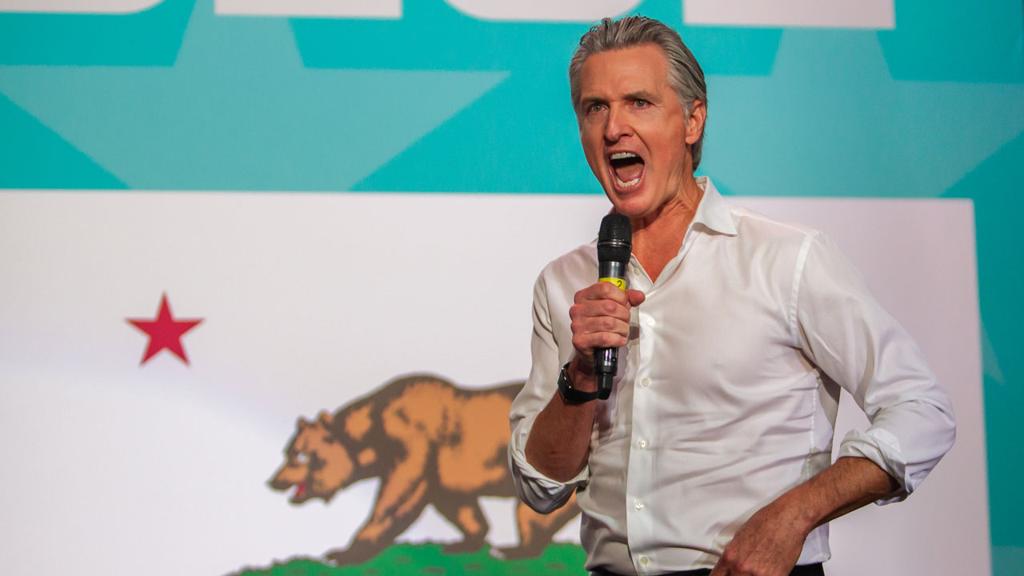
Newsom has continued to emphasize California's leadership on both issues, stating at the Vatican, "We look forward to maintaining our position of leadership. And we look forward to all of us bringing into our positions of formal authority, the moral authority that is needed and demands of this time."
The debate over the moral and legal status of abortion and capital punishment remains active in California, with Newsom's policies drawing both praise and criticism from religious and political groups.