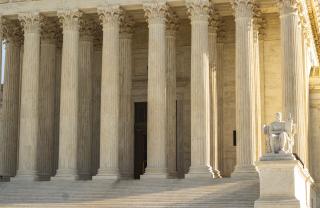
Louisiana, Alabama, and Arkansas have filed a lawsuit directly with the U.S. Supreme Court, seeking to overturn shield laws in California, New York, and Massachusetts that protect abortion pill providers from out-of-state investigations and extradition requests.
Explainer The Voting Rights Act: Judicial Battles Over Race and Redistricting
The case centers on whether states that ban abortion can enforce their laws against providers in states where abortion remains legal, and whether shield laws can block such enforcement. The legal dispute highlights the growing tension between states with opposing abortion policies in the aftermath of the Supreme Court’s decision to overturn Roe v. Wade in 2022.
After the end of Roe, states were given the authority to set their own abortion policies. In response, several Democratic-led states, including California, New York, and Massachusetts, enacted shield laws. These laws are designed to protect doctors and other providers who prescribe or send abortion-inducing drugs to people in states where abortion is banned. The shield laws generally prevent state officials from cooperating with out-of-state investigations or extradition requests related to abortion services that are legal within their own borders.
The Lawsuit’s Claims
Attorneys general Liz Murrill of Louisiana, Tim Griffin of Arkansas, and Steve Marshall of Alabama announced the lawsuit, alleging that the shield laws have "effectively insulated out-of-state providers from Louisiana investigations and enforcement efforts." According to the complaint, Louisiana cited two specific extradition requests involving doctors in California and New York, both of which were refused by those states.
One case involves New York physician Margaret Carpenter, who was indicted by a Louisiana grand jury for allegedly prescribing abortion drugs to a pregnant Louisiana teenager. New York Governor Kathy Hochul refused Louisiana’s extradition request, citing her state’s legal protections for abortion providers. New York later amended its law to allow prescribers of abortion medication to keep their names off prescription labels, further shielding providers from potential out-of-state scrutiny.
The second case involves California physician Remy Coeytaux, who was accused of mailing abortion medication to Louisiana. California Governor Gavin Newsom declined to cooperate with Louisiana’s request for extradition, citing California’s shield law protections.
Louisiana Attorney General Liz Murrill compared the refusals to extradite abortion providers to declining to extradite someone accused of shipping illegal drugs, arguing that the shield laws undermine states' ability to enforce their own laws. She stated, "A number of us have a legal opinion that they are obligated under the Constitution to take the case," referring to the Supreme Court’s potential obligation to hear the dispute between states.
Arguments from Plaintiff States
During a news conference, the attorneys general from the plaintiff states emphasized that the dispute is fundamentally about state sovereignty and the ability to enforce state law. Arkansas Attorney General Tim Griffin said, "This is, in large part, about fulfilling what Dobbs ... was about, which is each state deciding through their duly elected representatives what the law of those states are going to be and enforcing that law."
Alabama Attorney General Steve Marshall echoed this sentiment, stating, "Our elected representatives in Alabama have declared abortion unlawful. We have the responsibility, as well as under our system of law, the ability to be able to enforce our laws."
The plaintiff states also said their investigators conducted controlled purchases of abortion drugs online, sometimes using false information about the buyer or pregnancy, to support their enforcement efforts. These purchases were used as evidence in their investigations of out-of-state providers.
Next Steps and Legal Uncertainty
The states are asking the Supreme Court to declare the shield laws unconstitutional and to block officials in California, New York, and Massachusetts from enforcing them. However, Louisiana Attorney General Murrill acknowledged that the Supreme Court has discretion over whether to accept the case, though she argued that some justices believe the Court is constitutionally required to take it when states are in direct conflict.
Supporters of the shield laws in California, New York, and Massachusetts have not publicly responded to the lawsuit or addressed the plaintiff states' criticisms. The Supreme Court must first decide whether to hear the case before any arguments on the merits proceed. If the Court agrees to take up the case, it could have significant implications for the ability of states to enforce their own abortion laws across state lines and for the future of shield laws protecting abortion providers.
The outcome of this case could set a precedent for how states with conflicting laws interact, particularly on contentious issues like abortion. For now, the legal uncertainty remains, as both sides await the Supreme Court’s decision on whether to hear the case.