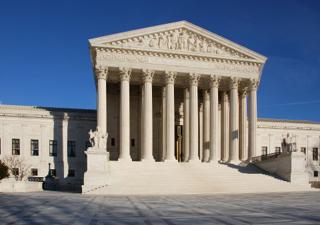
The U.S. Supreme Court is preparing to open its new term next week by hearing oral arguments in Suncor v. Boulder, a closely watched case that could reshape how climate-related lawsuits against energy companies are handled in the United States. The justices will consider whether federal law blocks state-level claims seeking damages for harms allegedly caused by interstate and international greenhouse gas emissions, and whether the Court itself has jurisdiction to decide the matter.
Explainer Understanding the Supreme Court’s Impact on Law and Liberty
At the center of the case is a lawsuit brought by Boulder, Colorado, which seeks monetary damages from Suncor Energy and Exxon Mobil. Boulder argues that the fossil fuel activities of these companies contribute to climate change and cause harm to local residents, including increased wildfire risk, drought, and infrastructure damage. The outcome of the case could set a precedent for whether states and localities can use state courts to pursue similar claims against energy producers, or whether such disputes must be handled under federal law.
The case arrives amid a broader movement by Democratic-led states and local governments to hold oil companies financially accountable for the effects of climate change. Rather than relying solely on legislative solutions, these governments have increasingly turned to the courts, seeking remedies through lawsuits that allege public nuisance or other state law violations. Legal experts say the Supreme Court's decision could have sweeping implications for energy policy, the role of the judiciary, and the balance of power between state and federal governments.
Stakes for State and Federal Authority
The central legal question before the justices is whether federal law preempts state-law claims for injuries allegedly caused by global emissions, as detailed in the official Supreme Court docket. If the Court finds that federal law does preempt these claims, it could effectively block state and local governments from pursuing damages in their own courts for climate-related harms linked to greenhouse gas emissions that cross state or national borders.
O.H. Skinner, executive director of the Alliance for Consumers, emphasized during a press conference that the case is about more than just climate change. He warned that a ruling in favor of Boulder could open the door for courts to drive major policy changes across a range of industries, not just energy. "It’s about [Democrats’] overall ability to weaponize courts to accomplish policy goals that are sweeping and that are multibillion-dollar in scale, and they could end up with an order that basically rewrites the American economy [if they prevail]," Skinner said.
Former Alaska Acting Attorney General Stephen Cox echoed these concerns, arguing that such litigation could allow states and localities to dictate national energy policy, potentially undermining democratic accountability. Cox pointed out that if state courts are allowed to set national energy policy through lawsuits, states that depend on oil revenues, such as Alaska, could find themselves subject to decisions made by courts in other jurisdictions.
Recusals and Judicial Scrutiny
The Supreme Court will hear the case without Justice Samuel Alito, who recused himself after advocacy groups raised concerns about his financial interests in the fossil fuel sector. Although reports indicate that Alito does not hold interests in the companies directly involved in the case, he stepped aside based on his own considerations. Skinner acknowledged that it is not ideal for the Court to hear cases without its full bench, but expressed confidence that at least five justices are skeptical of allowing courts to handle such cross-border claims.
Justice Elena Kagan has also faced calls to recuse herself from the case, this time from conservative groups. The calls stem from her foreword in a judicial manual that included a now-retracted chapter on climate science. Kagan has told Congress that she had not read the contested chapter before writing the foreword and was unaware of its content at the time.
Broader Implications for Climate Litigation
The outcome of Suncor v. Boulder could have far-reaching effects on the strategy of using so-called "public nuisance" lawsuits to target energy companies for their role in climate change. Skinner predicted that if the Supreme Court rules in favor of Suncor and Exxon, it would undermine this legal strategy. He suggested that while new legal theories might emerge, they would likely be less viable. "A favorable ruling from the justices would ... conclusively end this type of attack by the left and state courts to reshape our energy industry and our nation," Skinner said.
Supporters of Boulder’s approach argue that local governments should have the right to seek redress for harms caused by climate change, especially when those harms affect their communities directly. However, they did not respond to the criticisms raised by Skinner and Cox during the press conference.
Oral arguments in Suncor v. Boulder are scheduled to take place Monday at 10 a.m. ET. The Supreme Court's decision, expected later in the term, will likely clarify the extent to which state and local governments can use their courts to seek damages for climate change impacts, and could influence the direction of climate litigation nationwide.