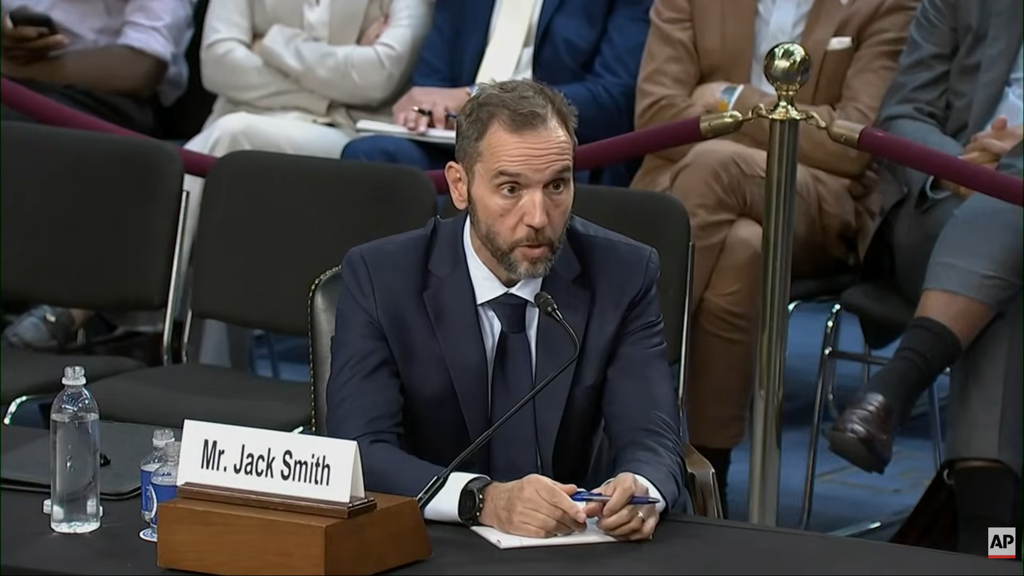
Special Counsel Jack Smith and his team obtained nearly 5,000 personal checks written by donors to former President Donald Trump, according to whistleblower disclosures released by Senate Judiciary Committee Chair Chuck Grassley during a Tuesday hearing.
The disclosures have intensified scrutiny of Smith's investigative tactics, with critics arguing the move swept up sensitive personal information from thousands of Americans. The revelations have sparked debate on Capitol Hill and among legal experts about the appropriateness and scope of Smith's methods as he investigates Trump and his associates.
Details of the Subpoenaed Checks
According to Grassley, Smith's office acquired at least 4,782 checks from individuals who made mostly small-dollar donations to Trump between September 2019 and August 2023. The checks were obtained via subpoenas and included donors' bank account and routing numbers, signatures, and home addresses, according to a committee press release. Grassley stated that the subpoenas targeted donors across all 50 states, Washington, D.C., and Puerto Rico, with check amounts ranging from $5 to $1,000.
Grassley argued that collecting this information was unnecessary for Smith's investigation, noting that donations to Republican groups were not mentioned in Smith's public report. He also criticized the Justice Department and FBI for now possessing thousands of donors' personal and financial details, raising concerns about privacy and data security.
"No matter what you say, there’s no legitimate basis for what you did. Especially since your staff killed an investigation into the Clinton campaign,"
— Chuck Grassley, Senate Judiciary Committee Chair
Grassley made these remarks during a hearing where Smith testified about his investigation of Trump. The committee chair linked the findings to broader concerns about what he described as "lawfare" against the former president, suggesting that the investigative tactics used by Smith's team were excessive and potentially politically motivated.
Media and Journalist Records Also Obtained
In addition to donor checks, Grassley revealed that Smith's team obtained communications from The Federalist and more than a dozen other media outlets. According to The Federalist, these records appeared in documents the National Archives turned over after Smith's office subpoenaed text messages from 87 phones used by Trump administration officials. The scope of the subpoenas included a wide array of communications, some of which reportedly involved journalists and news organizations.
The Federalist CEO Sean Davis said in a statement that the publication is "still working to determine which of our reporters were targeted by Jack Smith and which journalistic communications he and his thugs seized." Davis accused Smith of targeting the outlet in retaliation for its coverage of the Russia investigation and other controversies involving the Justice Department. He added that The Federalist plans to examine "all legal options" in response to Smith's actions.
The outlet later reported that Editor-in-Chief Mollie Hemingway's communications were among those seized. Hemingway called the news "egregious misconduct" and said it would not deter the publication's investigative work. The situation has raised concerns among press freedom advocates about the potential chilling effect on journalists covering politically sensitive topics.
Broader Debate Over Investigative Methods
The developments come amid ongoing debate over the scope and methods of federal investigations into Trump and his associates. Critics of Smith's approach argue that the collection of donor and journalist records raises privacy and First Amendment concerns, especially given the sensitive nature of the information obtained. They contend that sweeping up the personal and financial details of thousands of Americans who donated to a political campaign could set a troubling precedent for future investigations.
Supporters of Smith have not publicly addressed the whistleblower disclosures or the committee's criticism. The Justice Department has not issued a statement in response to the concerns raised by Grassley and others on the committee. The lack of a public response has fueled further speculation and debate about the motivations behind the subpoenas and the potential implications for civil liberties.
The whistleblower disclosures and related documents were made available by the Senate Judiciary Committee. A copy of the committee's press release and related documents is available here.