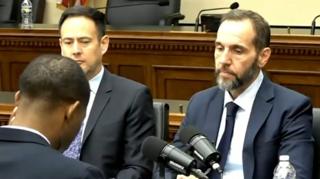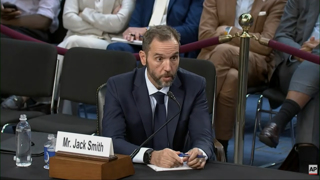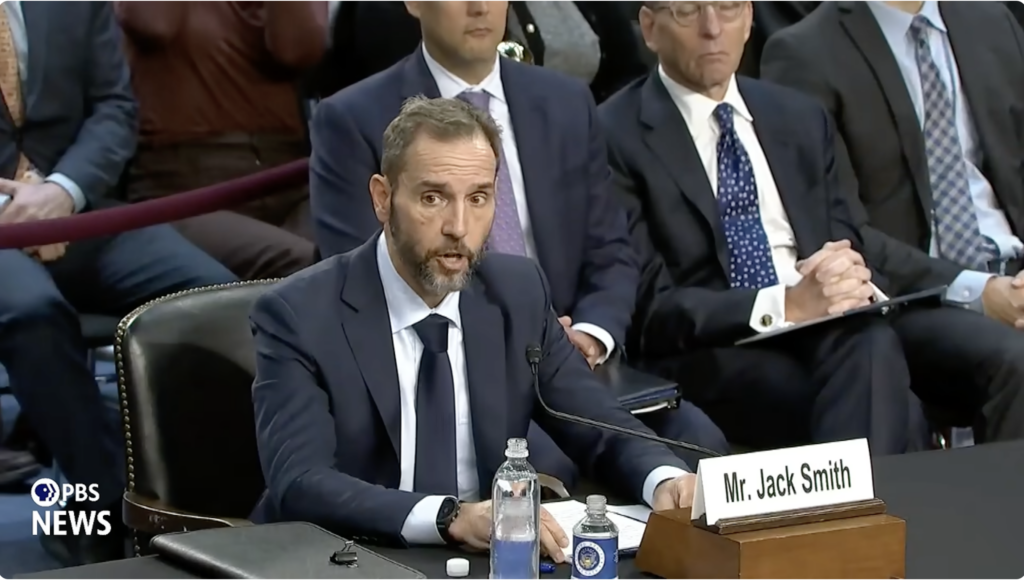
Former Special Counsel Jack Smith is facing renewed scrutiny from lawmakers after Senate Judiciary Committee Chair Chuck Grassley, R-Iowa, released documents revealing that Smith's investigative team obtained communications from nearly 50 journalists and more than a dozen national media outlets. The disclosures relate to the "Arctic Frost" investigation into former President Donald Trump, according to Senate Judiciary disclosures.
Explainer Attorney General Ken Paxton’s Legal Impact on Texas Policies and Public Safety
The revelations have intensified the ongoing debate in Congress over the alleged political weaponization of the Department of Justice (DOJ). Lawmakers and media figures are now demanding accountability and restitution for those whose communications were swept up in the probe.
The release of these documents comes amid persistent partisan clashes over the DOJ's handling of high-profile investigations. Republican lawmakers have accused the DOJ of overreach and political bias, while Democrats have defended the department's independence and investigative processes.
Journalist and Lawmaker Communications Seized
According to Senator Grassley, Smith's team collected communications from journalists at major outlets including The Federalist, Fox News, CNN, CBS News, NBC News, The Wall Street Journal, The Washington Post, Reuters, and NPR. Nearly 50 journalists were affected, with records indicating that messages exchanged with government sources were also obtained. Among those whose communications were accessed were Federalist Editor-in-Chief Mollie Hemingway and CEO Sean Davis.
Sean Davis, CEO and Co-Founder of The Federalist, criticized the probe, stating, "Corrupt cop Jack Smith spied on The Federalist and accessed our communications during his lawless anti-Trump witch hunt. We are still working to determine which of our reporters were targeted by Jack…"
Grassley further revealed that Smith's investigators sought subpoenas for nearly 5,000 checks written by Trump donors. The operation also included the secret seizure of text messages from more than 40 members of Congress. Both Grassley and Sen. Ron Johnson, R-Wis., were among those whose communications were reportedly accessed. Johnson called the probe "another grotesque example of the Biden administration’s weaponization of the Justice Department."
Lawsuits and Congressional Hearings
The scope of the investigation has led to legal challenges. Sen. Marsha Blackburn, R-Tenn., filed a lawsuit alleging that Smith unlawfully seized her cell phone records and obtained a non-disclosure order that prevented her from learning about the subpoenas. Blackburn's lawsuit claims that Smith's team did not inform the presiding judge that the subpoenas targeted a sitting senator. Margaret Harker, senior litigation counsel at the New Civil Liberties Alliance, which represents Blackburn, argued that Smith's actions violated the Speech or Debate Clause of the Constitution.
During a Senate Judiciary Committee hearing, Smith defended his decisions, stating, "I made these decisions without regard to President Trump’s political association, activities, beliefs, or candidacy." Smith maintained that the investigation was conducted according to legal procedures and was not politically motivated.
Calls for Restitution and Oversight Fund
The breadth of the investigation has prompted calls for the creation of an "anti-weaponization fund" to compensate individuals affected by what critics describe as federal prosecutorial overreach. Sean Davis argued that victims "need to be made whole" and criticized both Democrats and some Republicans for blocking the establishment of the fund. The fund, which had previously received support from Attorney General Todd Blanche, was paused after political pressure and legal challenges from federal judges who questioned its legitimacy.
Davis said he is "exploring all legal options" in response to the surveillance of The Federalist and called for accountability to prevent similar actions in the future. He also referenced a recent court victory involving Texas Attorney General Ken Paxton, The Federalist, and The Daily Wire, in which a federal district court ordered government entities to stop censoring constitutionally protected speech.
DOJ and Supporters Respond
Smith and DOJ officials have maintained that the investigation followed established legal procedures and was not motivated by politics. Smith told the Senate committee that his actions were based on evidence and the law, not political considerations. As of publication, Democratic committee members and DOJ representatives have not issued additional public statements addressing the latest disclosures.
The Senate Judiciary Committee continues to review the matter, with further hearings and investigations expected as lawmakers seek to determine whether the DOJ's actions constituted an abuse of authority or were consistent with standard investigative practices. The ongoing debate highlights the broader concerns in Congress over the balance between national security investigations and the protection of constitutional rights, including press freedom and legislative independence.