The U.S. government has reached a settlement in the Missouri v. Biden case that prohibits three federal agencies from pressuring social media companies to censor content. This agreement is seen as a significant victory for First Amendment rights, particularly in the context of online speech.
Explainer Free Speech Battles: Courts, Censorship, and Cultural Conflicts
The core issue revolves around the balance between government oversight and free speech, with critics arguing that government interference in social media moderation infringes on constitutional rights. Supporters of the settlement claim it will protect individuals from government-led censorship.
The settlement, described as unprecedented, bars the Centers for Disease Control and Prevention (CDC), the Cybersecurity and Infrastructure Security Agency (CISA), and the U.S. Surgeon General from influencing social media platforms to remove content they label as misinformation or disinformation. The agreement follows years of litigation initiated by the New Civil Liberties Alliance (NCLA), a nonprofit civil rights group that has fought against what it describes as government-led suppression of speech.
Key Details
John Vecchione, Senior Litigation Counsel for the NCLA, stated, "This case began with a suspicion, that blossomed into fact, that led to Congressional hearings and an Executive Order that government censorship of Americans’ social media posts should end." He emphasized the importance of this settlement in curbing government overreach in online discourse.
Background and Reactions
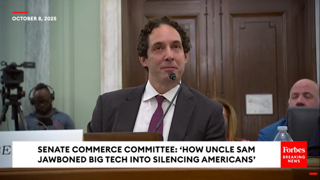
Senator Eric Schmitt, who previously served as Missouri's attorney general and initiated the lawsuit, also celebrated the outcome. He remarked, "This is a massive win for the First Amendment and for every American who believes in free speech," criticizing the Biden administration for what he termed as collusion with tech companies to silence dissenting voices.
The lawsuit highlighted how federal agencies allegedly pressured social media platforms to censor viewpoints that contradicted official narratives on various issues, including COVID-19 and the 2020 election. The NCLA's discovery process revealed extensive communications between government officials and social media companies, suggesting a coordinated effort to suppress certain perspectives.
The settlement also includes a Consent Decree that prevents federal officials from interfering with social media companies' content moderation decisions. This aspect of the agreement aims to ensure that social media platforms can operate independently without government coercion.
Critics of the settlement argue that it may hinder the government's ability to combat misinformation, particularly during public health crises. Some experts suggest that while protecting free speech is essential, there must also be mechanisms in place to address harmful misinformation that can impact public safety.
The case, originally known as Murthy v. Missouri, reached the U.S. Supreme Court after the Biden administration appealed a lower court's ruling that favored the plaintiffs. In a 2024 decision, the Supreme Court ruled that the NCLA's clients lacked standing, sending the case back to the district court where the settlement was ultimately reached.
The NCLA's clients included individuals who claimed to have been victims of government censorship. For instance, psychiatrist Aaron Kheriaty alleged that his social media presence was suppressed due to his opposition to lockdowns and vaccine mandates. Similarly, activist Jill Hines reported that her Facebook account was suspended for her views on public health measures.
The settlement is pending approval from Judge Terry Doughty of the U.S. District Court for the Western District of Louisiana, who must sign off on the agreement and the associated attorneys' fees. Zhonette Brown, NCLA General Counsel, remarked, "The United States government cannot abridge speech directly, nor by inducing intermediaries to do so at its bidding."
This case underscores ongoing tensions between government authority and individual rights in the digital age, raising questions about the role of social media in public discourse and the extent of government influence over online platforms. As the landscape of free speech continues to evolve, the implications of this settlement may resonate beyond the immediate parties involved, shaping future discussions on censorship and First Amendment protections.