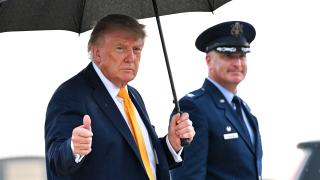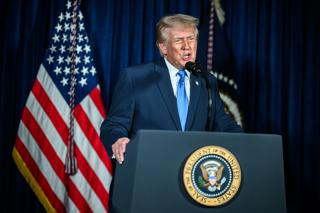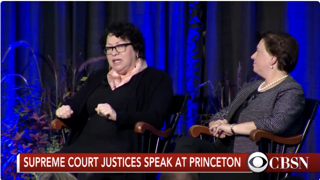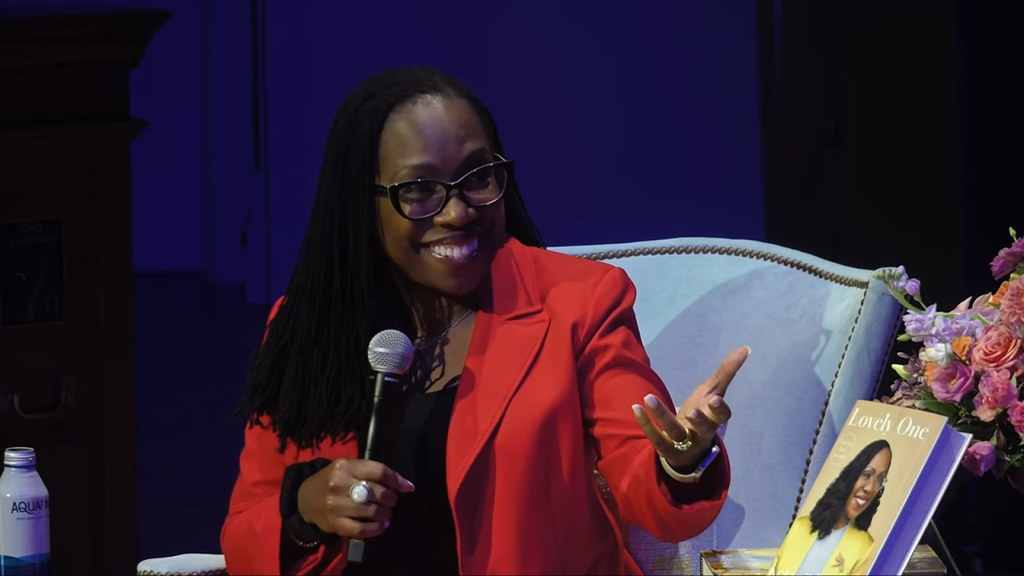
Supreme Court Justice Ketanji Brown Jackson raised important questions regarding the accountability of unelected officials in federal agencies during oral arguments on Monday. The case under consideration, Trump v. Slaughter, examines the constitutionality of statutory limits on a president's power to remove members of independent agencies. Specifically, the case focuses on President Trump's firing of Rebecca Slaughter from the Federal Trade Commission (FTC), which has sparked a broader discussion about the balance of power between the presidency and Congress.
Justice Jackson Questions Role of Unelected Officials in Federal Agencies
The core issue at stake revolves around how independent agencies operate without direct presidential oversight. Critics of the current structure argue that it undermines the president's authority, while supporters contend that it is essential for protecting expertise in critical areas of governance. This debate is particularly relevant as the justices are set to determine whether to uphold or overturn the precedent established in Humphrey’s Executor v. U.S. (1935). This landmark case has historically allowed for the existence of independent agencies with limited presidential control.
Background and Reactions
During the oral arguments, Justice Jackson engaged in a discussion with U.S. Solicitor General John Sauer, who argued that Congress's control over these agencies poses a significant separation of powers issue. Jackson expressed confusion over the argument that independent agencies do not answer to Congress. "Congress established them and can eliminate them. Congress funds them and can stop," she stated. This remark highlighted her view that Congress has sufficient mechanisms to oversee these agencies, thereby questioning the necessity of presidential control over them.
Sauer countered Jackson's assertions by emphasizing that the Constitution mandates clear lines of political accountability. He suggested that if Congress is informally controlling these agencies, it could threaten the separation of powers, a fundamental principle in U.S. governance. Jackson interrupted him, asserting that the existence of statutory frameworks provides a formal structure for accountability. She stated, "Not informally, we have a statute," reinforcing her belief that the current system allows for adequate oversight.
Furthermore, Jackson articulated her concerns about the potential consequences of allowing a president to unilaterally fire officials in independent agencies. She warned of the dangers posed by replacing experienced professionals with political loyalists. Jackson expressed her view that such actions could be detrimental to the public interest, saying, "Having a president come in and fire all the scientists, and the doctors, and the economists, and replacing them with loyalists and people who don’t know anything is actually not in the best interest of the citizens of the United States."
She emphasized that independent agencies are designed to operate with a degree of autonomy to ensure that expertise is prioritized in areas such as the economy and transportation. Jackson's comments suggest a belief that Congress's decision to limit presidential control over these agencies serves as a protective measure for the public interest, ensuring that knowledgeable professionals remain in key positions.
Sauer attempted to respond to Jackson's concerns but was frequently interrupted during the exchange. He reiterated that Congress cannot structure the government in a way that violates the separation of powers. "Congress cannot violate the separation of powers and threaten all of our liberties in the way that it structures the government, and it has done so here," he stated, emphasizing the importance of maintaining a clear separation between the branches of government.
The ongoing debate reflects a broader tension in U.S. governance regarding the balance of power among the branches of government. Supporters of independent agencies argue that they are essential for maintaining expertise and impartiality in federal decision-making. In contrast, critics contend that their structure can lead to a lack of accountability and transparency in government actions.
As the Supreme Court deliberates on this case, the implications for the future of executive authority and the role of independent agencies remain significant. The justices' decision could reshape the landscape of federal governance and influence how future administrations interact with these entities. The outcome of this case may set important precedents regarding the limits of presidential power and the accountability of unelected officials in the federal government.