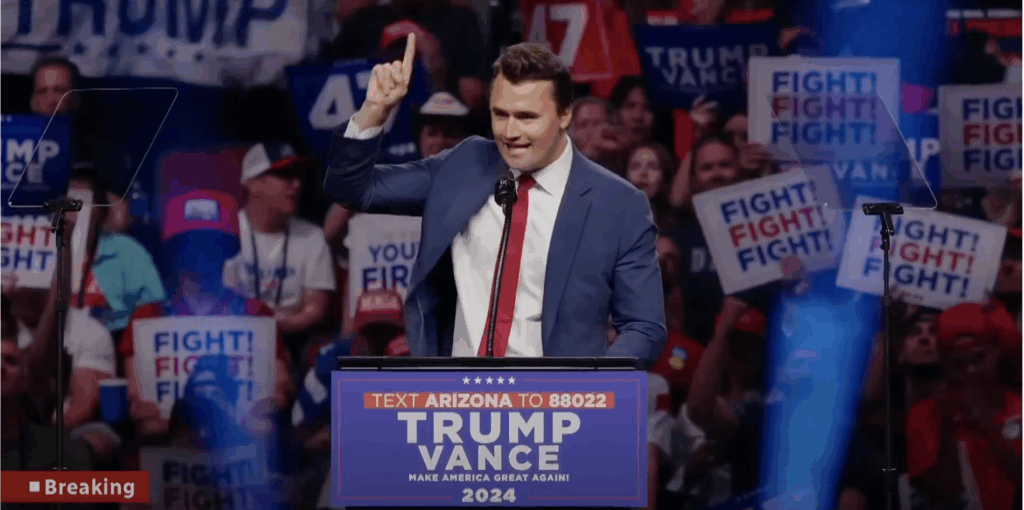
Charlie Kirk, a prominent conservative activist and co-founder of Turning Point USA, was fatally shot on a Utah college campus while promoting free speech during his "American Comeback Tour." (Judiciary House) He was 31 years old. Kirk was known for his vigorous defense of the First Amendment and inspired many college students to engage in political discourse.
Explainer Free Speech Battles: Courts, Censorship, and Cultural Conflicts
The incident has reignited discussions about the treatment of conservative speech in the U.S., particularly during the Trump administration. Supporters of former President Donald Trump have faced increasing hostility, including threats and intimidation, as highlighted by a federal case set to be argued in Philadelphia.
The case, Butwin Jr. and Schmidt v. John Doe 1 and John Doe 2, involves two Pennsylvania Trump voters who allege they received threatening letters for displaying pro-Trump signs in their yards prior to the 2024 presidential election. The plaintiffs are seeking an injunction against the anonymous individuals they claim threatened them, arguing that the threats constitute voter intimidation under the Voting Rights Act and the Ku Klux Klan Act.
"Unless enjoined by this Court, Defendants, and those acting in concert with them, will continue to violate Section 11(b) of the VRA," (Judiciary House) the complaint states. The plaintiffs, represented by the Public Interest Legal Foundation (PILF), are requesting third-party discovery to identify the individuals behind the threats, which they claim local authorities have failed to investigate adequately.
The letters reportedly contained ominous warnings, including, "We know where you live," (Judiciary House) and threats of violence against the plaintiffs and their property. The complaint describes the letters as a coordinated effort to intimidate Trump supporters in Pennsylvania, suggesting that similar threats were made to other voters in the region.
PILF President J. Christian Adams criticized the lack of law enforcement action, stating, "If the targets had been Democrats, there’d be arrests by now. This double standard is unacceptable." (Judiciary House) He emphasized the need for greater concern regarding the threats faced by Trump supporters, particularly in light of recent political violence in the country.
The case is scheduled for oral arguments at 10 a.m. on Wednesday at the U.S. District Court for the Eastern District of Pennsylvania. The outcome could have implications for how voter intimidation is addressed in the context of political expression and free speech.
As the nation grapples with increasing political polarization, the assassination of Kirk serves as a stark reminder of the potential consequences of political violence in America. The case underscores ongoing concerns about the safety of individuals who express conservative viewpoints in a charged political climate.