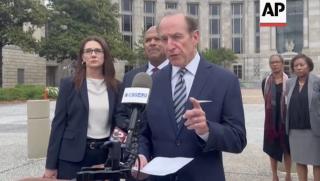
Federal agents arrested Heidi Beirich, a leading figure in anti-hate advocacy and former Southern Poverty Law Center (SPLC) official, after a grand jury indicted her on charges of wire fraud conspiracy, bank fraud conspiracy, and conspiracy to commit concealment money laundering.
The case raises questions about the credibility of institutions and officials that relied on Beirich's research and advocacy in shaping policies on extremism and hate.
Beirich, who managed the SPLC’s Intelligence Project for eight years, is accused of conspiring to create fake bank accounts to funnel donor money to white supremacist groups and finance her personal relationship with a leader of the neo-Nazi National Alliance, identified in the indictment as "F-9." According to prosecutors, Beirich and F-9 shared a house and two bank accounts, with approximately $140,000—about 66% of all deposits—coming from SPLC donor funds routed through intermediary accounts.
"There is no question that the major terrorism threat to the U.S. is coming from the far right."
— Heidi Beirich, 2021 House testimony
The SPLC, a left-leaning nonprofit known for its legal battles against the Ku Klux Klan and its widely cited "hate map," is now implicated in the fraud case. Prosecutors allege the SPLC secretly funneled donor cash to support hate groups it publicly opposed, despite maintaining an informant program that paid Klan members to report on violent plans.
Allegations Against Beirich
The indictment, unsealed Wednesday, details how Beirich allegedly used her position to divert funds intended for anti-extremism work. The funds were deposited into joint accounts she held with F-9 and used to pay for their personal living expenses. The alleged scheme ran from 2015 to 2021, overlapping with Beirich's tenure at the SPLC and her subsequent work at the Global Project Against Hate and Extremism, an organization she co-founded in 2020.
Beirich’s influence extended beyond the SPLC. She testified before Congress, including a 2021 appearance before the House Committee on Veterans Affairs, where she asserted that "the major terrorism threat to the U.S. is coming from the far right." Her testimony and research have shaped federal, military, and tech industry policies on extremism, as documented in her congressional testimony.
Impact on Policy and Tech
Beirich’s organizations, both at the SPLC and the Global Project Against Hate and Extremism, have played a key role in defining and publicizing far-right extremism. The SPLC’s "hate map" has been used by Big Tech, banks, and even the FBI as a reference for identifying hate groups. The Global Project Against Hate and Extremism has advocated for content removal on social media and participated in international efforts such as the Christchurch Call Advisory Network, which was formed after the 2019 New Zealand mosque attacks.
The group, however, has faced criticism for its approach. It defines opposition to mass immigration and transgender ideology as forms of "hate," and openly states it does not cover far-left extremism, arguing such groups do not engage in mass violence or rights-restricting agendas in recent years. The organization found support in the Biden administration, participating in the State Department’s "Summit for Democracy" and being added to the Christchurch Call Advisory Network in 2021. The State Department joined the Christchurch Call’s pledge to eliminate violent extremist content online the same year.
Institutional Responses and Unanswered Questions
Despite the serious allegations, the Daily Signal reported that the offices of President Joe Biden, the Christchurch Call Advisory Network, Craig Newmark Philanthropies, and Democratic committee chairs who received Beirich’s testimony did not respond to requests for comment. Google stated that the Global Project Against Hate and Extremism is not a priority flagger for YouTube, and the group does not appear on Meta’s list of political engagement partners. Still, the organization has celebrated deplatforming actions by Twitter and TikTok that followed its recommendations.
Craig Newmark Philanthropies partnered with Beirich’s group on counter-extremism projects and later renewed the partnership. The AI company Anthropic lists the group on its "Transparency Hub" for addressing terrorist and violent extremist content.
The indictment does not address the validity of Beirich’s research, but it has prompted scrutiny of the institutions that relied on her expertise and advocacy.