A new interim report from the House Judiciary Committee alleges that the Environmental Law Institute (ELI) and its Climate Judiciary Project (CJP) have conducted targeted efforts to influence federal and state judges on climate-related litigation. The report, titled How Radical Environmental Special Interests Manipulate the Federal Judiciary, was released Wednesday and details what committee staff describe as an organized campaign to predispose judges in favor of plaintiffs in climate lawsuits.
The committee’s findings highlight concerns over whether judicial education programs are being used to shape outcomes in climate litigation, as the Supreme Court prepares to hear oral arguments in Suncor v. Boulder, a high-profile case involving state-based climate claims against oil companies. The report comes amid broader scrutiny of advocacy groups’ roles in shaping legal interpretations on environmental issues, with critics warning of potential threats to judicial impartiality and supporters arguing such programs provide necessary scientific context for complex cases.
Allegations Against ELI and CJP
According to the committee report, ELI and its CJP have organized seminars and educational sessions for judges that, the report claims, are designed to "indoctrinate" them with a particular view of climate science. The report cites a transcribed interview with CJP founder Paul Hanle, who stated that many judges do not believe climate change is human-caused and that CJP’s seminars aim to "educate" judges that climate change is "real" and caused by humans.
"CJP seminars have the express purpose of ‘educating’ judges that climate change is ‘real’ and is caused by humans."
— Paul Hanle, CJP founder
The committee also points to private emails from Hanle, in which he reportedly described CJP’s success in persuading judges to accept certain climate science positions and suggested these efforts could "make a great difference in the final outcome of cases."
Additionally, the report claims that CJP lacks a formal conflict-of-interest policy to ensure that seminar presenters are not involved in active climate litigation before participating judges. Instead, the project relies on internal reviews by its founder and senior staff to assess neutrality and potential conflicts. The committee argues that this approach may not be sufficient to guarantee impartiality, especially when judges are presiding over cases with significant national implications.
Funding and Activities of ELI
The Environmental Law Institute, a nonprofit founded in 1969 and based in Washington, D.C., operates a judicial education program and an environmental justice initiative, according to Influence Watch. ELI’s CJP received a $500,000 grant from the William and Flora Hewlett Foundation in 2020. The organization’s stated mission is to provide evidence-based, nonpartisan information to judges, and it has denied participating in or advising on litigation.
ELI’s president, Jordan Diamond, previously worked at the University of California, Berkeley’s Center for Law, Energy and the Environment. The group’s funding comes from a range of foundations, including the Pew Charitable Trusts and the Walton Family Foundation. ELI maintains that its educational programs are consistent with other judicial education initiatives and are designed to help judges understand the scientific and legal complexities of climate change cases.
Controversy Over Judicial Guidance Materials
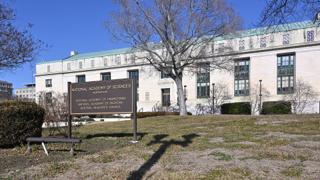
The House Judiciary Committee’s report also addresses the Federal Judicial Center (FJC) and the National Academies of Science’s Reference Manual on Scientific Evidence. Earlier this year, the manual’s climate science chapter was retracted after it was found to include references to climate activists, prompting backlash from critics and a review ordered by President Trump. The committee’s analysis contends that such educational materials, if influenced by advocacy groups, could undermine the tradition of judicial neutrality.
The report argues that ELI and CJP’s activities risk predisposing judges in favor of plaintiffs in climate-related cases involving fossil fuel companies. Critics of these programs claim that even well-intentioned educational efforts could cross the line into advocacy, especially if presenters have connections to ongoing litigation or activist organizations. Supporters, however, maintain that judges require up-to-date scientific information to fairly adjudicate complex environmental disputes.
Responses and Next Steps
ELI has stated that its Climate Judiciary Project delivers nonpartisan, evidence-based information consistent with other judicial education initiatives and does not participate in litigation. The organization has not publicly addressed the specific conflict-of-interest concerns raised in the committee’s report. ELI continues to emphasize its commitment to neutrality and transparency in its educational offerings.
The release of the report comes just days before the Supreme Court is scheduled to hear oral arguments in Suncor v. Boulder, a case that could have significant implications for climate litigation nationwide. The outcome of the case may influence how future climate lawsuits are handled in both state and federal courts, and the committee’s findings are likely to fuel ongoing debate over the proper role of advocacy groups in judicial education.
The House Judiciary Committee has not announced whether it will pursue further investigation or legislative action in response to its findings. The interim report is expected to be followed by additional hearings or recommendations as the committee continues to examine the intersection of environmental advocacy and the federal judiciary.