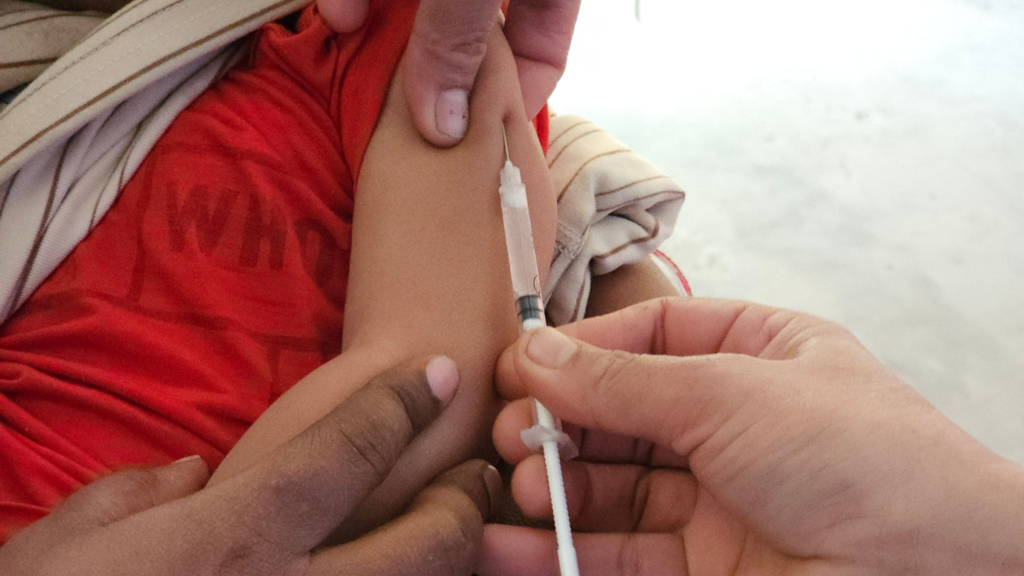
Parents in Michigan who want a nonmedical vaccine waiver for their children to attend school are now required to complete an online educational course before local health departments will certify the exemption. The course, developed by University of Michigan professor Michael Rubyan and a team of public health nurses, begins and ends with surveys asking parents to rate their agreement with statements about vaccine safety, importance, and effectiveness on a five-point scale.
Explainer Election Integrity in America: Safeguarding Voter Trust and Ballot Security
The new requirement has intensified debate over whether state agencies can impose additional conditions on statutory rights, and whether parents must disclose personal beliefs to access exemptions.
Michigan law, under MCL 333.9215(2), allows parents to exempt their children from school vaccine requirements by submitting a written statement to the school administrator citing religious convictions or other objections. The statute does not require parents to explain or justify their objections, nor does it mandate any educational session.
The Online Course Process
The online module opens with a pre-training assessment, asking parents to indicate their views on vaccine safety, importance, and effectiveness. After completing the course materials, parents are asked to answer the same questions again. The course does not allow parents to decline to answer; the only option for non-commitment is "do not know," which is still recorded as data.
There is no explanation provided to parents about where their responses are stored or who has access to the data. The only privacy policy available is the county health agency’s HIPAA notice, which does not mention the waiver process or the collection of attitudinal data.
"He will click something, the state will record it, and later in the week he will have stopped thinking about it."
— Christopher Lloyd Goffos, writer and former school headmaster
The course also presents parents with questions about the legal requirements for obtaining a waiver. According to the module, attending a vaccine education session and receiving a waiver from the local health department is the correct answer, though the statute only requires a written statement submitted to the school.
Legal and Administrative Dispute
The Michigan Department of Health and Human Services (MDHHS) implemented rule R 325.176(12) in 2014, requiring local health departments to certify that parents seeking nonmedical exemptions have received education on vaccine risks and benefits. The rule does not specify how this education must be delivered or what certification entails. MDHHS's own rulemaking file anticipated that local departments would use various methods, including simply mailing information to parents.
Some county health departments have argued that the rule was misinterpreted and that providing information by mail would suffice. However, the current practice requires parents to complete the online course and respond to attitudinal surveys.
MDHHS stated in its rulemaking file that the intent was to make obtaining nonmedical exemptions more difficult, citing concerns that ease of access had increased exemption rates. Suzanne Waltman of Michigan for Vaccine Choice described the rule as "a stealth move."
Legislative Efforts and Criticism
Since 2014, Michigan lawmakers have twice considered bills to codify the education requirement, in 2016 and again in 2024, but both measures failed. A third bill, House Bill 4552, introduced by 11 Republican legislators in June 2025, would prohibit the department from imposing requirements beyond those in the statute and bar local health departments from demanding their own forms. The bill has not received a hearing for nearly 15 months.
Juan Marquez, medical director for Livingston and Washtenaw counties, estimated that in-person sessions preceding the online course changed the minds of "maybe one or two people" out of about 10,000 waivers issued in his counties over a decade.
Critics argue the current process compels parents to declare beliefs and fails to provide adequate privacy protections. Supporters of the rule have not publicly addressed these concerns in recent legislative sessions.
The debate centers on whether a state agency can require parents to complete an attitudinal survey and educational course as a condition for a statutory exemption that, by law, only requires a written statement.