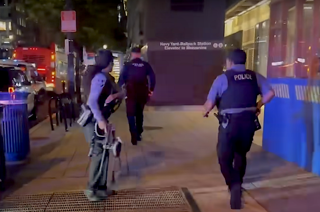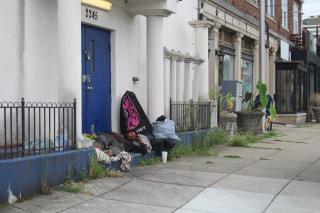
San Bernardino, California, continues to grapple with high rates of violent crime and homelessness, even as county officials report a second consecutive year of declining homeless counts and ongoing investments in public safety and housing. The city, once celebrated as an "All-America City," now faces nearly 900 violent offenses per 100,000 residents—almost twice the statewide average—and was ranked the dirtiest city in America for the second year in a row in 2025.
Explainer Understanding Public Safety Trends: Crime Declines and Rising Challenges for Law Enforcement
The city's struggle reflects broader tensions over the effectiveness of state and local policies aimed at reversing economic decline and addressing public safety and homelessness.
San Bernardino's challenges are part of a larger pattern in California, where cities contend with the consequences of economic shifts, controversial criminal justice reforms, and debates over how best to allocate billions in state funding for housing and homelessness.
Economic Decline and Public Safety
San Bernardino's economic fortunes have faded since the closure of major employers like Kaiser Steel and Norton Air Force Base. The city filed for bankruptcy in 2012, and its downtown is marked by vacant buildings and ongoing efforts at revitalization. Ryan Stanley, creative director for the restored Enterprise Building, recalled skepticism from then-Mayor R. Carey Davis about investing in the area, saying Davis asked, "Why would anyone in their right mind want to invest in downtown San Bernardino?" Davis did not respond to requests for comment.
Crime remains a significant concern. The city experienced a high-profile terrorist attack in 2015 that killed 14 people, and first responders continue to face heavy workloads. In 2017, a San Bernardino fire engine was among the busiest in the nation, with 6,923 emergency responses. Firefighters have responded to over 1,000 fires linked to homelessness since 2020, according to a 2023 police report citing county fire data. Medical emergencies, particularly opioid overdoses, are also frequent. Christopher Prater, San Bernardino County Fire Public Information Officer, described the routine use of Narcan and the challenges of helping repeat overdose victims who often refuse further treatment.
"In San Bernardino, drug use is something that we come across quite often. We call them regulars. We know their first name, last name. We know their birthday. We usually know if they're using it or not."
— Christopher Prater, San Bernardino County Fire Public Information Officer
Between 2023 and 2024, 714 people in San Bernardino County died in fentanyl-related cases.
Homelessness and Shelter Policy
According to the 2026 Point-in-Time Count, 1,172 people were experiencing homelessness in San Bernardino, nearly one-third of the county's 3,718 homeless individuals. The county's homeless population declined by 3.1 percent from the previous year, with unsheltered homelessness dropping by 7.1 percent. County officials attributed the decline to expanded outreach, increased shelter capacity, and investments in permanent supportive housing, as detailed in the county’s official report.
Donald Smith, an official at the San Bernardino Community Wellness Campus—a 140-bed interim housing facility funded through the state's Homekey program—said mental health and substance use are leading contributors to homelessness. The campus operates as a "low barrier" shelter, allowing residents to stay even if they are actively using drugs. Smith acknowledged concerns that this approach can make recovery harder for some, noting that at full capacity, only 80 to 90 beds might be filled if sobriety were required.
State Policy and Local Criticism
Some residents and political leaders argue that state policies have complicated efforts to address crime and homelessness. California voters approved Propositions 47 and 57, which reduced penalties for certain offenses and altered parole eligibility. Critics, including Greg Abdouch, then a candidate for the 45th Assembly District, contend these measures weakened accountability for repeat offenders and affected law enforcement's ability to address issues like vagrancy and fentanyl use.
A 2026 study by the Public Policy Institute of California estimated that Proposition 47 led to a 20% decline in drug treatment admissions through the criminal justice system, a 7% to 8% increase in serious drug use, and a roughly 10% increase in unsheltered homelessness. In response, voters approved Proposition 36 in 2024, increasing penalties for repeat drug and theft offenders and creating new pathways to court-ordered addiction treatment. However, only $100 million in one-time funding was approved for 2025-26, despite calls from Senate Republicans for $400 million annually.
Supporters of recent reforms argue that expanded outreach and increased resources are beginning to show results, as reflected in the declining homeless population. County officials emphasized the importance of continued investment and coordination with state and federal partners to sustain progress.
What the 2026 Point-in-Time Count Shows
The 2026 Point-in-Time Count was conducted on January 22 and identified 3,718 sheltered and unsheltered homeless individuals in San Bernardino County. The count found 2,448 unsheltered and 1,270 sheltered individuals, with unsheltered homelessness decreasing by 188 people from the previous year. County officials credited the decline to "expanded outreach, increased shelter capacity and ongoing investments in permanent supportive housing." Board of Supervisors Chairman Dawn Rowe said, "We’re proud of the progress reflected in our Point-in-Time Count numbers," while Vice Chair Joe Baca, Jr. added, "It shows that expanded outreach, additional resources from the state and federal government, and coordinated strategies with our partners are all helping to move the needle in the right direction."