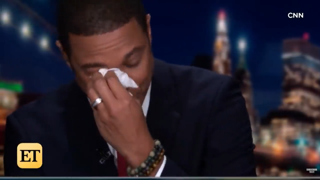
Former CNN host Don Lemon has asked a federal court to strike down the section of the Freedom of Access to Clinic Entrances Act (FACE Act) that protects places of worship, following his indictment for participating in a protest at a Minnesota church. The case is shaping up as a significant test of whether the FACE Act’s protections for religious institutions can withstand constitutional scrutiny, with potential implications for the law’s broader application, including its use in protecting abortion clinics.
Explainer Free Speech Battles: Navigating Rights and Censorship in Modern Society
Lemon, who is represented by attorney Abbe Lowell, filed a motion on Friday to dismiss the indictment. The motion argues that Section 248(a)(2) of the FACE Act exceeds Congress’s authority under the Commerce Clause of the U.S. Constitution. According to Lemon’s legal team, the law’s regulation of conduct at religious sites is “intrastate, non-economic, and lacks any non-attenuated nexus to interstate commerce.” This argument challenges the federal government’s ability to regulate activities at houses of worship under the FACE Act, which was enacted in 1994.
Details of the Indictment
A federal grand jury indicted Lemon and 37 others for allegedly invading Cities Church in St. Paul, Minnesota, on January 18. Prosecutors allege that the group targeted the church because one of its pastors works for Immigration and Customs Enforcement (ICE). The indictment states that the group disrupted a church service, refused to leave when asked, blocked congregants from reaching their children, and chanted slogans, including, “Who shut this down? We shut this down!” Lemon has pleaded not guilty to the charges.
The indictment specifically charges Lemon under the FACE Act’s second section, which prohibits using force, threats of force, or physical obstruction to interfere with anyone exercising their religious freedom at a place of worship. Lemon’s legal team contends that this section is unconstitutional as applied to his conduct, arguing that the alleged actions do not fall within Congress’s power to regulate interstate commerce.
Legal Arguments and Reactions
Lemon’s motion to dismiss references the 1996 case U.S. v. Dinwiddie, in which an appeals court upheld the FACE Act’s protections for abortion clinics as a valid exercise of Congress’s commerce power. However, Lemon’s filing distinguishes between abortion clinic protections, which may involve economic activity, and the law’s application to religious obstruction, which his attorneys argue is not inherently economic and therefore falls outside federal authority.
Jeremy Dys, senior counsel at First Liberty Institute, criticized Lemon’s legal approach, calling it “extremely weak” and suggesting that Lemon’s actions were criminal rather than expressive. Dys argued that Lemon and others “intimidate[d] people who were exercising their First Amendment rights” by trespassing and blocking access during worship services.
“I’m surprised that he would want to inflict that damage to a law that has protected abortion clinics around the country.”
— Jeremy Dys, senior counsel, First Liberty Institute
Dys also pointed out that Lemon traveled from New York to Minnesota and filmed the protest for his YouTube podcast, suggesting an intent to reach a national audience. He warned that if the court invalidates Section 2 of the FACE Act, the ruling could undermine the entire statute, since courts have historically treated the law as a unified whole. This could have far-reaching effects beyond the immediate case, potentially affecting the law’s application to abortion clinics as well.
Broader Implications and Political Context
The FACE Act was passed with bipartisan support in 1994, in part because it extended protections to both abortion clinics and houses of worship. The law was designed to address violence and obstruction at reproductive health facilities, but lawmakers included religious institutions to broaden its appeal and ensure constitutional balance. Over the years, abortion rights groups have urged the Justice Department to enforce the law vigorously against pro-life protesters, while critics have argued that it has been used selectively and sometimes in a politically motivated manner.
Dys suggested that Lemon’s challenge could have unintended consequences for abortion clinic protections, stating, “it would be one of the greatest ironies of the universe that it was Don Lemon that was responsible for invalidating the very law that was put in place to protect abortion clinics in this country.”
Lemon’s attorney did not respond to requests for comment from the Daily Signal. At the time of publication, there were no public statements from abortion rights groups or Democratic lawmakers regarding Lemon’s legal challenge or the broader implications for the FACE Act. The case is expected to draw further attention as it moves through the courts, given its potential to reshape the legal landscape for both religious and reproductive rights.