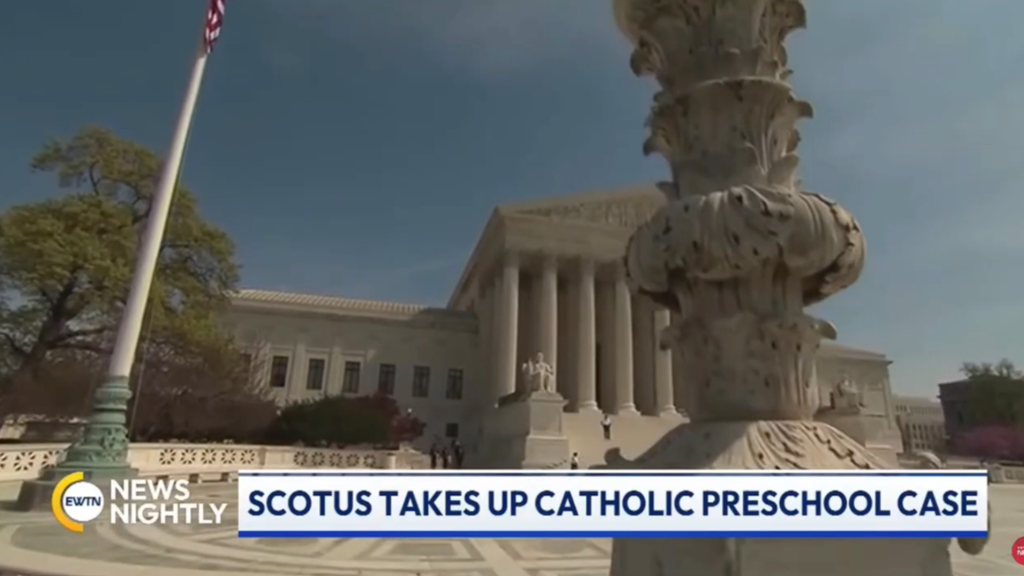
The U.S. Supreme Court has agreed to hear St. Mary Catholic Parish v. Roy, a case that challenges Colorado’s decision to exclude Catholic preschools from its universal preschool funding program. The lawsuit, filed by two Denver-area parishes, the Archdiocese of Denver, and several families, alleges that the state’s policy denies funding to families who choose Catholic schools for their children, violating constitutional protections for religious freedom.
Explainer Understanding the Supreme Court’s Impact on Law and Liberty
At the heart of the dispute is whether Colorado’s program, which provides 15 hours of free preschool per week to every 4-year-old, is truly open to all families or unlawfully discriminates against those seeking faith-based education. The outcome of this case could have significant implications for how states nationwide structure school choice and religious accommodation policies in publicly funded education programs.
Details of the Lawsuit
According to the Becket Fund, which represents the plaintiffs, Colorado’s Universal Preschool program promised more than $6,000 per eligible child for use at any public, private, or faith-based preschool. However, Catholic schools were excluded after refusing to sign a provider agreement that plaintiffs argue would force them to violate their religious beliefs. The agreement, according to the lawsuit, contains requirements that Catholic schools say conflict with their faith-based mission and teachings.
One of the families involved, the Sheley family, says they were denied funding solely because their preschooler would attend a Catholic school already attended by their older children. The lawsuit claims that more than 1,500 families have been affected by the exclusion. Plaintiffs argue that Colorado’s policy is not neutral, pointing out that the state allows exceptions for preschools serving children with disabilities, low-income families, or LGBT families. They contend that the refusal to grant a similar accommodation to Catholic schools amounts to targeted discrimination against religious institutions.
The legal team representing the plaintiffs maintains that the state’s refusal to include Catholic preschools in the program is not simply a matter of regulatory compliance, but rather a form of religious discrimination. They argue that the state’s actions violate both the Free Exercise Clause and the Equal Protection Clause of the U.S. Constitution.
Arguments and Personal Stories
Plaintiffs argue that Colorado’s policy either directly or indirectly penalizes families for their religious beliefs. They assert that attaching conditions to funding that Catholic schools cannot meet is functionally equivalent to excluding them outright. The Supreme Court has previously ruled that states cannot use indirect means to achieve religious discrimination, a point the plaintiffs emphasize in their arguments.
Several families have submitted personal stories to the Court to illustrate the impact of the policy. Jill Hall, who lost tuition assistance for her youngest child at Our Lady of Lourdes in Denver, said, “I’m not choosing something so extreme. I’m choosing just a faith, and I’m being punished for that.”
"I’m not choosing something so extreme. I’m choosing just a faith, and I’m being punished for that."
— Jill Hall, parent
Andy Abols, whose daughter Reese has spina bifida, described paying out of pocket for preschool at St. Mary’s while his taxes fund free preschool for others. “I’m moving backwards to protect our children’s minds and instill virtue,” he said. Other parents, such as Ana Karen Mier and Melissa De La Cruz, have also shared how the exclusion has forced financial sacrifices and, in some cases, prevented their children from enrolling in Catholic schools. These stories are intended to highlight the real-world effects of the state’s policy on families seeking faith-based education.
The plaintiffs maintain that the exclusion places a burden on families who wish to raise their children in accordance with their religious beliefs. They argue that the policy effectively forces parents to choose between their faith and access to a public benefit that is otherwise available to all families in the state.
State’s Position and Broader Implications
Colorado officials argue that the exclusion is based on how Catholic schools operate, not their religious identity. The state has not issued a detailed public response to the lawsuit’s latest claims, and officials have not addressed the specific allegations in the Supreme Court filings. State representatives maintain that the requirements in the provider agreement are designed to ensure compliance with state laws and regulations, not to target religious institutions.
The Supreme Court granted certiorari on April 20, with oral arguments expected in the fall. The outcome could set a precedent for how states nationwide accommodate religious schools in publicly funded education programs. The case is being closely watched by advocates on both sides of the school choice and religious liberty debates, as it could clarify the limits of state authority in regulating participation by religious institutions in universal programs.
The Becket Fund and other religious liberty organizations have framed the case as a test of whether states can exclude faith-based schools from generally available public benefits. The decision is expected to clarify the boundaries of state power when it comes to regulating the participation of religious institutions in programs that are otherwise open to all.
As the Supreme Court prepares to hear arguments, the case has drawn national attention for its potential to reshape the landscape of religious liberty and school choice in the United States. The decision could have far-reaching effects, not only for Colorado families but also for similar programs and disputes in other states.
For more information, see: https://thefederalist.com/2026/07/13/colorado-denies-funding-to-preschoolers-on-account-of-their-catholic-faith-lawsuit-alleges and https://becketfund.org/case/st-mary-catholic-parish-v-roy/?section=caseDetail.