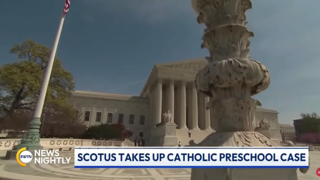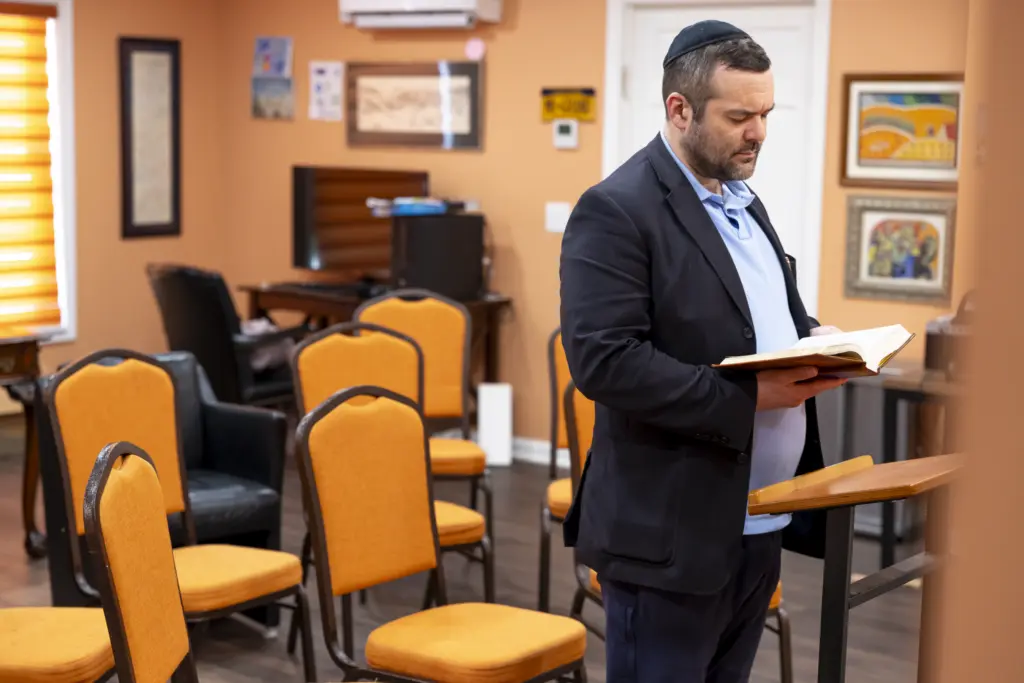
Daniel Grand, an Orthodox Jew from University Heights, Ohio, has petitioned the Supreme Court after claiming that local authorities effectively barred him from hosting an in-home prayer group. The case, Grand v. City of University Heights, centers on the tension between local zoning laws and religious freedoms, as Grand argues that he should be allowed to gather with friends for prayer without government interference.
Explainer Understanding the Supreme Court’s Impact on Law and Liberty
In 2021, Grand invited friends to his home for the inauguration of a shul, a place for Jewish religious services. Following the email invitation, which was leaked, Grand received a cease-and-desist letter from the city’s law director, ordering him to stop what was termed an illegal “place of religious assembly.” Critics argue that the city’s actions infringe upon Grand’s constitutional rights to freely practice his religion.
Grand’s lawyer, Jonathan Gross, explained that the city required him to obtain a commercial special-use permit for his home, which is typically necessary for churches and synagogues. However, Gross noted that the permit would prohibit residential use, effectively forcing Grand to choose between hosting a prayer group and living in his home. “The whole purpose of this was because the synagogue is over a mile from Daniel’s house, and it gets cold in Cleveland in the winters,” Gross said.
Local Government's Position
Former University Heights Mayor Michael Dylan Brennan stated that the city had no issue with Grand hosting a small prayer group. He claimed that after Grand withdrew his permit application, the city was willing to sign a Memorandum of Understanding to allow the gatherings. “This is a manufactured controversy on Mr. Grand’s part,” Brennan told The Federalist. “If he was merely having a small prayer group that met regularly at his house, this would not require a permit, and it would not be the city’s business.”
Brennan also mentioned that he approved every special-use permit that completed the application process during his tenure, including permits for three other synagogues. However, Grand contends that the city’s actions were part of a broader effort to surveil his home, claiming that neighbors were encouraged to report any activities consistent with a house of worship. “I felt like paparazzi every time I walked out of my house,” Grand said, describing the atmosphere created by the city’s scrutiny.
Legal Proceedings and Appeals
The Sixth Circuit Court of Appeals ruled that Grand's case was “unripe” because he withdrew his permit application without a final determination from the district court. The court noted that Grand could not establish harm since the cease-and-desist letter did not impose any fines or restrictions beyond existing town ordinances.
In their legal filings, Grand and his legal team argued that the cease-and-desist letter caused significant harm by preventing his prayer group from meeting in his home. They emphasized that the city’s actions created a procedural maze that hindered his ability to practice his faith. “This dispute began with Daniel Grand trying to pray with a small group of friends in his own living room,” a spokesperson for Grand’s legal counsel stated.
Grand and the Alliance Defending Freedom (ADF) filed a petition with the Supreme Court on May 28, seeking to overturn the circuit court’s dismissal and allow him to host his prayer gatherings. “I’m asking for all people of faith and who believe in the Constitution to pray that the Supreme Court takes up this case,” Grand said. “We want God in the home. I should not have a government telling me that I have no right to have God in my home.”
The city of University Heights maintains that land disputes like Grand’s require a final determination from the district court to proceed. They argue that Grand’s withdrawal of his permit application precludes any claims of harm, as the cease-and-desist letter did not impose immediate penalties.
As the case moves forward, it raises important questions about the balance between local zoning laws and the rights of individuals to practice their faith in their homes. Supporters of Grand’s position argue that the government should not interfere with religious practices, while city officials assert that they are merely enforcing zoning regulations.
The outcome of this case could have significant implications for religious freedom and local governance in similar disputes across the country.