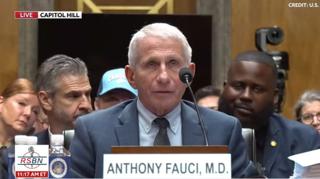
Dr. Anthony Fauci, the longtime director of the National Institute of Allergy and Infectious Diseases and a leading figure in the U.S. response to the COVID-19 pandemic, now faces possible legal consequences after a sharply divided Senate panel voted to hold him in contempt of Congress. The Senate Homeland Security Committee voted 8-7 along party lines to refer contempt charges to the Department of Justice (DOJ), escalating an already heated partisan dispute over Fauci’s testimony and the broader investigation into the origins of the coronavirus pandemic.
The committee’s decision centers on Fauci’s refusal to answer certain questions during a recent hearing. Republicans on the panel allege that Fauci withheld information about his role in COVID-19 research and the origins of the pandemic. During the hearing last week, Fauci invoked his Fifth Amendment right against self-incrimination, declining to respond to specific questions from senators. Committee Chairman Rand Paul, R-Ky., argued that Fauci could not legally invoke that right, citing a 12-year pardon from President Joe Biden. Paul asserted that Fauci’s refusal to answer was unjustified and suggested that the former health official was deliberately avoiding the truth.
"All he had to do was tell the truth more than 100 times. Though he refused,"
— Rand Paul, Senate Homeland Security Committee Chairman
The Department of Justice has acknowledged receipt of the committee’s referral. A DOJ spokesperson stated that the department is reviewing the document and will work with the Senate as appropriate. "The department seriously reviews all congressional referrals," the spokesperson told the Daily Signal. The referral was reportedly hand-delivered to acting Attorney General Todd Blanche and Washington, D.C., U.S. attorney Jeanine Pirro. Paul told reporters that the decision to pursue charges now rests with the DOJ, emphasizing, "I think it’s important for them to look at, and then that’ll be their choice whether to look at it."
Partisan Divide Over Evidence and Process
The contempt vote has further exposed partisan divisions on the committee. Democrats, led by Ranking Member Gary Peters, D-Mich., opposed the move, arguing that they had not been given access to the evidence Republicans cited in support of the referral. According to Peters, the evidence in question reportedly amounts to over 1 million pages of documents. He called for a delay in the vote until the full Senate could consider the matter and until all members had the opportunity to review the evidence. Paul countered that Democrats had been granted access to the documents for over a year and only needed to request a password to review them, but said none had done so.
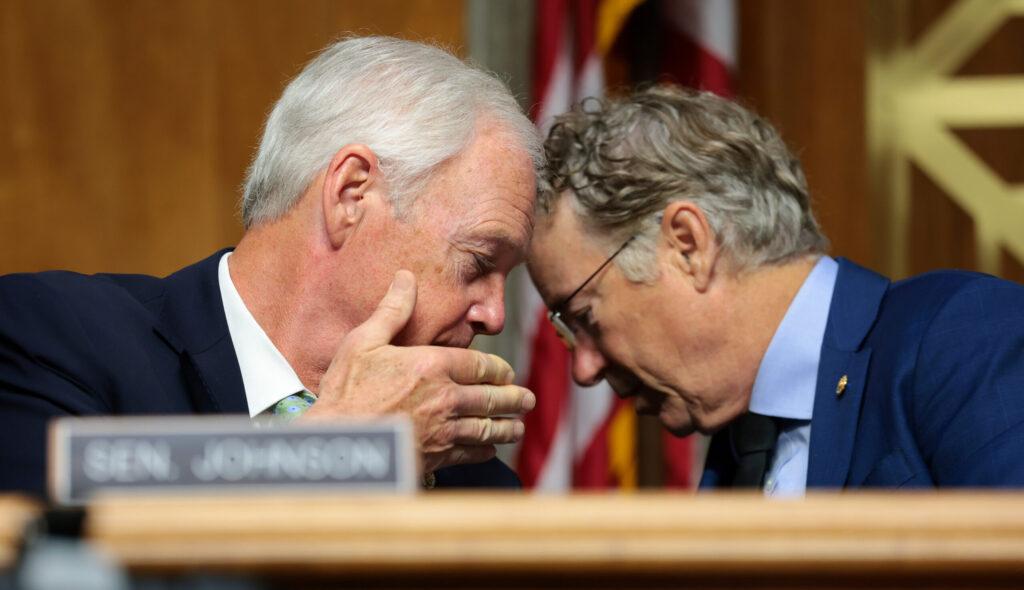
Sen. Ron Johnson, R-Wis., another Republican member of the committee, criticized Democrats after the vote, saying they "need to pull their heads out of the sand." Johnson characterized Fauci as a "self-proclaimed expert" and revealed that he has obtained Fauci’s federal phone, which was used during the pandemic, from the Department of Health and Human Services. Johnson said he plans to review the phone for additional evidence as part of the ongoing congressional investigation.
Ongoing Investigation and Broader Context
The investigation into Fauci’s actions and testimony is ongoing. Johnson told reporters that he is seeking "more evidence on how he lied to the American public." While Democrats have not publicly addressed the specific allegations against Fauci or the contempt referral beyond their procedural objections, they have maintained that the process has been unfair and that they have not been given adequate access to the materials underpinning the Republican case.
The dispute over Fauci’s testimony and the committee’s handling of evidence reflects broader partisan divisions over the federal government’s response to COVID-19 and the continuing debate over the origins of the virus. Fauci, who retired from government service in late 2022, has long been a polarizing figure in American politics, praised by many for his leadership during the pandemic but criticized by some Republicans who allege he misled the public or withheld information.
The DOJ’s review of the contempt referral could take weeks or months, and it remains unclear whether the department will ultimately pursue charges against Fauci. In the meantime, the Senate committee’s investigation is expected to continue, with both parties likely to maintain their sharply contrasting positions on Fauci’s conduct and the handling of the COVID-19 pandemic.