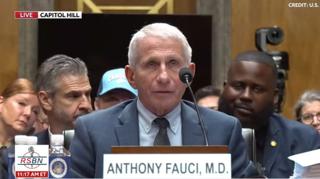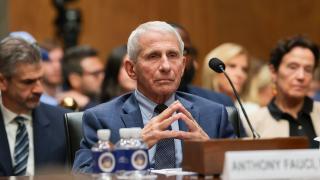
The Senate Homeland Security and Governmental Affairs Committee voted Thursday to hold former White House COVID adviser Anthony Fauci in contempt of Congress, citing his refusal to answer questions during a hearing last week on the federal pandemic response.
The move marks a significant escalation in partisan tensions surrounding Fauci’s role during the pandemic. Republicans on the committee have pushed for further accountability regarding Fauci’s actions and decisions, while Democrats have objected to both the process and the rationale behind the contempt proceedings.
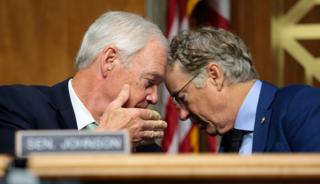
The committee’s 8-5 vote was split strictly along party lines, with all Republican members supporting the contempt resolution and all Democrats opposing it. The vote followed a contentious hearing in which Fauci, appearing under subpoena, repeatedly invoked his Fifth Amendment right against self-incrimination. According to committee chair Sen. Rand Paul, R-Ky., Fauci declined to answer more than 100 questions posed by committee members. These questions covered a range of topics, including his role in funding research in China, his public statements regarding the origins of COVID-19, and his assessments of vaccine risks and alternative treatments.
"But the contempt power exists for precisely this circumstance."
— Sen. Rand Paul, committee chair
Democratic Opposition to Contempt Resolution
Democrats on the committee sought to table the contempt resolution and proposed granting Fauci immunity from prosecution as a way to encourage his testimony. Both motions failed. In addition, two Democratic senators registered their opposition to the contempt finding by proxy, according to CBS News. Democrats argued that the contempt proceedings were unwarranted and that the committee should have pursued alternative means to secure Fauci’s testimony.
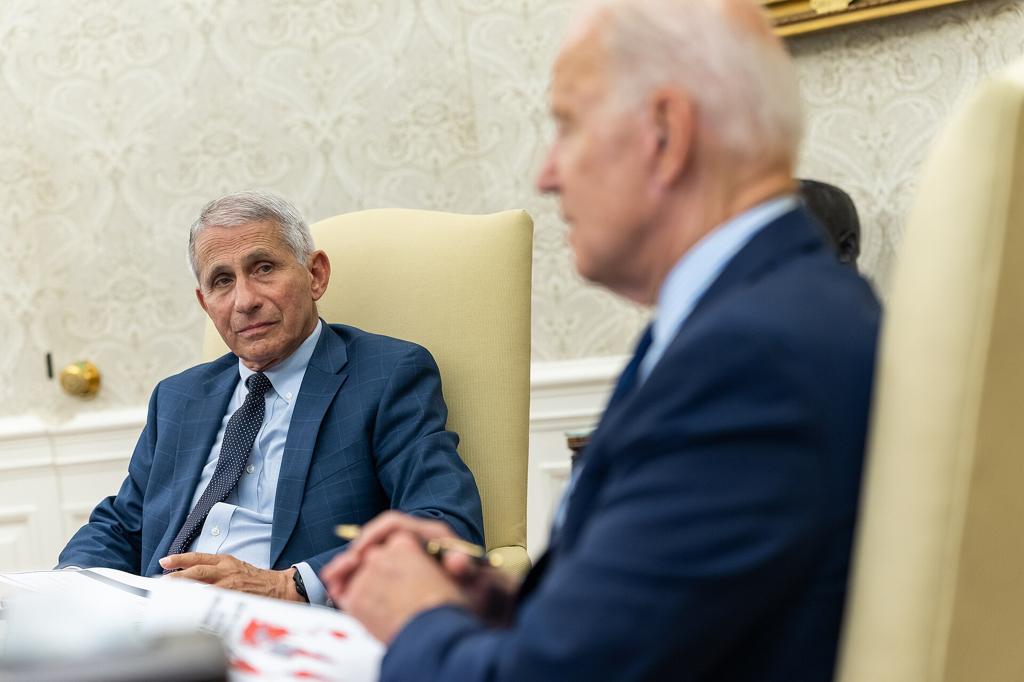
Sen. Paul told CBS News that he intends to bypass a full Senate floor vote and refer the contempt resolution directly to the Justice Department. This step departs from the typical procedure, which usually involves a vote by the full Senate before such a referral. The committee’s actions come as legal scholars debate whether Fauci’s broad pardon from former President Biden, which covers an 11-year period, should have shielded him from concerns about self-incrimination in this context.
During the hearing, Sen. Josh Hawley, R-Mo., argued that Fauci’s use of the Fifth Amendment was overly broad and extended beyond areas where he faced real legal jeopardy. Hawley cited examples in which Fauci refused to answer even basic questions unrelated to potential prosecution, such as the color of his tie or the presence of a folder in front of him. Hawley described this as evidence of a "premeditated design to evade this committee’s questions."
In his opening statement, Fauci referenced the public release of more than 1,000 pages of his journal entries by Sen. Paul ahead of the hearing. Fauci maintained that his invocation of the Fifth Amendment was appropriate given the circumstances, but did not elaborate further during the session. Supporters of Fauci have not issued additional public statements addressing the contempt vote or the ongoing investigation.
The contempt vote comes in the wake of a report by The Wall Street Journal that a Senate subcommittee chaired by Sen. Ron Johnson, R-Wis., has obtained a copy of Fauci’s government-issued cellphone from his tenure as director of the National Institute of Allergy and Infectious Diseases. The device could potentially provide further insight into Fauci’s communications and decision-making during the pandemic lockdown period.
The committee’s official contempt resolution details the allegations against Fauci and outlines the process that led to Thursday’s vote. The resolution now awaits action by the Department of Justice, which will determine whether to pursue prosecution based on the committee’s referral.
The outcome of the contempt referral remains uncertain. Legal experts note that prosecutions for contempt of Congress are rare and often depend on the willingness of the Justice Department to pursue the case. The debate over Fauci’s testimony and the broader questions about the federal pandemic response are likely to continue as Congress and the public seek further answers about the government’s handling of COVID-19.