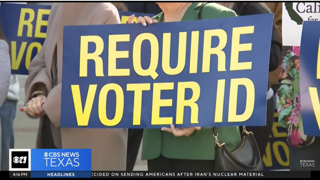
The Senate has begun debate on the SAVE America Act, a controversial bill aimed at enhancing election integrity through measures such as voter ID requirements and proof of citizenship. Despite widespread support among Republicans, the bill faces significant hurdles, including the 60-vote threshold needed to advance in the Senate.
Explainer Election Integrity: Protecting Voter Rights in Modern America
The core tension lies in the stark divide between Republican efforts to secure elections and Democratic opposition, which critics claim is rooted in misinformation. Supporters argue that the bill is essential for maintaining public confidence in electoral processes, while opponents contend it could disenfranchise millions of voters.
The SAVE America Act has sparked intense discussions, with proponents emphasizing its necessity for safeguarding elections. Rachel Bovard, vice president of programs at the Conservative Partnership Institute, noted, "The reality is, it has been a very long time since the Senate has worked as a deliberative body to pass legislation." She criticized the current Senate dynamics, attributing the stagnation to the silent filibuster, which allows the minority party to block legislation with minimal effort.
GOP Strategy and Leadership
Senate Majority Leader John Thune, R-S.D., has faced pressure from conservative senators to push the SAVE America Act forward. Bovard remarked, "The conservative movement asked him to make this a fistfight. He did." Thune's leadership marks a departure from former Majority Leader Mitch McConnell's approach, which often required securing 60 votes before moving legislation.
Thune's strategy includes extending the debate on the bill, allowing Republicans to control the legislative process and limiting Democratic amendments. This approach aims to expose Democratic opposition as obstructionist ahead of the upcoming midterm elections. Insiders expect the debate to last up to ten days, providing a platform for Republicans to articulate their positions on election integrity.
Democratic Opposition
Democratic senators have criticized the SAVE America Act, with some claiming it would disenfranchise voters, particularly among minority groups. Senator Adam Schiff, D-Calif., has been vocal in opposing the bill, arguing that it would negatively impact over 20 million Americans. Critics of this perspective, including election law expert Hans von Spakovsky, argue that the bill is necessary to prevent unauthorized voting.
Von Spakovsky stated, "Convincing politicians who clearly want noncitizens to vote in U.S. elections to support a bill that keeps noncitizens off the voter rolls is a long shot under the current filibuster rules." He suggested that attaching the bill to must-pass legislation could be a viable path forward, although the Byrd Rule complicates this strategy.
Future Prospects
As the debate unfolds, the potential for the SAVE America Act to pass remains uncertain. Bovard expressed cautious optimism, stating, "As long as the floor remains open and the Senate remains on, there’s a chance at passage — even in the shadow of 60 votes." However, the path forward may require significant negotiation and compromise among Senate Republicans.
Senator Ron Johnson, R-Wis., emphasized the importance of getting Democrats on record regarding the filibuster. He noted, "If they vote against nixing the filibuster, that vote will hang over them. If they vote yes? Well, let’s at least we get election integrity out of it."
The ongoing debate reflects broader national discussions about election integrity and voter access, with both sides preparing for a contentious battle in the lead-up to the midterm elections. As the Senate deliberates, the outcome of the SAVE America Act could have lasting implications for future electoral processes in the United States.