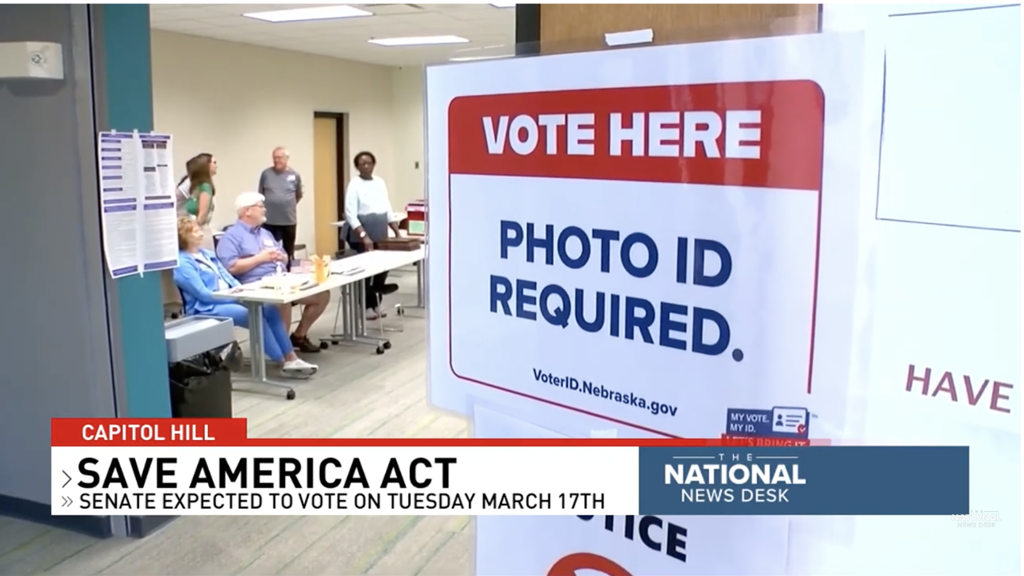
The Senate commenced debate on the SAVE America Act on Tuesday, a bill designed to enhance election security by requiring proof of citizenship to register and photo identification to vote. However, the bill's prospects appear bleak, with critics within the Republican Party questioning the sincerity of its supporters.
Explainer Election Integrity: Protecting Voter Rights in Modern America
The core tension lies in the divided Republican stance on the bill, as some party members express skepticism about its support and the effectiveness of the proposed debate strategy. Senate Majority Leader John Thune, R-S.D., has promised a "robust debate" on the legislation, which he argues is necessary to hold Democrats accountable for their opposition to what he describes as a popular election-integrity measure.
The SAVE America Act, which has garnered significant public support according to a Harvard CAPS/Harris Poll, aims to prevent unauthorized individuals from voting. The poll indicates that 71% of Americans favor the legislation, while 80% want non-citizens removed from voter rolls. Thune stated, "[Democrats] will be forced to defend their outrageous positions on these issues – and explain to the American people why common sense and the Democratic Party have parted ways."
Internal GOP Divisions
Despite the public backing, internal divisions among Republicans have surfaced. Critics, including former White House Chief of Staff Mark Meadows, argue that many GOP senators are not genuinely committed to the bill. Meadows claimed that Thune is providing cover for Republicans who oppose the SAVE America Act and are reluctant to engage in a talking filibuster, a strategy that would require Democrats to actively debate the bill to prevent its passage.
Meadows pointed out that a list of 25 Republican senators, including prominent figures like Mitch McConnell and Lisa Murkowski, do not support the legislation. He stated, "The SAVE America Act isn’t lacking public support. It’s lacking political will."
Thune's office has indicated that the amendment process will allow Republicans to push for additional provisions, including those requested by former President Donald Trump, such as banning mail-in ballots and restricting participation in women's sports based on gender identity. However, the requirement for a 60-vote threshold for cloture poses a significant hurdle, as it necessitates bipartisan support that appears unlikely.
The Debate Strategy
The debate is expected to last seven to ten days, with Republicans controlling the amendment process. Thune has emphasized the importance of this debate, suggesting it will highlight the Democratic Party's stance on election integrity. However, critics argue that the approach lacks the necessary political resolve to advance the bill effectively.
Meadows criticized the current strategy, stating, "Saying you are supportive of the SAVE America Act but not supporting the process to get it to the president’s desk is at best disingenuous. The American people are tired of excuses."
Supporters of the bill, including several Republican senators, have expressed their commitment to the legislation. For instance, Sen. Jerry Moran, R-Kan., reiterated his support, stating, "I cosponsored the SAVE America Act to make certain only U.S. citizens are voting in federal elections."
Responses from Supporters
While some senators have publicly backed the bill, many did not respond to inquiries regarding their support for the talking filibuster. Thune's office pointed to his floor speech reaffirming his commitment to the SAVE America Act, while Grassley’s spokeswoman noted his long-standing support for voter ID laws.
Sen. Tim Scott, R-S.C., also expressed the need for the bill, stating, "When the vast majority of every demographic in this country comes to the same conclusion, that the SAVE America Act should be passed, we should pass it." However, he did not definitively endorse the talking filibuster strategy.
As the Senate continues its debate, the future of the SAVE America Act remains uncertain, with internal GOP disagreements and the need for bipartisan support posing significant challenges. Critics of the current approach argue that without a more aggressive strategy, the bill is unlikely to succeed in its current form.