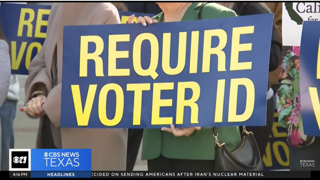
The Senate is set to bring the SAVE America Act to the floor this week, a measure aimed at enhancing election integrity through provisions such as voter ID and proof of citizenship. The legislation has garnered support from Republican, independent, and some Democratic voters, but faces significant opposition from Senate Democrats, raising questions about the legislative process needed for its passage.
Explainer Election Integrity: Protecting Voter Rights in Modern America
The core tension lies in whether Republicans will need to change Senate rules to pass the bill with a simple majority, as some media outlets have suggested. Critics argue that this portrayal misrepresents the existing Senate procedures that could allow the bill to pass without altering the rules.
The SAVE America Act has been introduced amid ongoing debates about election security and voter access. Proponents assert that measures like voter ID are essential for maintaining the integrity of elections, while opponents argue they disproportionately affect certain demographics. The act's introduction has reignited discussions about the filibuster, a procedural tactic that requires a supermajority to advance most legislation in the Senate.
Misconceptions About Senate Rules
Some media reports have claimed that Republicans would need to change Senate rules to implement a "talking filibuster" to pass the SAVE America Act. For instance, The Hill reported that conservatives have pushed for such a change, while The Washington Post noted that unified opposition from Democrats would necessitate a rules alteration for the bill to advance.
However, Rachel Bovard, vice president of programs at the Conservative Partnership Institute, argues that these claims misunderstand Senate procedures. "Every bill passes the Senate with a simple majority; it’s just a question of how you break the filibuster," Bovard told The Federalist. She explained that under current rules, a bill can be passed with a simple majority once the filibuster is broken, either through a cloture vote requiring 60 votes or through a talking filibuster, which involves continuous debate by the minority.
Rep. Chip Roy, R-Texas, echoed this sentiment, stating that as long as all Senate Republicans are present and united, a final vote on the bill can occur without needing to change existing rules. "If Republicans stick together, and the minority exhaust their opportunities to speak in opposition or give up, a final vote on passage of the bill occurs automatically at a majority threshold," Roy said.
The Role of the Talking Filibuster
Bovard emphasized that a talking filibuster could encourage negotiation and deliberation in the Senate. "A talking filibuster forces the Senate to start seeing if it can shake loose a deal that seven Democrats might support," she said. This approach could potentially lead to a bipartisan agreement, allowing the bill to gain the necessary support for passage without altering Senate rules.
Critics of the talking filibuster, however, argue that it could lead to prolonged debates that stall legislative progress. They contend that the current political climate may not foster the cooperation needed for such negotiations to succeed. Supporters of the SAVE America Act maintain that the measure reflects the will of the electorate and should be passed without unnecessary procedural hurdles.
Historical Context and Future Implications
The debate over the SAVE America Act and the filibuster is not new. In 2022, Senate Democrats attempted to change filibuster rules to pass their own election legislation, which included provisions aimed at expanding voting access. Then-Senate Majority Leader Chuck Schumer proposed limiting the speaking time for senators in an effort to expedite the process. However, this attempt highlighted the complexities of Senate rules and the challenges of garnering bipartisan support.
Bovard noted that misconceptions about the need to change Senate rules may stem from the Democrats' previous efforts to alter the filibuster. "Because Democrats tried to propose a rules change to make it easier for themselves, there are a lot of people who say, ‘Well, a rules change must be required now,’" she said. "But that is not true at all. A talking filibuster has always been a part of the Senate’s architecture."
As the Senate prepares to debate the SAVE America Act, the outcome may set a precedent for how future legislation is approached in a divided chamber. The discussions surrounding the bill and the filibuster will likely continue to shape the legislative landscape as lawmakers navigate the complexities of governance in a polarized environment.