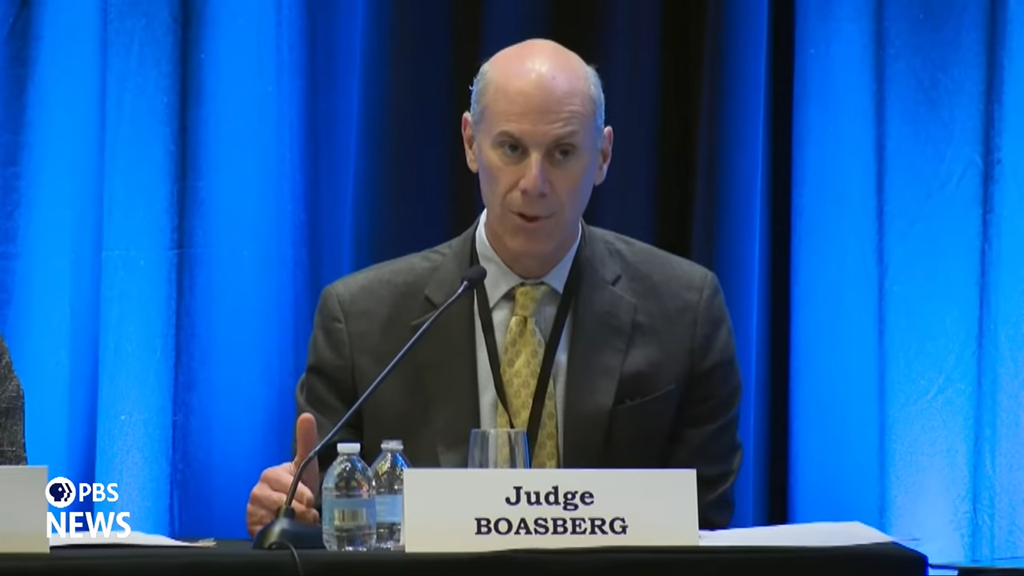
The D.C. Circuit Court of Appeals issued a ruling on Tuesday that halted Chief Judge James Boasberg's contempt proceedings against officials from the Trump administration. These proceedings were specifically aimed at officials involved in the deportation of individuals suspected of being gang members. The court's decision, which was made with a 2-1 vote, characterized Boasberg's actions as a "clear abuse of discretion." This ruling highlights significant concerns regarding judicial overreach and the separation of powers between the judiciary and the executive branch.
D.C. Appeals Court Overturns Judge Boasberg's Contempt Proceedings Against Trump Officials
The ruling underscores a notable tension that exists between judicial authority and the autonomy of the executive branch, especially in contexts related to national security and immigration enforcement. The majority opinion, authored by Judge Neomi Rao, articulated that Boasberg's inquiry improperly intruded upon the decision-making processes that are reserved for the executive branch. This intrusion raises questions about the appropriate limits of judicial oversight in matters that are traditionally within the purview of the executive.
Background and Reactions
In December, the D.C. Circuit had previously placed a temporary pause on Boasberg's contempt proceedings. These proceedings were initiated in response to the deportation of individuals linked to the Tren de Aragua gang, which was sent back to El Salvador. Despite the temporary pause, Boasberg continued to broaden his inquiry, seeking additional information from government officials regarding the deportations. Judge Rao noted that this expansion of inquiry was both unnecessary and improper, particularly since the government had already provided the name of the official responsible for the actions in question, then-Department of Homeland Security Secretary Kristi Noem.
Rao stated, "The district court proposes to probe high-level Executive Branch deliberations about matters of national security and diplomacy. These proceedings are a clear abuse of discretion, as the district court’s order said nothing about transferring custody of the plaintiffs and therefore lacks the clarity to support criminal contempt based on the transfer of custody."
The majority opinion was bolstered by Judge Justin Walker, who not only supported Rao's ruling but also penned a concurring opinion. Conversely, Judge J. Michelle Childs, who was appointed by President Biden, dissented from the majority opinion. In her dissent, Childs argued that the majority's ruling undermined the authority of the district court and could set a concerning precedent for future cases involving contempt findings.
Childs expressed her apprehension that the ruling would enable any litigant to challenge contempt findings based on their interpretation of a court's order before any formal findings are made. She stated, "Now, any litigant can argue, based on their preferred interpretation of a court’s order, that they did not commit contempt before contempt findings are even made."
This appeals court decision arrives at a time when Judge Boasberg's role in various investigations involving Trump and Republican lawmakers is under increased scrutiny. Recent documents released by Iowa Senator Chuck Grassley have indicated that Boasberg had met with members of special counsel Jack Smith's team regarding their investigative efforts. This revelation has raised further questions about Boasberg's impartiality and the motivations behind his actions.
Supporters of Boasberg's inquiry maintain that it is crucial to hold government officials accountable for their actions, especially in cases that involve national security. However, critics argue that such investigations can overstep judicial boundaries and interfere with the operations of the executive branch, potentially leading to a conflict between judicial oversight and executive authority.
The court's ruling not only halts Boasberg's contempt proceedings but also serves as a significant reminder of the delicate balance that must be maintained between judicial oversight and executive authority in matters related to national security and immigration enforcement. As the legal landscape continues to evolve, the implications of this ruling may resonate in future cases that involve similar issues, potentially shaping the relationship between the judiciary and the executive branch in the years to come.