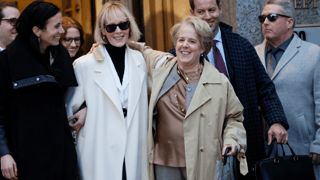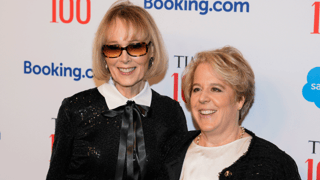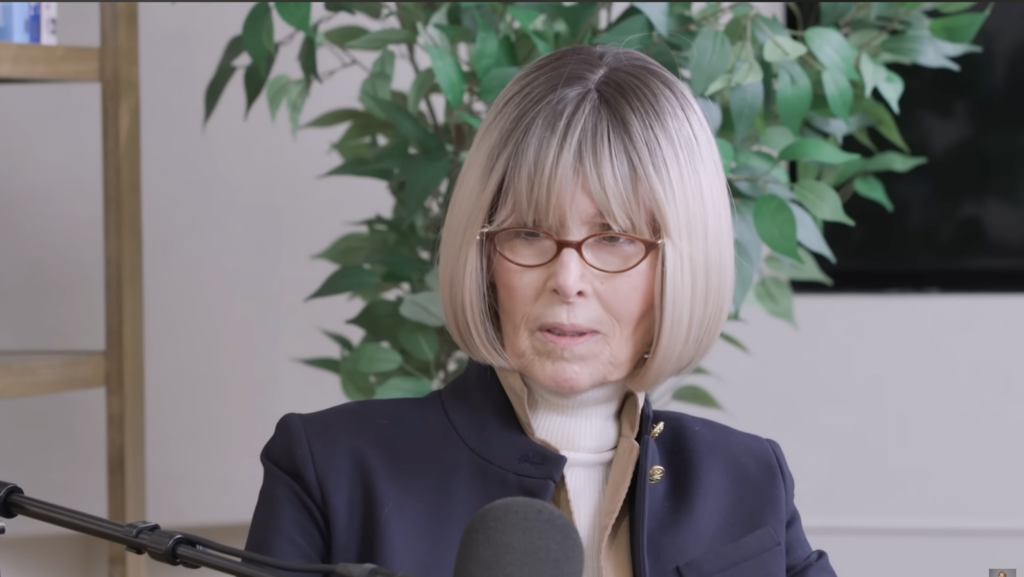
The U.S. Department of Justice (DOJ) has reportedly launched an investigation into E. Jean Carroll, focusing on whether she committed perjury during her testimony regarding her allegations against former President Donald Trump. This development has sparked significant debate, with critics arguing it reflects a politicized legal environment.
The core issue revolves around Carroll's claims that she received no outside funding for her lawsuit against Trump, which she filed after he denied her allegations of sexual assault. However, reports indicate that billionaire Democratic donor Reid Hoffman contributed to her legal expenses, raising questions about the integrity of her statements.
According to a CNN report, the investigation centers on a deposition Carroll provided in 2022. In that deposition, she stated she had no external financial support for her lawsuit. However, subsequent revelations suggest that Hoffman's nonprofit organization funded some of her legal fees. U.S. Attorney Andrew Boutros clarified that the Northern District of Illinois has not opened a criminal investigation into Carroll herself, despite CNN's sources indicating otherwise. A source told Axios that the DOJ is looking into the Hoffman organization rather than Carroll directly.
Background on Carroll's Allegations
Carroll accused Trump of raping her in a Bergdorf Goodman department store in the mid-1990s and subsequently sued him for defamation in 2019 after he denied the allegations. Carroll did not pursue criminal charges against Trump, citing a desire to respect other victims of sexual assault. In 2022, she filed a second lawsuit under New York's Adult Survivors Act, which temporarily lifted the statute of limitations for civil suits related to sexual assault.
The legal battles have been contentious, with Carroll winning a $5 million verdict for sexual abuse and defamation. However, the jury did not find Trump liable for rape, leading to further disputes over the nature of the allegations and the motivations behind them. Trump has consistently denied the allegations, stating, "She is trying to sell a new book; that should indicate her motivation."
Funding Controversies
The funding of Carroll's lawsuit has emerged as a focal point in the ongoing debate. Critics argue that the financial backing from a prominent Democratic donor undermines the credibility of her claims. Carroll's testimony that she received no outside funding contradicts the evidence suggesting otherwise, prompting questions about her honesty.
Hoffman's involvement in politically charged lawsuits has also raised eyebrows. He has previously funded legal actions against conservative media outlets and has been accused of employing tactics to influence political outcomes. This context has led some to view Carroll's lawsuit as part of a broader political strategy rather than a straightforward legal matter.
Questions About the Allegations
Further complicating the situation are the inconsistencies in Carroll's account of the alleged incident. Carroll has struggled to provide specific details regarding the timing of the alleged assault, stating it occurred "23 years ago" but failing to pinpoint an exact date. Trump's legal team has highlighted this lack of specificity, arguing it undermines her credibility. Trump's lawyer, Joe Tacopina, stated, "Give me a date. … We could see where he was. But of course, with no date, no month, no year, can’t present an alibi."
Additionally, emails from 2017 reveal Carroll discussing a plan to challenge Trump politically, which some interpret as evidence of ulterior motives behind her allegations. In one email, a friend urged Carroll to "scheme" against Trump, to which Carroll responded enthusiastically.
Conclusion
The unfolding investigation into E. Jean Carroll raises significant questions about the intersection of legal proceedings and political motivations. While critics assert that the DOJ's inquiry is a necessary step to uphold the integrity of the judicial process, supporters of Carroll argue that the investigation may be an attempt to undermine her credibility. As the situation develops, the implications for both Carroll and Trump remain uncertain, with broader ramifications for public trust in the legal system and political discourse.