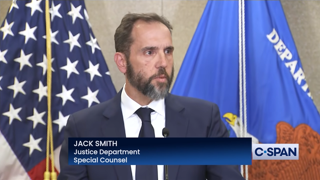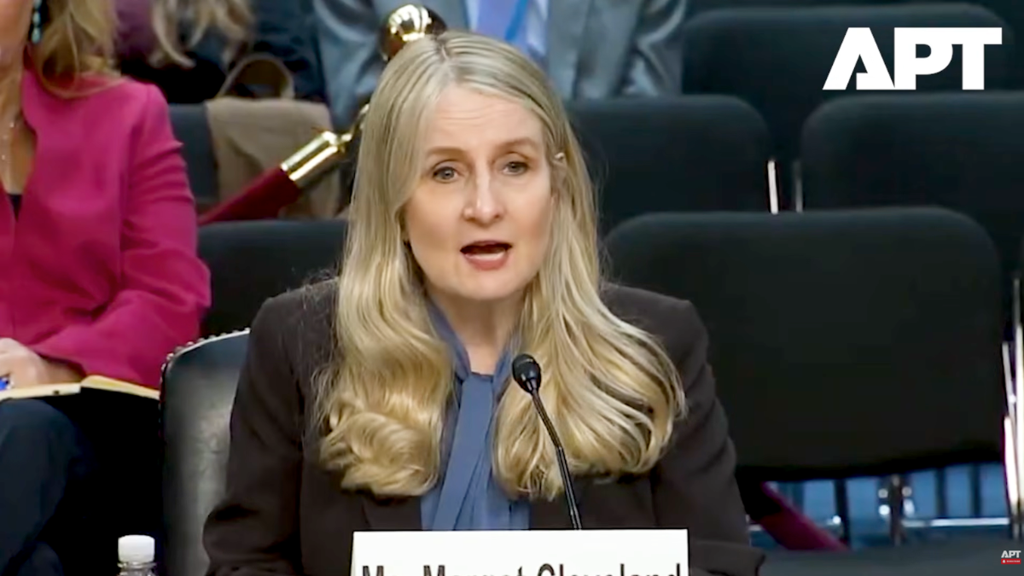
Margot Cleveland, Senior Legal Correspondent for The Federalist, provided a critical analysis of Special Counsel Jack Smith's legal tactics against former President Donald Trump during a Senate Judiciary subcommittee hearing on Tuesday. Cleveland's testimony was focused on what she described as constitutional violations stemming from Smith's investigations, particularly highlighting the controversial Arctic Frost initiative that was launched by the Biden administration's Department of Justice (DOJ) and FBI. This initiative has been a point of contention, raising questions about the motivations behind the investigations and the integrity of the legal process.
The core tension in Cleveland's arguments revolves around allegations that the DOJ and FBI have engaged in politically motivated actions against Trump and his allies. This has led to broader concerns regarding the integrity of the legal process, especially in the context of ongoing scrutiny of the Biden administration's approach to political opposition. In late 2025, Senate Republicans revealed that the DOJ and FBI allegedly compiled an "enemies list" of Republicans, which included seizing phone records from several GOP senators. Cleveland asserted that the Arctic Frost investigation was specifically designed to target Republicans in key battleground states, ultimately leading to Smith's elector case against Trump. She stated, "After the 2020 election, an anti-Trump FBI agent named Tim Thibault attempted to use the Justice Department to destroy the president."
Subpoenas and Congressional Targets
Cleveland highlighted that Smith approved subpoenas to obtain toll records from Republican senators, including a notable failed attempt to subpoena records from Senator Ted Cruz. Cruz's cellphone provider challenged the legality of the subpoena, which Cleveland noted as a significant point of contention. She remarked, "As this committee well knows — because many of you were victims — Smith approved the subpoenas."
Additionally, Cleveland raised concerns about a nondisclosure order that Smith's team sought from Chief Judge James Boasberg. She argued that the judge was not adequately informed that the targets of these subpoenas were members of Congress. "Judge Boasberg still failed to order Smith and his prosecutors to show cause for why they should not be held in contempt for concealing the members of Congress who were being targeted," she added. This lack of transparency has drawn criticism from various quarters, with some legal experts suggesting that such actions could undermine public trust in the judicial system.
Constitutional Concerns
Cleveland characterized the breadth of Smith's constitutional intrusions as unprecedented, asserting that his actions have stretched the meaning and intent of the law. She pointed out that the Supreme Court invalidated Smith's theory of criminal liability, which had significant implications for his attempts to prosecute Trump for actions related to his official duties. "The Supreme Court ultimately invalidated Smith’s theory of criminal liability and also halted Smith’s efforts to prosecute Trump for actions that fell within the president’s official duties," Cleveland noted.
Smith's investigations have included allegations against Trump for mishandling classified documents and for questioning the legitimacy of the 2020 election. U.S. District Judge Aileen Cannon dismissed the classified documents case entirely, ruling that Smith's appointment was unconstitutional. Following Trump's victory in the 2024 election, Smith chose not to pursue the election-related case further. Notably, the Supreme Court had recently affirmed that presidents enjoy absolute immunity for core presidential acts and presumptive immunity for official acts, further complicating Smith's legal strategies.
Response from Officials
While Cleveland's testimony has raised significant concerns about the actions of the DOJ and FBI, officials from the Biden administration have not publicly responded to these specific allegations. Supporters of Smith argue that his investigations are necessary to uphold the rule of law and accountability, especially in light of the events surrounding the 2020 election. However, critics maintain that the methods employed by Smith and his team have crossed ethical and constitutional boundaries.
Cleveland's testimony underscores the ongoing debate over the legality and morality of political investigations, particularly as they pertain to high-profile figures like Trump. As the political landscape continues to evolve, the implications of these legal battles remain a focal point for both supporters and detractors of the current administration. The discussions surrounding these issues are likely to persist, reflecting the deep divisions in American politics and the complexities of the legal system as it interacts with political processes.