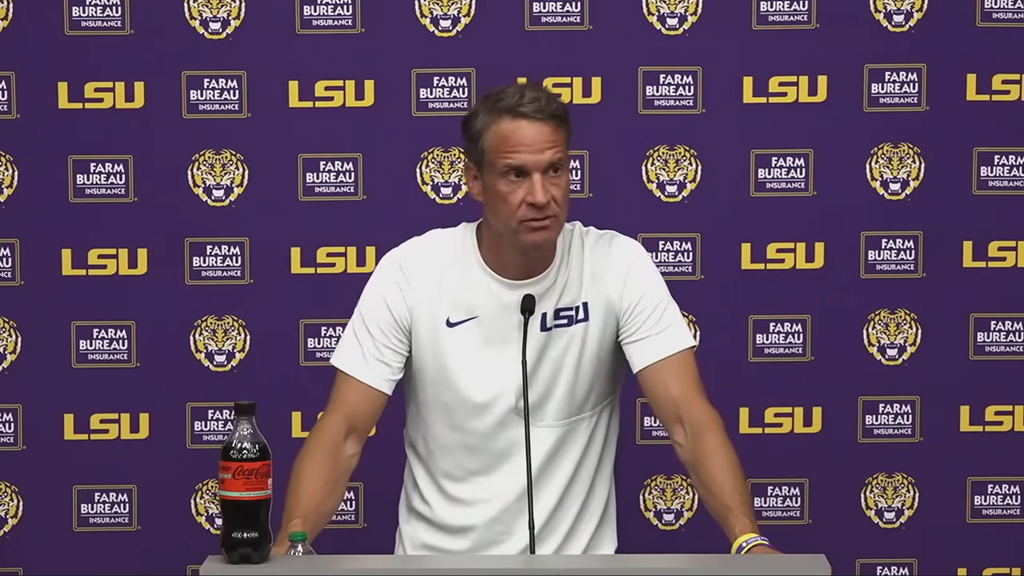
Lane Kiffin, the head football coach at LSU, is currently facing significant scrutiny for comments he made during a Vanity Fair interview regarding his decision to leave Ole Miss for LSU. In this interview, Kiffin suggested that racism at Ole Miss has hindered the university's ability to recruit talented players. This assertion has drawn considerable criticism from various quarters, raising questions about race and recruitment in college sports, particularly in the South, where historical ties to the Confederacy remain a sensitive topic.
The core issue revolves around Kiffin's claim that the atmosphere in Oxford, Mississippi, is less welcoming for nonwhite recruits compared to the more diverse environment at LSU. He stated that prospective recruits expressed concerns about moving to Oxford, saying, "Hey, coach, we really like you. But my grandparents aren’t letting me move to Oxford, Mississippi." In contrast, Kiffin noted that families felt more comfortable in Baton Rouge, Louisiana, appreciating the campus's diversity and the absence of segregation. This comparison has reignited discussions about the challenges faced by minority athletes in the recruitment process.
Kiffin's comments have prompted backlash, with critics arguing that they oversimplify complex issues related to race and recruitment. The author of the Vanity Fair piece highlighted Kiffin's indirect references to Ole Miss's struggles with its historical symbols, including the Confederate flag and the nickname "Ole Miss." Critics have labeled Kiffin's remarks as irresponsible, suggesting they perpetuate stereotypes about Mississippians. Some have pointed out that both Mississippi and Louisiana share a complicated history with the Confederacy, questioning Kiffin's logic in suggesting that players would feel more comfortable at LSU despite its own Confederate ties.
Criticism of Kiffin's Remarks
The backlash against Kiffin intensified on social media, where users criticized him for what they perceive as a lack of understanding of the broader implications of his statements. Many argue that his comments reflect a troubling trend in college sports, where coaches prioritize personal gain over ethical considerations. This has led to a wider conversation about the responsibilities of coaches in addressing sensitive issues related to race and recruitment.
In response to the outrage, Kiffin later issued an apology, stating, "I apologize if anybody at Ole Miss or in Mississippi was offended by that." He added, "I just hope [my comment] comes across respectful to Ole Miss … There are some things that I’m saying that are factual; they’re not shots." This apology, however, has not completely mitigated the criticism he has faced, as many continue to debate the implications of his remarks.
The Broader Context of College Sports
Kiffin's move from Ole Miss to LSU has raised ethical questions about loyalty and commitment in college sports. Critics argue that his departure just before the playoffs reflects a growing trend of coaches prioritizing lucrative contracts over their responsibilities to student-athletes and programs. This situation highlights the ongoing challenges faced by college programs in navigating the complexities of recruitment and the ethical considerations that come with it.
Supporters of Kiffin, however, argue that he is simply speaking candidly about the challenges of recruiting in a competitive landscape. They contend that his comments, while controversial, highlight real issues that need to be addressed in college athletics. As the debate continues, many in the college sports community are left questioning the implications of Kiffin's remarks and the broader issues of race and recruitment in the South.
The situation underscores the complexities of navigating historical legacies while striving for progress in college athletics. Kiffin's comments and the subsequent backlash serve as a reminder of the ongoing challenges faced by college programs in addressing issues of race, recruitment, and ethical conduct. As the conversation evolves, it remains to be seen how these dynamics will impact recruitment strategies and the culture within college sports moving forward.