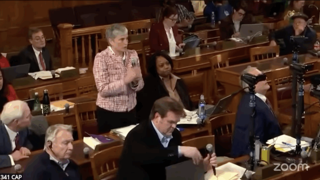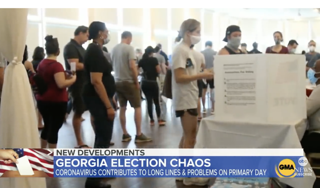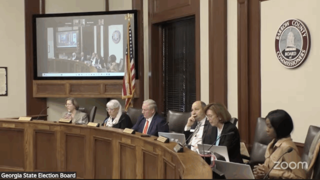
Fulton County, Georgia, has acknowledged that approximately 315,000 early ballots from the 2020 presidential election were unlawfully certified and included in the state's official results. This admission came during a hearing before the Georgia State Election Board, where officials confirmed that these ballots were counted despite not meeting legal certification requirements. Joe Biden won Georgia by a margin of just 11,779 votes, making the implications of this revelation significant.
Explainer Election Integrity: Protecting Voter Rights in Modern America
The core issue revolves around the integrity of the election process and the adherence to state laws governing ballot certification. Critics argue that the failure to properly certify these ballots undermines public trust in electoral outcomes. David Cross, an election integrity activist, filed a challenge that led to this admission, highlighting concerns over Fulton County's handling of early voting.
Under Georgia law, each ballot scanner must produce tabulation tapes at the close of voting, which must be signed by poll workers to certify the reported totals. These signed tapes are essential for verifying the legitimacy of the vote count. Without them, there is no verifiable starting or ending point for the vote totals, raising questions about the accuracy of the election results. Fulton County's inclusion of hundreds of thousands of unlawfully certified early votes in the official totals has prompted calls for accountability.
Key Details
Once Fulton County submitted its early voting totals, the responsibility shifted to Georgia Secretary of State Brad Raffensperger. Critics contend that his office accepted these numbers without proper verification, undermining the integrity of the election process. Raffensperger previously dismissed concerns raised by former President Donald Trump regarding irregularities in Fulton County, stating, "We do have an accurate election."
Background and Reactions
Trump's January 2021 phone call with Raffensperger, in which he mentioned Fulton County multiple times, has been a focal point of controversy. During the call, Trump claimed that Fulton County was "totally corrupt" and cited estimates of "250 to 300,000 ballots" that had been "dropped mysteriously into the rolls." Critics argue that the subsequent framing of this conversation contributed to a narrative that painted Trump as attempting to overturn the election, rather than addressing legitimate concerns about election integrity.
In light of Fulton County's recent admission, Trump's claims appear to have merit, raising questions about the accountability of election officials. Cross has requested that the State Election Board decertify Fulton County's 2020 advanced voting results for historical accuracy, emphasizing that this request is not about changing past outcomes but about acknowledging the misconduct that occurred. He stated, "An official acknowledgment that Fulton County’s vote certification was invalid would place a permanent mark on the deliberate misconduct of those responsible."
Despite the serious implications of this admission, there has been no response from Raffensperger's office regarding Cross's request. Supporters of the current election administration may argue that the integrity of the overall election process remains intact, but the lack of accountability for the failure to follow legal procedures raises concerns about future elections.
The potential consequences of inaction by the State Election Board could set a troubling precedent, suggesting that election laws may be treated as optional. Critics warn that without accountability, future officials may feel empowered to ignore essential checks on the integrity of the vote if the results align with their political interests.
As the situation unfolds, the broader implications for election integrity in Georgia and beyond remain a pressing concern. The acknowledgment of unlawful certification in Fulton County could have lasting effects on public trust in the electoral process, particularly if no action is taken to address the violations.
Democracies are at risk not only when rules are broken but when those responsible for upholding them face no consequences. The ongoing debate over election integrity in Georgia highlights the need for transparency and accountability in the electoral process, ensuring that all votes are counted lawfully and accurately.