Newly released documents indicate that the Obama-Biden Administration restricted FBI agents from reviewing eight thumb drives containing intelligence related to Hillary Clinton, citing concerns over executive and congressional privilege. This revelation has intensified scrutiny over the Biden Administration's recent approval of subpoenas targeting congressional Republicans, raising questions about the perceived politicization of the justice system.
The core issue revolves around allegations that the Obama Administration obstructed investigations into Clinton while simultaneously allowing the Biden Administration to pursue aggressive actions against former President Donald Trump. Critics argue this reflects a troubling inconsistency in how privilege is applied in politically sensitive investigations.
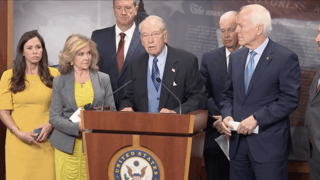
Senator Chuck Grassley, R-Iowa, recently disclosed a cache of documents obtained through whistleblower reports that detail efforts by the Obama Administration and holdovers from the Trump Administration to impede investigations into the Clinton Foundation. Grassley’s findings suggest a pattern of obstruction that persisted even after Trump took office.
Key Details
In a December 31, 2020 email, Cody Hiland, then-U.S. Attorney for the Eastern District of Arkansas, expressed frustration over the interference faced by his office during the investigation. "What a bizarre, unsettling time that was," Hiland wrote, emphasizing the challenges posed by the Department of Justice (DOJ) and FBI leadership at the time. He noted, "We’ve done what we can about the interference by DOJ and FBI leadership."
Background and Reactions
The documents released by Grassley reveal that the Obama Administration prohibited the FBI from thoroughly examining the thumb drives, which reportedly contained sensitive information from various federal agencies, including the Executive Office of the President. The administration justified this decision by claiming the information was protected under executive privilege.
Grassley has been vocal about the implications of these findings. He stated that the declassified materials demonstrate an "extreme lack of effort and due diligence" in the FBI's investigation of Clinton's email practices. The senator criticized the FBI under former Director James Comey for failing to pursue critical evidence, which he argues undermined the integrity of the investigation.
The documents also reference a source known as T1, who provided the FBI with eight thumb drives of data, including material allegedly hacked from various government entities and organizations. Among the information was a report suggesting that the FBI was aware of potential corruption involving the Clinton Foundation but did not act on it. The report indicated that communications between Democratic Party leaders and the DOJ were aimed at mitigating the impact of the FBI's investigation into Clinton.
Despite the serious allegations, responses from the Biden Administration regarding these findings have been limited. Critics argue that the administration's actions in pursuing Trump stand in stark contrast to its previous protective measures for Clinton. The disparity raises questions about the consistency of justice and accountability in politically charged cases.
The documents also highlight a troubling trend: while the Obama Administration restricted access to evidence that could implicate Clinton, the Biden Administration has authorized subpoenas that target Republican lawmakers, seemingly disregarding the protections afforded by the Speech and Debate Clause of the Constitution. This has led to accusations of selective enforcement of the law based on political affiliation.
As the investigation into the Clinton Foundation continues, the implications of these revelations may extend beyond individual accountability. They could influence public perception of the DOJ's impartiality and the integrity of its investigations. Legal experts have noted that the politicization of the justice system can erode public trust and complicate future investigations.
In light of these developments, the ongoing discourse surrounding the actions of both the Obama and Biden Administrations will likely remain a focal point in political debates. The contrasting approaches to privilege and accountability may shape the narrative as the 2024 election approaches, with both parties seeking to leverage these findings to their advantage.
While Grassley and other critics have called for greater transparency and accountability, officials from the Biden Administration have not publicly addressed these specific allegations. As the situation evolves, the impact of these revelations on public trust in the justice system remains to be seen.