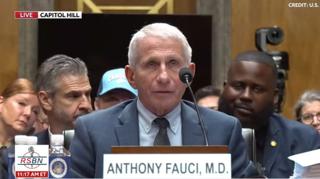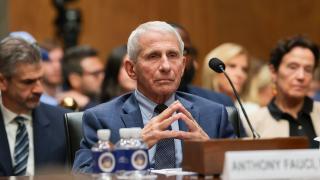
A previously undisclosed June 2025 memorandum obtained by the Counterlawfare Institute details a proposed Department of Justice investigation into Anthony Fauci and the National Institutes of Health’s (NIH) role in shaping the scientific consensus that dismissed the possibility of a laboratory origin for Covid-19.
The memo’s emergence highlights ongoing scrutiny over whether senior federal officials manipulated scientific opinion and public messaging about the pandemic’s origins, with potential legal and institutional consequences.
The document, authored by former HHS official Michael Caputo and addressed to Ed Martin, then director of the DOJ’s Weaponization Working Group, alleges that Fauci and other officials coordinated with scientists to produce and promote the influential Proximal Origin of SARS-CoV-2 paper, which asserted the virus was not a lab construct. Caputo’s memo claims this effort was designed to shield the government from scrutiny and mislead both the public and intelligence agencies.
Allegations of Coordinated Messaging
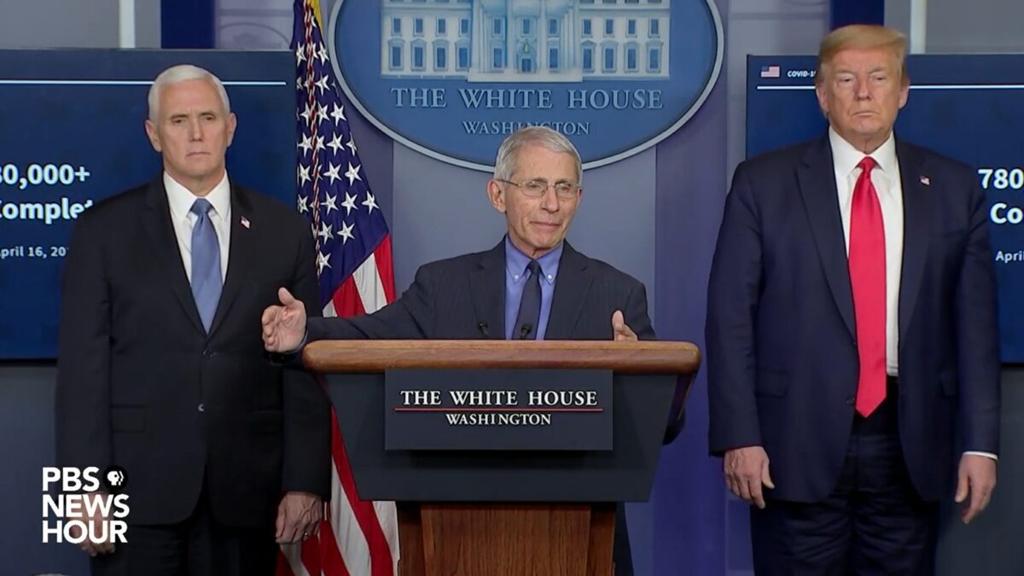
Caputo’s memo asserts that Fauci, then director of the National Institute of Allergy and Infectious Diseases, worked closely with the authors of the Proximal Origin paper during its development. The memo states that Fauci and NIH Director Francis Collins provided extensive input, despite Fauci later presenting the paper at the White House as independent work by scientists he claimed not to know. The memo describes this as a two-level deception: first, shaping the scientific conclusion, and second, presenting it as outside validation.
"He knew what they had initially believed, how their conclusions had changed, and the extent of his own involvement in producing the scientific authority he was now presenting to the country as independent."
— Counterlawfare Institute memo
The paper, published in Nature Medicine in March 2020, became a key reference for dismissing the lab-leak theory. Collins promoted it through NIH channels, and Fauci cited it from the White House podium. The memo alleges that news organizations and technology companies used the paper’s conclusions to suppress alternative theories.
Funding and Institutional Response
The memo also points to an $8.9 million NIH grant awarded to Kristian Andersen, Robert Garry, and collaborators two months after the paper’s publication. Caputo’s memo references allegations that the grant was a reward for supporting the government’s preferred narrative, though Andersen denied this under oath. Documents released by Sen. Rand Paul, R-Ky., show that a senior NIH director acknowledged Fauci’s office had influence over grant decisions, challenging claims that the process was fully independent.
Following the memo, federal agencies including the Departments of Agriculture and Energy canceled contracts worth roughly $3 million with Springer Nature, the publisher of Nature Medicine. The NIH and other agencies had planned to spend up to $25 million on subscriptions that year, signaling a significant institutional reaction tied to concerns raised in the memo.
Unanswered Questions and Ongoing Investigations
The status of any formal DOJ investigation remains unclear. The memo called for identifying and compensating individuals whose careers were harmed by the alleged misinformation effort, and for a broad inquiry into officials, scientists, grants, and intelligence briefings involved in the Proximal Origin operation. It is not known whether the Justice Department acted on these recommendations or if the investigation is ongoing.
Recent document releases by Sen. Paul further complicate the picture. According to Paul’s published records, Fauci’s personal diary reveals that as early as January 2020, top virologists privately expressed doubts about a natural origin for the virus, while Fauci publicly dismissed the lab-leak theory. The diary also documents Fauci’s private concerns over gain-of-function research and funding ties to the Wuhan Institute of Virology, even as he denied such links before Congress.
A March 2025 letter from Ed Martin to the editor-in-chief of Nature Medicine questioned the journal’s handling of competing viewpoints and its awareness of the private doubts among the paper’s authors. It is not known whether the journal responded or if further inquiry followed after Martin left the DOJ.
Broader Context and Response
The Counterlawfare Institute, which published the memo, argues that the Proximal Origin episode exemplifies a coordinated use of government, scientific, and media institutions to enforce a single narrative and marginalize dissent. The Institute’s founder, Hans Mahncke, contends that this approach punishes critics without due process.
Officials named in the memo and the NIH have not publicly responded to the latest allegations. Andersen has previously denied that his NIH grant was connected to his work on the Proximal Origin paper. Supporters of Fauci and Collins have not addressed the claims regarding their involvement in the paper’s development or subsequent promotion.
The fate of the DOJ investigation and the full impact of the released documents remain uncertain as scrutiny over the origins of Covid-19 and the government’s response continues.