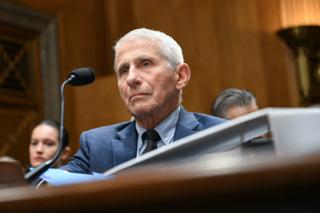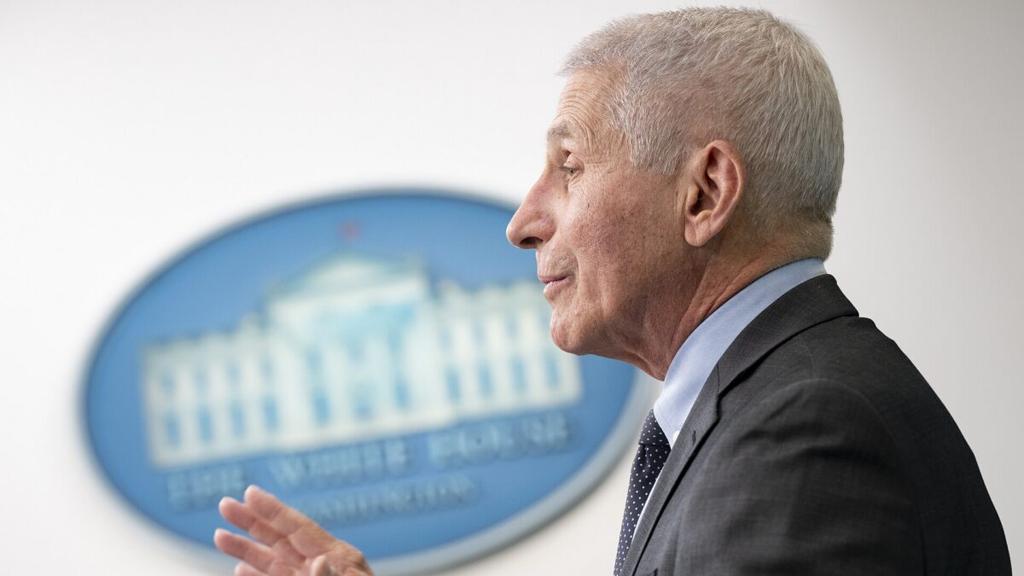
Sen. Rand Paul, R-Ky., has published diary entries from former National Institute of Allergy and Infectious Diseases director Anthony Fauci, revealing that Fauci privately estimated a much lower Covid-19 fatality rate than he publicly stated in early 2020, and that he played a direct role in urging school closures during the pandemic. The documents, released by Paul, also show Fauci privately doubted the Wuhan wet market origin theory and acknowledged gain-of-function research in Wuhan, despite later public denials.
The release intensifies scrutiny of Fauci’s leadership during the pandemic, raising questions about the accuracy of official messaging and the influence of federal officials on state and local Covid policies.
The diary excerpts come as debate continues over the federal government’s pandemic response, including the origins of Covid-19, the effectiveness of lockdowns, and the transparency of public health officials. Fauci, who became the face of the U.S. Covid response, has faced repeated criticism from Republican lawmakers over his statements to Congress and the public.
Fauci’s Private vs. Public Fatality Estimates
According to the diary entry dated Feb. 8, 2020, Fauci wrote that he and former CDC director Tom Frieden agreed Covid-19 was acting like a “bad influenza” and that the case fatality rate (CFR) was “more like 0.2-0.3% rather than 2.0%.” This private assessment sharply contrasts with Fauci’s public statements in March 2020, when he told Fox News’ Sean Hannity that Covid-19’s mortality was “about 2, 2.5 percent,” and later testified to Congress that the mortality rate was “about three percent.”
Fauci did acknowledge in public that the rate could be lower, stating, “It’s probably lower than that… probably closer to 1 [percent],” but maintained that Covid was “ten times more lethal than the seasonal flu.” These public statements were made under oath before Congress, as documented in the March 11, 2020, hearing transcript.
“I think if you count all the cases of minimally symptomatic or asymptomatic infection, that probably brings the mortality rate down to somewhere around one percent, which means it is 10 times more lethal than the seasonal flu. I think that is something that people can get their arms around and understand.”
— Anthony Fauci, then-NIAID director, Congressional testimony
Lab Leak Theory and Gain-of-Function Research
Fauci’s diary entries also indicate that, as early as Jan. 26, 2020, he privately dismissed the Wuhan wet market as the source of the outbreak, writing, “Now we know the market was not the source, it was the amplifier.” He noted that the first infection was not connected to the market, contradicting later public statements that emphasized the wet market theory.
On gain-of-function research, Fauci summarized a Feb. 1, 2020, call by noting that Dr. Zheng-Li Shi at the University of Wuhan had been conducting gain-of-function (GOF) research on coronaviruses to adapt the spike protein to bind to the human ACE2 receptor. This acknowledgment stands in contrast to Fauci’s later testimony to Congress, where he stated that the National Institutes of Health “has not ever and does not now fund gain-of-function research in the Wuhan Institute of Virology.”
School Closures and Vaccine Messaging
In a March 15, 2020, diary entry, Fauci described persuading New York City Mayor Bill de Blasio and California Governor Gavin Newsom’s office to close schools, bars, and restaurants, based on his public recommendations and TV appearances. This appears to contradict Fauci’s later claims that he did not recommend lockdowns or school closures.
Fauci’s diary also reveals private doubts about the effectiveness of Covid vaccines in preventing infection. After attending a large, vaccinated-only event in November 2021, Fauci wrote of his anxiety about contracting Covid, noting, “I’m well aware that many people who are vaccinated are still getting infected and that worried me a lot.”
Reactions and Ongoing Debate
Sen. Paul has argued that the diary entries show Fauci misled the public and Congress about key aspects of the pandemic. Fauci and his supporters have previously defended his public statements as reflecting the best available information at the time and have not yet responded to the latest diary disclosures. Congressional records and prior hearings corroborate Fauci’s public testimony on Covid fatality rates and NIH funding, but the new documents raise further questions about internal deliberations and consistency.
The release of Fauci’s diary is likely to fuel continued legislative and public scrutiny of the federal pandemic response, with lawmakers seeking further clarification on the origins of Covid-19, the role of gain-of-function research, and the decision-making behind school closures.