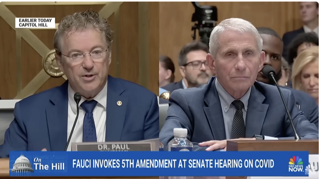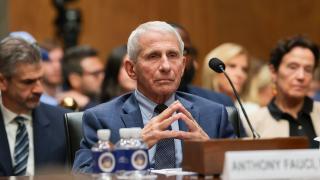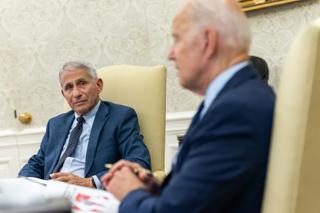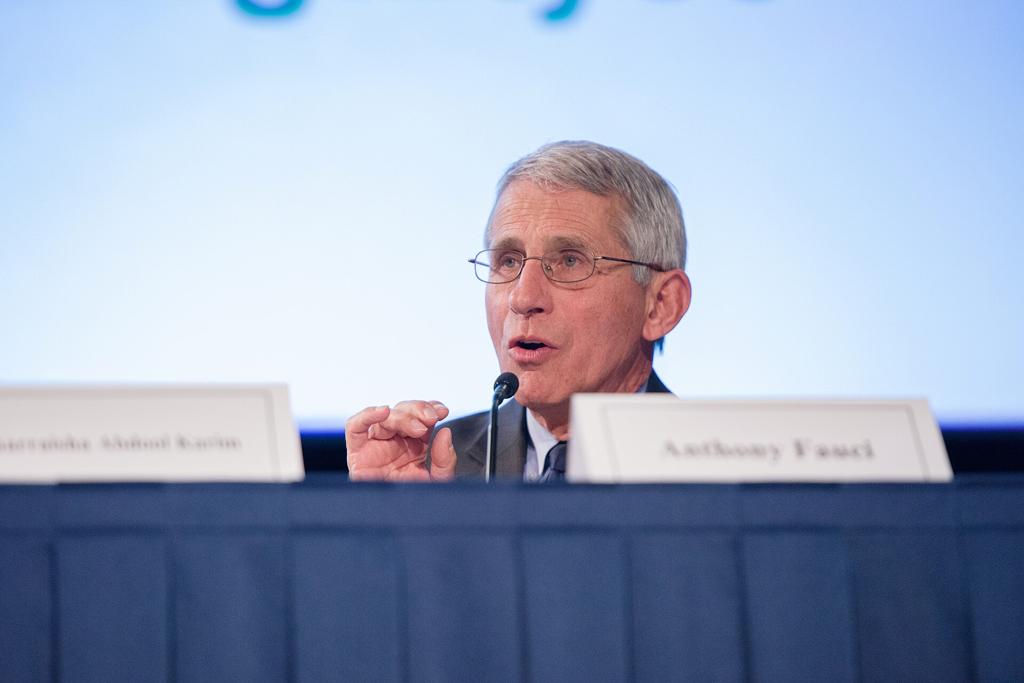
Anthony Fauci is set to testify before Congress on Wednesday, with senators expected to press him on a series of newly released documents that raise questions about his role in the early response to Covid-19, research funding, and public messaging about the virus’s origins. The records, released by Sen. Rand Paul, R-Ky., include Fauci’s emails, diary entries, and internal messages from scientists involved in the influential “Proximal Origin” paper.
The hearing comes as lawmakers seek answers about apparent contradictions between Fauci’s private communications and his public testimony, particularly regarding the origins of Covid-19 and the funding of research at the Wuhan Institute of Virology. These issues have been at the center of ongoing debates in Congress and among the public, with some lawmakers and critics alleging that key information about the pandemic’s origins and the U.S. government’s response was not fully disclosed.
The controversy over Fauci’s conduct is part of a broader debate about transparency and accountability in the U.S. government’s pandemic response. Critics have alleged a coordinated effort by officials and scientists to suppress evidence of a possible laboratory origin for the virus, while others argue that the available evidence still points to a natural origin. The upcoming hearing is expected to provide a forum for senators to address these concerns directly with Fauci under oath.
Funding and Gain-of-Function Research
Senators are expected to question Fauci about his previous testimony denying that the National Institutes of Health (NIH) funded gain-of-function research at the Wuhan lab. Documents show that the National Institute of Allergy and Infectious Diseases (NIAID), under Fauci’s leadership, awarded a grant to EcoHealth Alliance for bat coronavirus research in China, with the Wuhan Institute as a subrecipient. The funding for gain-of-function work was paused in 2016 but later reinstated, according to emails cited in the records.
In a February 2020 email, Fauci acknowledged that scientists in Wuhan were conducting experiments designed to see how bat viruses adapt to humans. He also noted that the outbreak’s location “heightened” suspicion about its origin. Lawmakers are expected to ask Fauci to clarify the extent of U.S. involvement in this research, the oversight mechanisms in place, and whether his previous statements to Congress were accurate in light of the new documents.
Messaging and Public Statements
Lawmakers are also likely to focus on discrepancies between Fauci’s private assessments and his public statements. His diary entry from January 2020 indicated that the Huanan Seafood Market was not the source of the outbreak, yet public messaging continued to suggest otherwise for several months. At an April 2020 White House press conference, Fauci cited the Proximal Origin paper to support a natural origin theory, describing it as independent work, though records show he was closely involved in organizing and reviewing the paper.
The lead author, Kristian Andersen, thanked Fauci for his “advice and leadership” in a private message, stating, “Thank you again for your advice and leadership as we have been working through the SARS-CoV-2 'origins' paper.” Internal messages and notes reveal that several scientists involved in the paper privately considered a lab origin plausible, with Andersen writing that a lab escape was “so friggin’ likely.” Despite these doubts, the paper was promoted publicly as evidence against a laboratory origin.
Senators are expected to ask Fauci about his role in shaping the narrative around the virus’s origins and whether he or others influenced the scientific debate or public messaging for political or strategic reasons. The hearing may also address the broader implications for scientific transparency and the process by which key public health decisions were communicated to the public.
Ethics and Prize Nominations
The records also detail Fauci’s efforts to secure nominations for prestigious awards, including the Shaw Prize and Dan David Prize, from scientists who had received significant NIAID funding. Emails show that Fauci and his staff helped prepare nomination materials during government work hours. Federal ethics rules prohibit using public office for private gain or soliciting benefits from those financially dependent on one’s agency.
It is unclear whether Fauci obtained written ethics approval or disclosed the nominators’ funding ties to NIAID. Lawmakers are expected to question Fauci about the process for seeking such nominations, the role of his staff, and whether any ethics guidelines were violated. These questions reflect broader concerns about conflicts of interest and the use of public resources for personal recognition.
School Closures and Policy Influence
Fauci has publicly denied involvement in school closures, but a March 2020 diary entry records that he spoke directly with New York City Mayor Bill de Blasio and urged him to close schools, bars, and restaurants. The entry states that de Blasio agreed to act on Fauci’s recommendation. This revelation has prompted renewed scrutiny of Fauci’s influence on local and national policy decisions during the early stages of the pandemic.
Fauci’s supporters have not publicly addressed these latest allegations or the newly released records. The Senate hearing is expected to focus on these and other questions, with lawmakers seeking direct answers from Fauci under oath about his role in shaping the government’s pandemic response and public understanding of Covid-19’s origins.
The outcome of the hearing could have significant implications for ongoing investigations into the pandemic response, future public health policy, and the public’s trust in government officials and scientific advisors. As senators prepare their questions, the hearing is likely to draw national attention and reignite debates over the handling of the Covid-19 crisis.