Newly disclosed Slack messages obtained by Sen. Rand Paul reveal that the scientists behind the influential Proximal Origin paper privately considered a laboratory origin of Covid-19 to be plausible, even as they publicly dismissed the theory in a major scientific journal.
The disclosures raise questions about transparency and scientific integrity at the highest levels of pandemic response, as the paper was widely cited to shut down debate over Covid's origins.
The Proximal Origin paper, published in Nature Medicine on March 17, 2020, was conceived after a secret teleconference convened by Anthony Fauci on February 1, 2020, according to the Federalist report. Fauci directed a group of scientists, including Kristian Andersen, Robert Garry, Andrew Rambaut, and Edward Holmes, to address the possibility of a lab origin. The resulting paper concluded that a laboratory scenario was "not plausible."
Authors' Private Doubts
The 1,123 pages of Slack messages, released by the House Select Subcommittee on the Coronavirus Pandemic, show that lead author Kristian Andersen and others repeatedly acknowledged the possibility of a lab origin. Andersen described accidental escape as "highly likely" and said it was "not some fringe theory." Another author wrote that Covid "easily could have" leaked from a laboratory. Even after publication, the authors continued to express doubts, with Andersen writing in June 2020, "some smoking(ish) guns starting to appear that I’m not comfortable with."
"The main issue is that accidental escape is in fact highly likely — it’s not some fringe theory."
— Kristian Andersen, Scripps Research scientist
Despite these private admissions, the authors publicly defended the natural origin theory and discussed strategies to preserve it in the face of mounting evidence. The Slack messages also show that the authors debated technical flaws in their own arguments, including the claim that Covid could not have been engineered due to the absence of a known viral backbone and the assumption that the virus's binding to human cells was not tight enough to be engineered.
Fauci's Role and Public Messaging
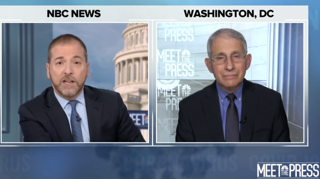
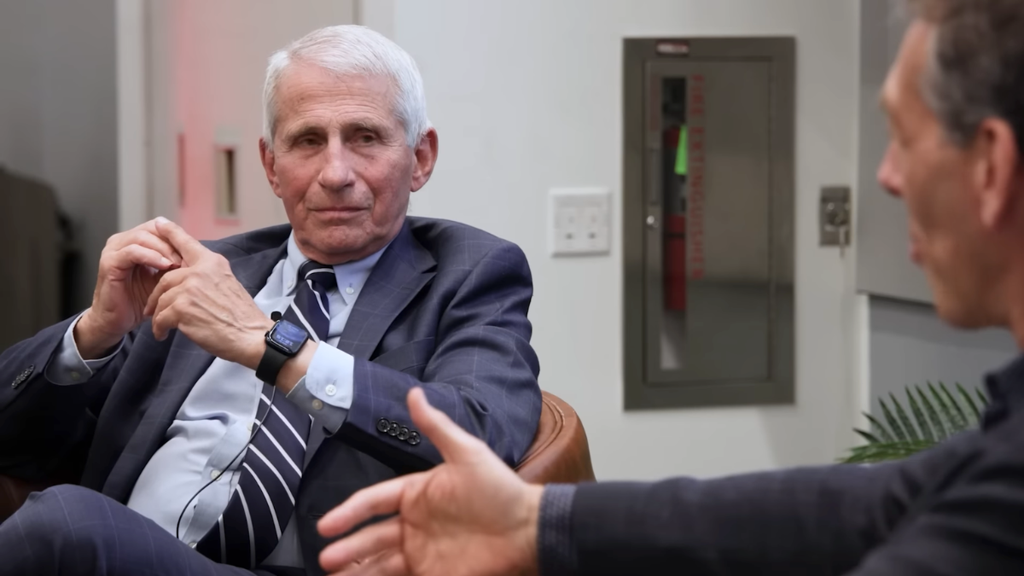
The messages indicate that Anthony Fauci played a central role in initiating and shaping the Proximal Origin paper, though his involvement was not disclosed to the public. After publication, Fauci cited the paper as evidence against the lab leak theory when questioned by President Donald Trump and the media. Fauci told reporters he could not recall the authors' names, despite having been involved from the beginning.
The Slack records show that Fauci's engagement with the authors continued after publication. On May 23, 2021, Andersen wrote that he had met with Fauci and his team, who "deeply appreciate what we’re doing, so we’ll keep dancing." Days later, President Biden ordered an intelligence review into Covid's origins, and Fauci's emails about the February 2020 teleconference became public under FOIA.
Technical Flaws and Outside Criticism
The Slack messages revisit several technical arguments made in Proximal Origin. The authors privately admitted that their claim about the virus's backbone was based on outdated data and that their arguments against manipulation were undermined by subsequent research. Andersen acknowledged that a German team had created a reverse genetics system for SARS-CoV-2 in less than two weeks, contradicting the paper's assertion that such manipulation was difficult.
The paper also claimed that research on bat coronaviruses was widespread globally, but Andersen later admitted in private that such work was exclusive to the Wuhan Institute of Virology. Microbiologist Rossana Segreto and others criticized the paper's assumptions and warned of the risks of downplaying the possibility of a lab leak.
Lack of Public Correction and Response
Despite ongoing private doubts and technical reassessments, the authors did not publicly correct or update their conclusions. The Proximal Origin paper became one of the most cited scientific publications in history, shaping public and institutional attitudes toward the lab leak theory. Several authors received substantial grant funding from Fauci's National Institute of Allergy and Infectious Diseases after the paper's publication.
Supporters of the paper, including Andersen, have argued that their initial doubts were resolved before publication and that the Slack messages reflect normal scientific debate. Officials cited in the messages have not publicly addressed the latest disclosures.